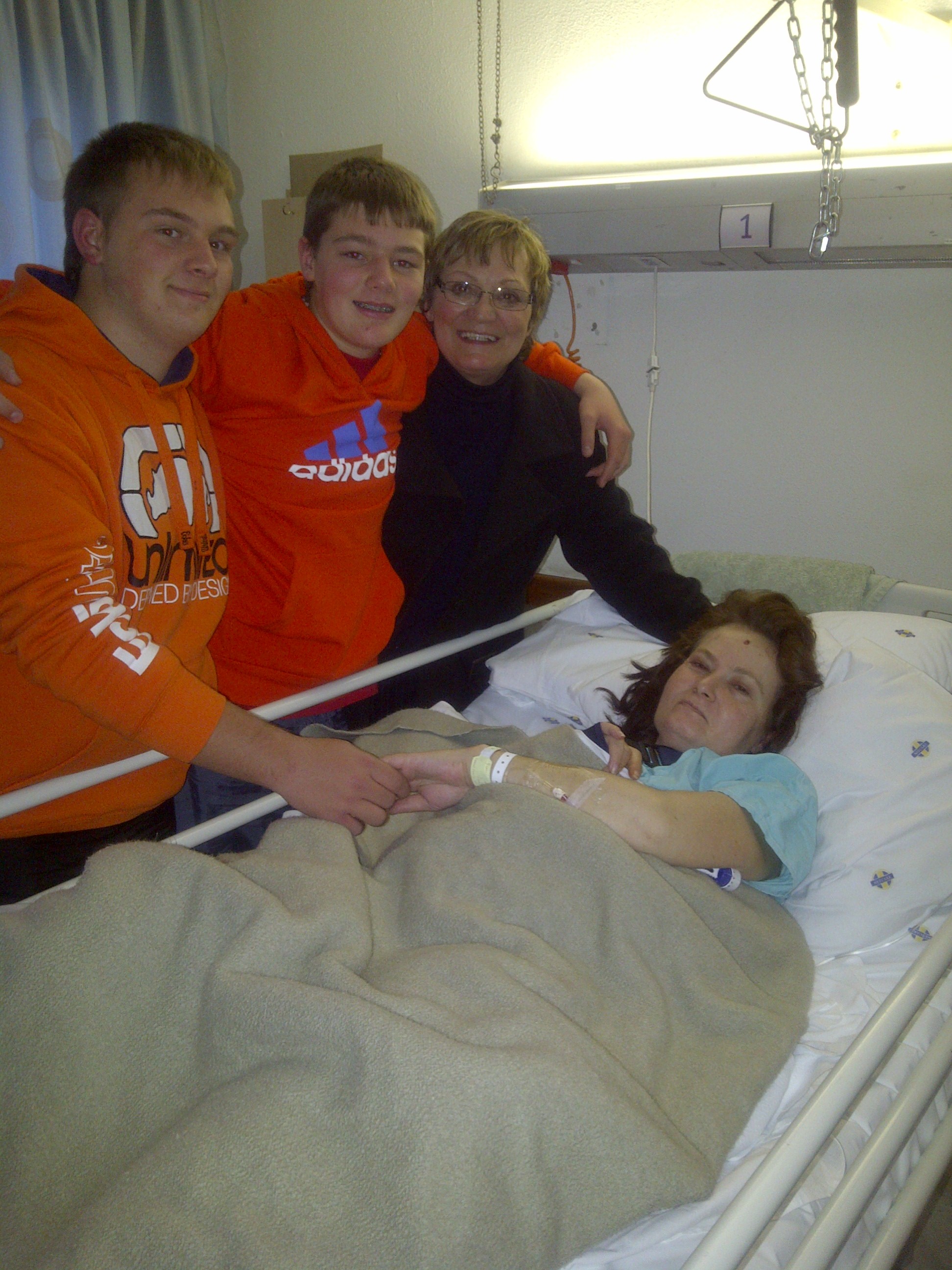
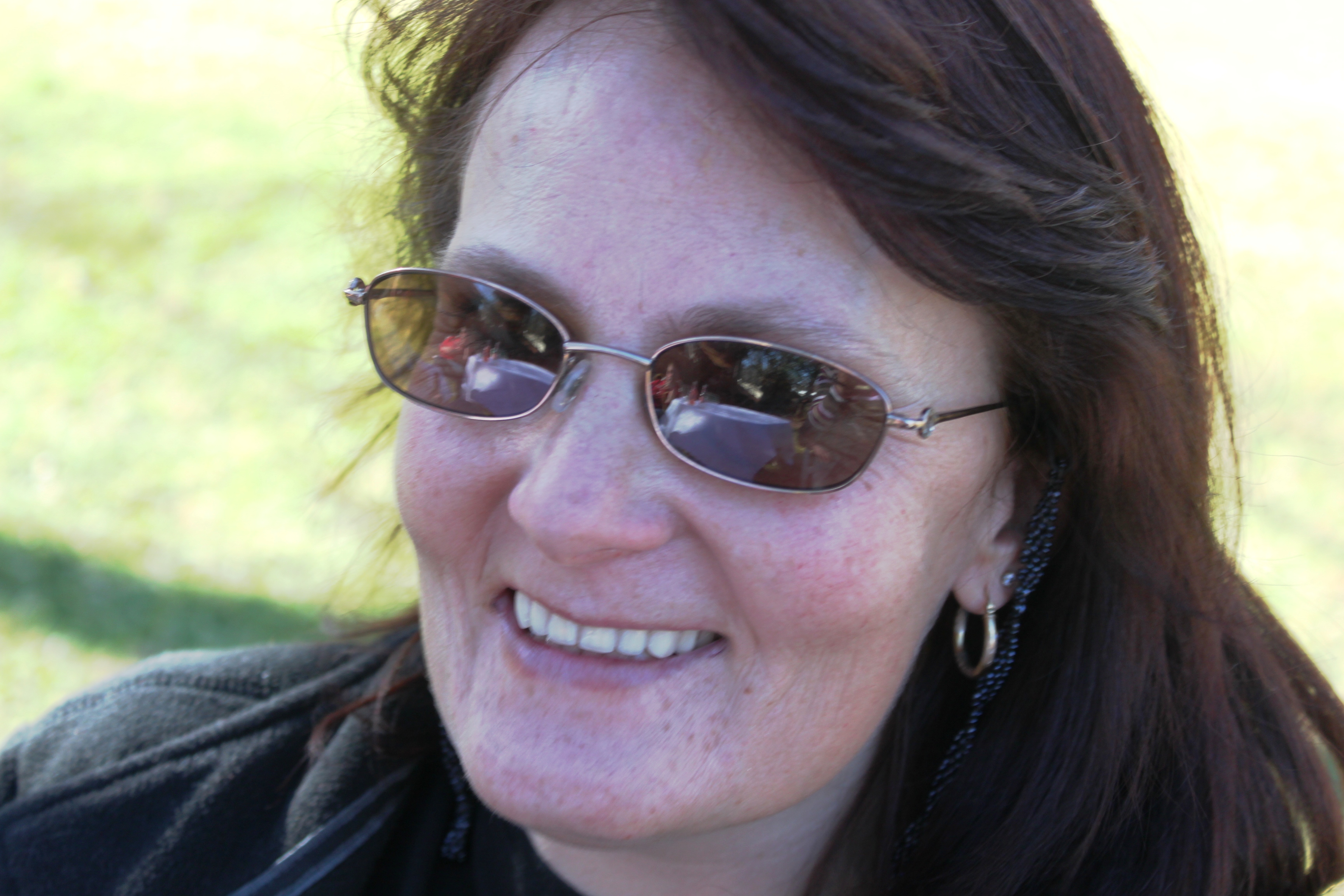
Dying is a lonely journey. Not only for the sick person but also for the family. As hard as we may try to avoid death, the truth is that we do a lousy job of it. Science and medicine will certainly postpone it, even staying healthy might seem to delay it, but the harsh reality is that death does not wait for you, it does not ask you, and it does not listen to you. Death ignores your feelings and wants; you do not matter to death…Death is the only certainty in life! We need to remember that our existence here is fragile, and we never have as much time with people as we think we do. If there is someone or someones out there that you love, don’t neglect that and don’t put off engaging with them because waits for no-one… Vic's Journey ended on 18 January 2013 at 10:35. She was the most courageous person in the world and has inspired thousands of people all over the world. Vic's two boys are monuments of her existence. She was an amazing mother, daughter, sister and friend. I will miss you today, tomorrow and forever my Angle Child.
I woke up early this morning with a very heavy heart. It was Pain Clinic Day again. There is no appointment system – it operates on a first come first serve basis. Wonder above all wonders no traffic delays… I was first to arrive!!!
The amazing thing is that one of Vic’s ICU doctors ran the Pain Clinic today. He immediately recognised me and we spent an hour discussing Vic. He looked at her X-rays and was mortified by the fracture. He was so sympathetic. Over the past 5 years he has often been part of the ICU team fighting for her life. He is well aware of the prognosis and confirmed that the arm would be terribly painful and that there was no chance of it mending. He knows exactly what her little body has been subjected to over the years.
We will try an additional tablet, Jurnista, which apparently works on two different pain receptors.“Hydromorphone controlled-release belongs to the family of medications known as opioid analgesics (narcotic pain relievers). It is used to treat chronic severe pain.Hydromorphone works on the brain to increase the ability to tolerate pain. Hydromorphone controlled-release works by gradually releasing the medication into the body to help control pain that requires the prolonged or continuous use of an opioid pain killer.”
The side effects seem severe. But he double checked with the head of the department so I am sure they know what they are doing! I know that I will not have a peaceful night’s sleep at all! But so far so good – it is a slow release tablet so no effect at all yet. Oh, I forgot – it is highly addictive!
I am cautiously optimistic! Just a little reprieve would be great!
Jared was born with a reflux problem. He was the best projectile vomitter ever! As he grew older he stopped vomiting (in public) and never complained. He then started chewing Rennies. No matter who he went shopping with, he always came back with a pack of Rennies. Obviously nobody reconciled his Rennies intake… Until he developed chest pains!
Long story short is that after six months of treatment, the decision was made to do the Nissen repair. I may have blogged how well Jared did post-operatively, how brave he was and how wonderfully he recovered. So it came as quite a shock when I received a call from school yesterday asking me to pick Jared up as he had severe chest pains again…
We spent the afternoon at the doctors. Chest X-Ray, ECG and then a CT scan. CT showed up several kidney stones… Average size 6.6mm. The chest pain was caused by something called Costochondritis. Costochondritis is inflammation of the junctions where the upper ribs join with the cartilage that holds them to the breastbone or sternum.
Today Jared went for blood tests. Once the results are back we will start seeing some specialists to resolve the kidney stone and calcium build-up problem. The Dr suspects Jared has either an autoimmune and/or connective tissue problem.
I was thinking today, that if we only have one life, how come it is so crappy? Why can I not be the ill one? I have made many mistakes in my life and stepped on a couple of toes in my career. People love me or hate me. Vic has never deliberately gone out to hurt anyone. She was born with this dreadful disease. And now my beautiful Jared… I could not bear going through this again with him. He has such a pure heart. The scariest thing is that he has witnessed his mother’s struggle and steady decline over the years.
There are times that Vic cannot remember – the times that she was in ICU, ventilated, sedated, critically ill – all of this the boys lived. Vic does not know what tomorrow holds but if Jared is diagnosed with OI he will know exactly what lies ahead of him. I see the helplessness in his eyes when he looks at her. I hear his frustration with her battle… Please, if there is a God of Mercy, let Jared be spared this.
Tonight I am not in a happy place. I spoke to the UK kids and feel content that they are settled and doing well. Spoke to the little ones but the longing is worse than ever. Chloe graduates tomorrow. I am not there to share this milestone in her life.
” I’m going to smile…and make you think I’m happy…I’m going to laugh…so you don’t see me cry…and even if it kills…I’mgoingto smile.”
I think seeing Vic trying to remain cheerful and to smile through her pain is almost harder than seeing the raw pain on her face. I know Vic so well. When her voice becomes shrill and loud she is suffering bravely.
The sad thing is that Vic thinks we cannot see through her act. She especially tries this act with the boys. She will try and joke (not that she ever had a great sense ofhumor) and tell long winded stories. Long winded because I think she somehow loses the thread of the story along the road and fills in the blanks with words.
Even as a baby Vic used to babble. She used to lie in her cot and ooch and gooch…She was such a happy little thing. Laughed from her stomach. When she turned ten she started experimenting with her sense of humor…It was quite painful. She could never get the punch line right. At 37 she still can’t get it right.
With 80 operations under her belt Vic developed almost a manic fear for the theatre. She got to know the theatre team very well. Her anaesthetist, Richard Spark, is one of the greatest human beings I have ever met. Brendon Bebington, her surgeon, would hold her hand whilst Richard administered the anaesthetic.
Vic always insisted on telling them a joke in theatre. We would make her practice the joke for days!! Even in the holding area of the theatre we would make her repeat the joke… We would laugh and clown about to try and take her mind off her fear. Fear that she would not survive another operation and fear of the pain if she did… As they wheeled her into the theatre the tears would come… my tears. I never cry in front of Vic.
I wish I had written down the original joke and what Vic ended up telling…
It is part of the burden of having a terminally ill child. You fear tears because it may lead to breakdown.
Last night Jon-Daniel and Jared managed to have them mother shrieking with laughter. I don’t know when last I heard them laugh like that. It was amazing. For a short while the heavy cloud that hangs over our home lifted…
Today is a very difficult day for Vic. The cold is in her bones. Pain is dominating her mind and life again! My brave child is battling. Maybe tomorrow will be a better day.
“Too often we underestimate the power of a touch, a smile, a kind word, a listening ear, an honest compliment, or the smallest act of caring, all of which have the potential to turn a life around.” Leo Buscaglia
I am disgustingly healthy! I do not get headaches, toe-aches, tummy aches, ear aches or any aches or pains. Every five years or so I get the flu and am totally unable to deal with the discomfort or pain of flu…I will stay in bed and when I hear Danie walking up the stairs to our room I will actually start groaning. It is involuntary. I am a ninny. My family joke with my non-existant pain threshold. Yet I see the doctor once a year for an annual check-up as I did last week.
Liver, lungs, kidneys perfect according to my blood tests. Slightly elevated cholesterol count. Doctor says I am in near perfect health. So how do I understand my child’s pain and discomfort? I don’t! If you were born blind how could you ever understand or appreciate color?
There is a very brave young lady called Katie Mitchell, who suffers from Marfan’s Syndrome. http://connectivetissuedisorders.wordpress.com Katie gives me an insight into pain… She articulates her feelings beautifully. Katie lives, breathes and understands pain… Katie has become my window into Vic’s painful journey…Katie re-posted a blog on pain and I found it so enlightening. I will actually print the document and discuss it with the family.
Katie writes in red and my comments are in black:
Tips for dealing with people in pain:
1.People with chronic pain seem unreliable (we can’t count on ourselves). When feeling better we promise things (and mean it); when in serious pain, we may not even show up.Vic is always trying to go to breakfast with Angela, lunch with Mrs Cramp and coffee with Tracey. Vic very seldom is able to stick to a commitment. It fills her with remorse. She desperately wants some normality in her life. Some semblance of a social life. Pain and ill-health prevent it!
2.An action or situation may result in pain several hours later, or even the next day. Delayed pain is confusing to people who have never experienced it.Oh this I truly relate to…Vic sitting in the sun and crashing later, Vic trying to participate in a family barbecue and spending a week in bed to recover… Every action has a painful consequence! As a family we dread Vic’s brave (but stupid as far as we are concerned) attempts of participating in life. As a family we become angry, frustrated and scared when Vic tries to “live”!
3.Pain can inhibit listening and other communication skills. It’s like having someone shouting at you, or trying to talk with a fire alarm going off in the room. The effect of pain on the mind can seem like attention deficit disorder. So you may have to repeat a request, or write things down for a person with chronic pain. Don’t take it personally, or think that they are stupid. I never realized or appreciated this aspect of pain. I often thought to myself Vic must be doped up, disinterested… As a family we were not aware of this aspect of pain. Vic at times seems totally disinterested in the boys, the family, in life…
4.The senses can overload while in pain. For example, noises that wouldn’t normally bother you, seem too much.Vic battles with too much movement or noise. She becomes very irritated.
5.Patience may seem short. We can’t wait in a long line; can’t wait for a long drawn out conversation.Absolutely!! If Vic wants something she wants it now!
6.Don’t always ask “how are you” unless you are genuinely prepared to listen it just points attention inward.Sometimes I am too scared to ask. Some day’s I say “Oh, you are looking so great today” and Vic will reply “Oh good…” and I know that she is thinking “Tell my body! I am feeling like death”
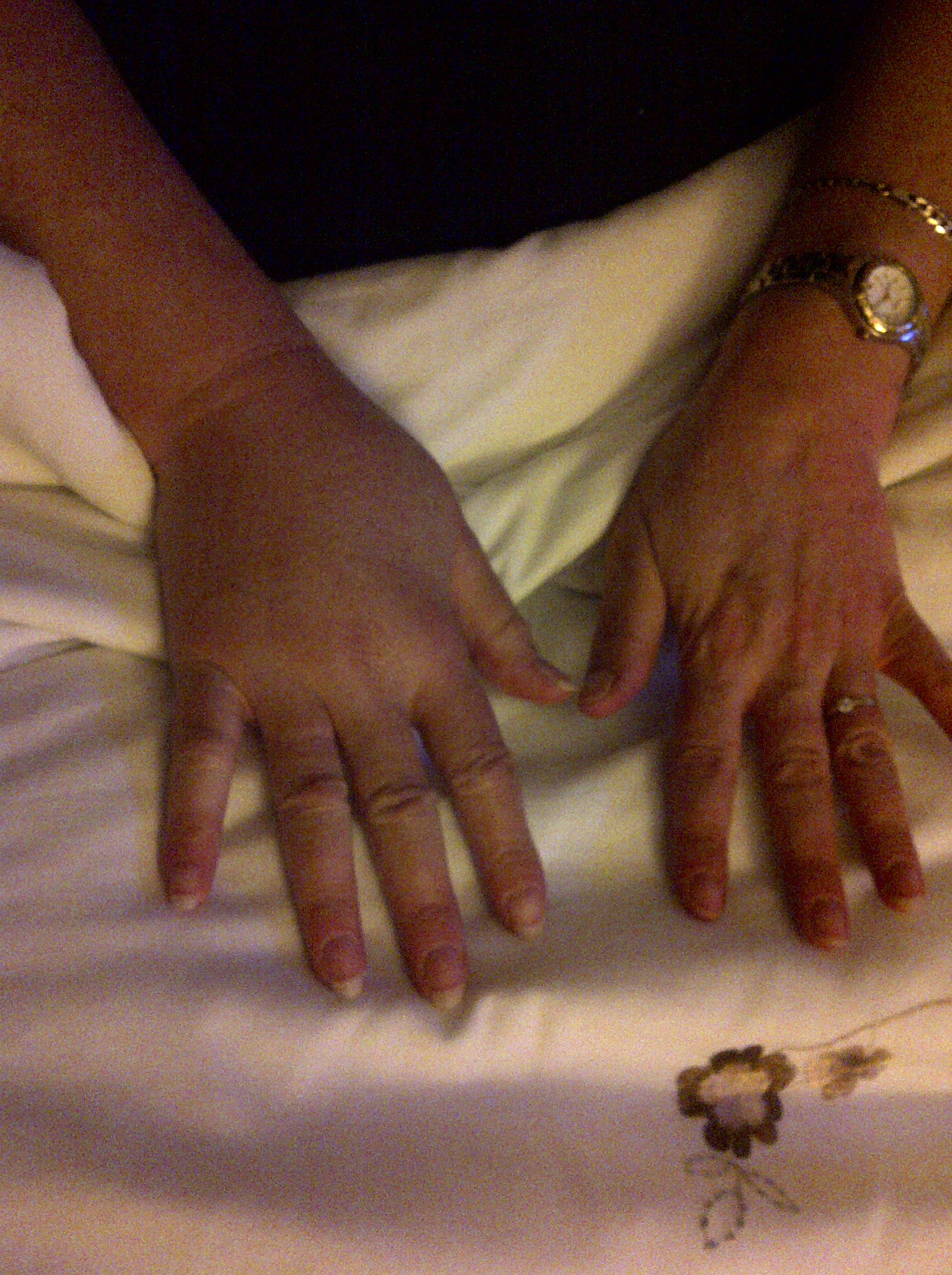
7.Pain can sometimes trigger psychological disabilities (usually very temporary). When in pain, a small task, like hanging out the laundry, can seem like a huge wall, too high to climb over. An hour later the same job may be quite OK. It is sane to be depressed occasionally when you hurt.Tonight Vic could not rub the hand cream into her little hands. She could not pull a brush through her hair…
8.Pain can come on fairly quickly and unexpectedly. Pain sometimes abates after a short rest. Chronic pain people appear to arrive and fade unpredictably to others. I think Vic is past this stage. Her pain is debilitating relentless and never-ending!
9.Knowing where a refuge is, such as a couch, a bed, or comfortable chair, is as important as knowing where a bathroom is. A visit is much more enjoyable if the chronic pain person knows there is a refuge if needed. A person with chronic pain may not want to go anywhere that has no refuge (e.g. no place to sit or lie down). We are past the visiting stage.
10.Small acts of kindness can seem like huge acts of mercy to a person in pain. Your offer of a pillow or a cup of tea can be a really big thing to a person who is feeling temporarily helpless in the face of encroaching pain.Every small action elicits a “Thank you Mommy” Reuben actually remarked that in the past Vic took everything that I did for her for granted. At this stage of her life Vic drives me absolutely mad with all the “Thank-You’s”
11.Not all pain is easy to locate or describe. Sometimes there is a body-wide feeling of discomfort, with hard to describe pains in the entire back, or in both legs, but not in one particular spot you can point to. Our vocabulary for pain is very limited, compared to the body’s ability to feel varieties of discomfort. Vic’s pain is well-defined but at times she has referred pain.
12.We may not have a good “reason” for the pain. Medical science is still limited in its understanding of pain. Many people have pain that is not yet classified by doctors as an officially recognized “disease”. That does not reduce the pain, – it only reduces our ability to give it a label, and to have you believe us.We do not understand pain. I never have pain. I cannot imagine not being able to walk, run, work, function, drive, live due to debilitating pain. I groan from flu-pain…I don’t know how it feels to have a frozen abdomen, fractured vertebrae, migraines from skeletal collapse, chronic and unrelenting tissue pain…. There are times that I think surely it cannot be that bad? I don’t understand Vic screaming with pain but I KNOW her pain is real!!!
In addition to the above I would like to add some of my own observations…
13. Pain makes people emotionally over-sensitive. Vic often misinterprets what we say. She takes things very personally! She is almost jealous of the boys and my relationship. She feels excluded from so many aspects of our lives. Last week Vic said “You are the fun-Oumie. I don’t make my boys laugh”… She is very sensitive as to who the boys ask permission to do things or go places… It is okay because she is scared of losing everything that is precious and dear to her.
14. Pain makes people selfish. This is a harsh statement. When your body is engulfed in pain it must be very difficult to see reason and to wait. It must be difficult not to lash out at the world. To not stop and think of the effect that your illness has on your family and friends.
15. Chronic pain and depression are closely linked. Chronic pain almost always leads to depression: Why? Just imagine a life consisting of dreadful, mind-blowing, unrelenting pain? Imagine not having anything to look forward to… We try to set little goals for Vic.
16. Fatigue is a definite factor.
23.2.2012
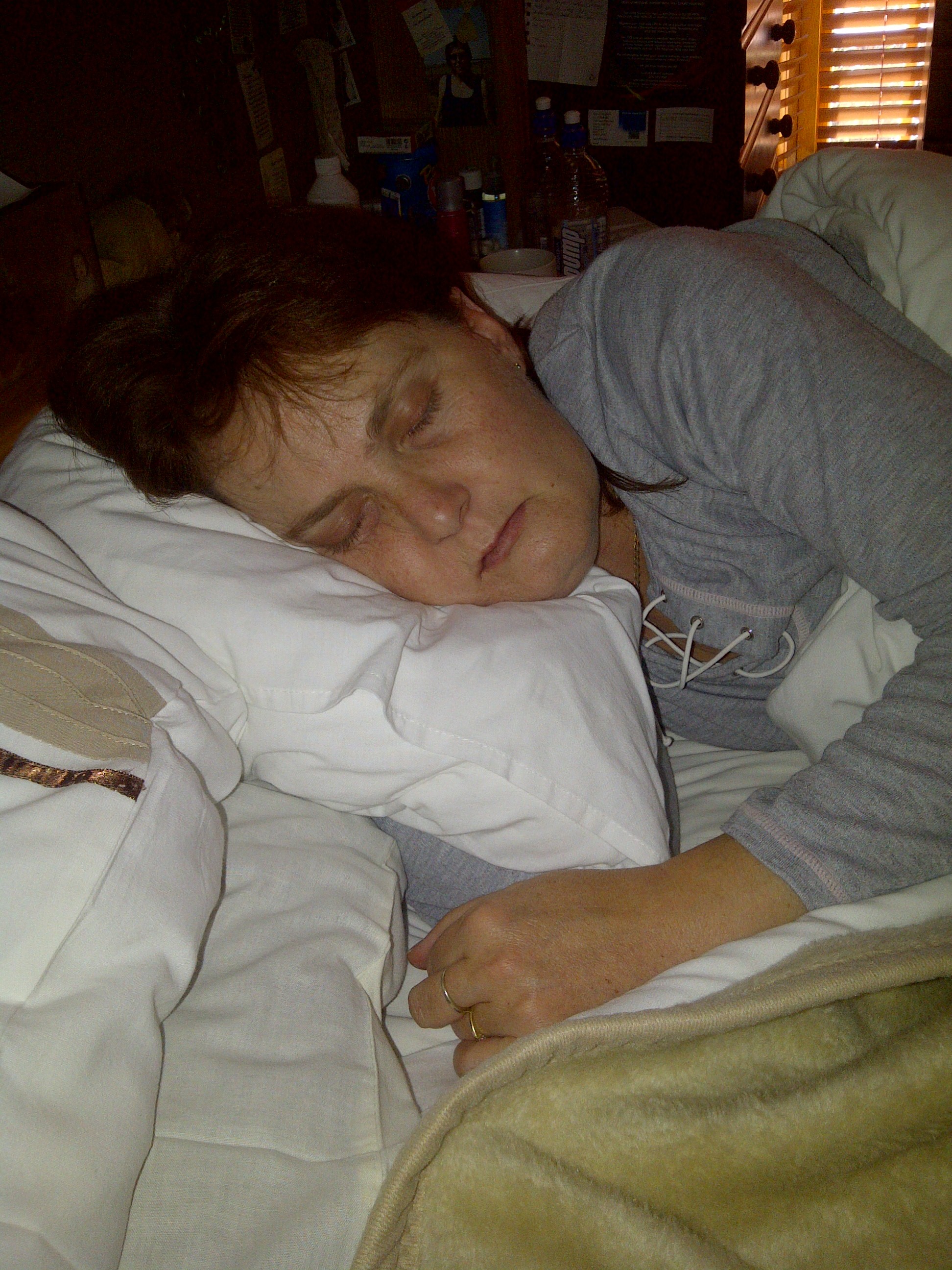
Whether it is the pain medication or the emotional strain of coping with the pain, Vic is chronically and permanently tired. We leave her to sleep. We are far happier seeing her in bed than seeing her battle to walk, sit or participate…It stresses us that she gets up when she is so tired. Vic falls asleep in a chair, the bath, the car, on her feet… We are at loggerheads with Vic in this regard… We want what is best for her…
17. Addiction:- “Patients often fear addiction. Patients with chronic pain do not and cannot get addicted to morphine. This is proved clinically by seeing patients whose pain is abolished (with a nerve block, for example) when even high doses of morphine used for several months can be stopped immediately with no withdrawal effects. Patients who are terminally ill still often fear that they may become addicted to morphine. They and their families can be reassured. This cannot happen when morphine is correctly used to control their pain. http://www.hospiceworld.org/book/morphine.htm“
The amount of medication that Vic takes is a source of great embarrassment to her. Her biggest fear is that people will think of her as a “drug addict”. This often prevents her from taking adequate medication. Do not even jokingly call someone who is chronically ill a drug addict…You have no idea what you are talking about! Quite frankly I don’t care whether Vic is an addict or not…as long as she has some quality of breathing or life as she now knows it.
I wish I could research exotic vacation spots rather than “Tip’s for dealing with people with pain” But this is part of our journey…
“Just because her eyes don’t tear doesn’t mean her heart doesn’t cry. And just because she comes off strong, doesn’t mean there’s nothing wrong.”
My beautiful little Vic is not in a good place emotionally. She feels that she has lost almost everything that is precious to her. She has no future that is not encased in pain, loneliness and further loss. Vic does not have a job to look forward to or even a shopping excursion. There is no hope or prospect of a holiday…not even a visit to a spa, a manicure or a pedicure….
A good day is a day without vomiting too much, some time with the boys, maybe a visit from a sister or friend…
Imagine if that was all there was to your life? Imagine a life like Vic’s…
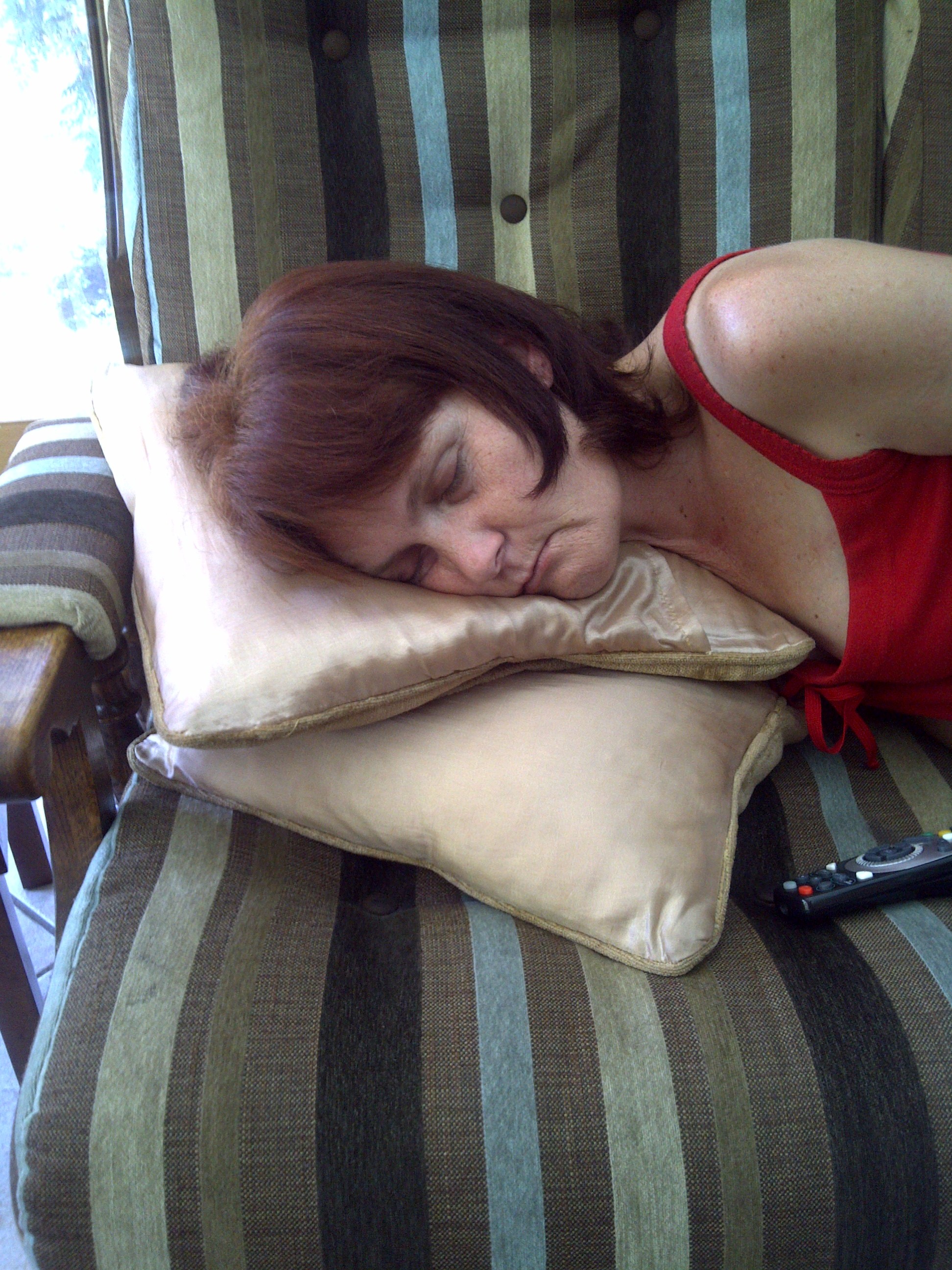
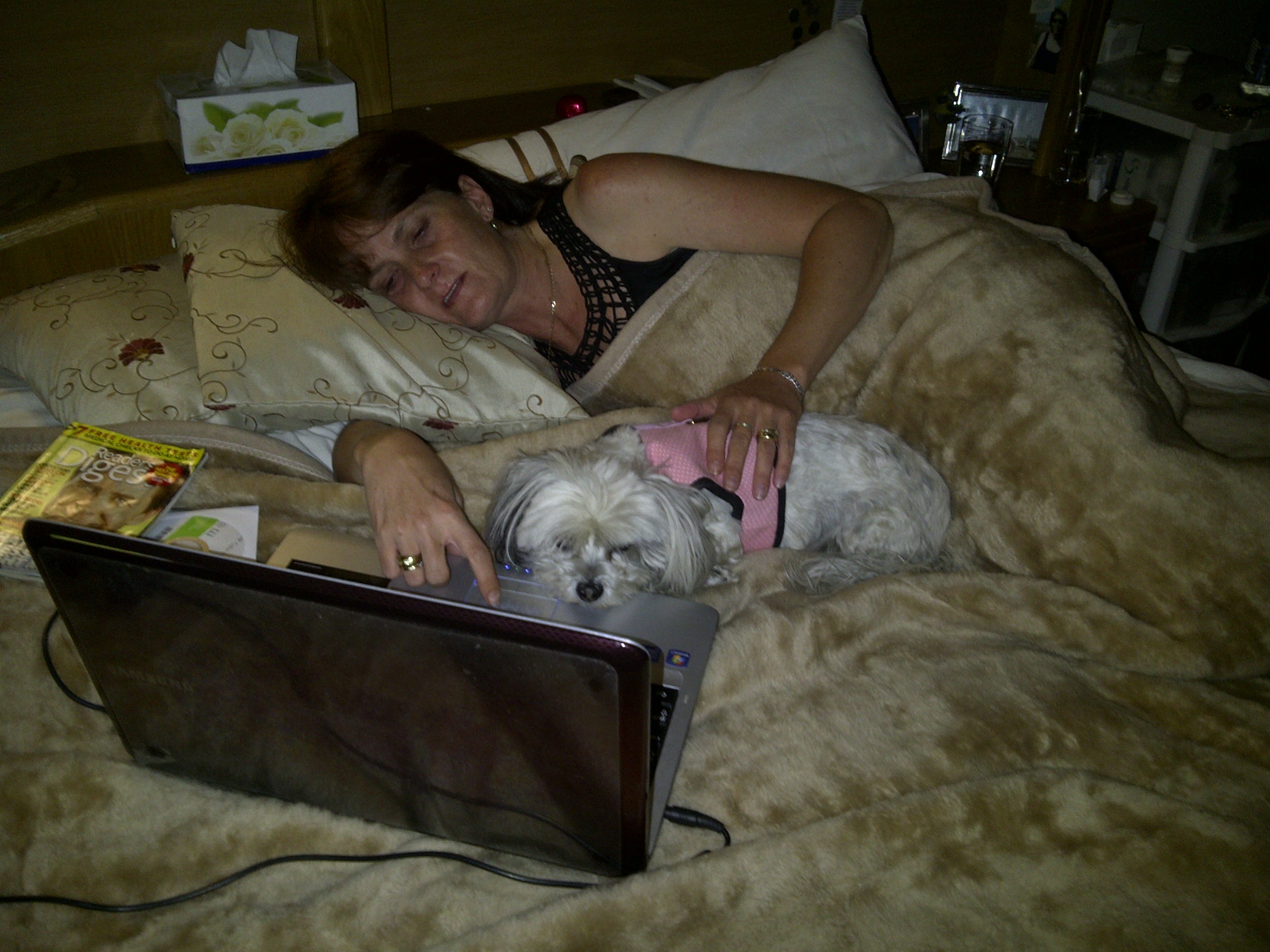
What goes through her mind? Vic does not wallow in misery all the time. She sleeps…Maybe it is not her body shutting down, maybe it is her mind shutting out her situation.
I sit here tonight and I am planning tomorrow. I have to arrange for our oak tree to be pruned and treated, I have to approve a sighting system for the Middle East, inspect some armored vehicles, organize flights for some staff to Saudi, pick the boys up after school, arrange Jared’s extra maths, sign up at a gym… dentist appointment at 09:30 and take care of my beautiful, sick little girl.
Tomorrow morning Vic will have breakfast and then 39 tablets. The boys will kiss her goodbye and Vic will sleep again. Vic will wake up at 11:00, have coffee and tablets. We will try and get her bathed before the boys get home. Primrose will change her linen and clean her room whilst I am bathing and dressing her. Vic will have lunch and fall asleep again…exhausted from the effort of bathing. The boys may or may not find her awake when they come home. Vic will wake up at 15:00 and chat with the boys for a couple of minutes. She will have coffee and tablets. She will sleep until dinner time… Take 39 tablets….. This is her life! The only deviation is the vomit breaks…sometimes it is a couple of bouts a day and sometimes it is at night. Sometimes it is during the day and the night…Extra baths to clean up and extra linen changes…
Her TV remains on 24/7 but I don’t know whether she has watched a complete program in months.
Vic no longer reads, hopes or lives. Vic no longer joins us in the TV lounge or for dinner. She is too ill to get out of bed.
ger Vic very seldom cries anymore. She is stoic in her lonely journey.
As parents, we try not to wallow in the bad prognosis, but we need to be honest with what the prognosis means and the inevitable outcome. We have to accept reality. We have to guide our family through this. Help the boys to get through this as unscathed as humanly possible! We also have to provide an environment that will be peaceful for Vic and allow her space to come to terms with her life.
The most difficult thing for the family is however to tackle the problems of a very ill child rather than each other.
We love one another and support one another. We will survive this ordeal as a family. We are not perfect but who is? We err in love. But we love deeply and always and forever!
We decided that we needed a 2nd opinion on Vic’s arm. We had a 10:45 orthopod appointment with her own Orthopod! (She was treated by the trauma orthopaedic surgeon in hospital)
Well, the orthopedic appointment did not go well at all. Firstly, her original orthopaedic guy would not look at her arm. He is not the treating doctor and it is unethical. Blah, blah, blah. If I had gotten a 2nd opinion on her back Vic may have been spared 10 years of absolute hell!!!!!!!!
Eventually he looked at her knee, which is hurting like hell, and I slipped the humerus X-Rays into the other X-Rays…
We sometimes forget how every tablet Vic takes, affects something else. Vic was diagnosed with Addison’s two or three years ago…
The condition arises from problems with the adrenal gland itself, a state referred to as “primary adrenal insufficiency”, and can be caused by damage by the body’s own immune system, certain infections or various rarer causes. Addison’s disease is also known as chronic primary adrenocortical insufficiency, to distinguish it from acute primary adrenocortical insufficiency, most often caused by Waterhouse-Friderichsen syndrome. “
So, part of Vic’s medicinal regime is Cortisone twice per day. One of the side effects of cortisone is “osteoporosis or other changes in bone which can result in an increased chance of fractures due to brittleness or softening of the bone”. Hello??? Osteogenesis Imperfecta + Addison’s + cortisone = disaster!!!
Yesterday, we were coldly and clinically informed by the Orthopaedic Surgeon that there was no way that the bone would ever mend properly. The humerus cannot be pinned due to the danger of sepsis and the fracture is complicated by severe comminution and poor bone quality. The surgeon said that when her arm is X-rayed in 3 weeks or even in 6 weeks, the fracture will progressively look worse until eventually there will be some callus formation. Another dismal prognosis! I wonder if there will be nerve damage and whether she will ever regain full use of her arm. From the sounds of it she will only be able to come out of the cast and sling in approximately three months’ time.
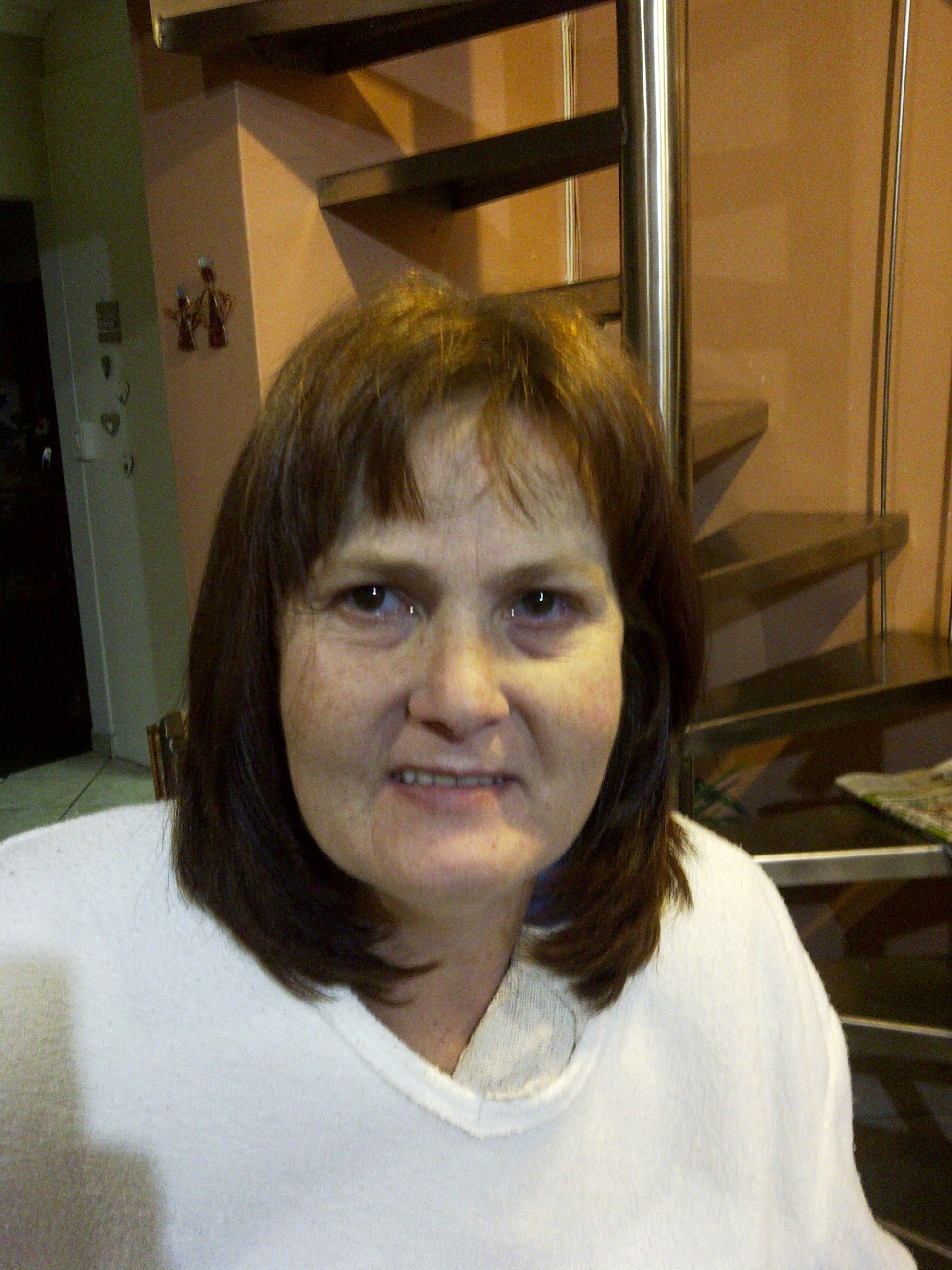
Today I took Vic to the hairdresser and she had a Brazilian blow-dry treatment. Now, for those of you who are as ignorant as I was, this is a “hair straightening” process. Four hours!! Shame Vic was sleeping in the chair…poor baby! She is exhausted but it will make her life so much easier for many months ahead. Vic will not wash and leave her hair – it has to be sleek…Now with this Brazilian blow-dry thing we can wash her hair and leave it! Bliss!!
I never saw my late Mom not immaculately dressed with her hair beautifully done. No matter how ill she was, Mom went to the hairdresser three times a week. Her nails were always immaculate and Mom would get very annoyed with me if I wasn’t wearing make-up and had my hair in a ponytail. “Always the lady” was her motto. As it is Vic’s. I find it absolutely amazing that she insists on getting dressed most days. Well, certainly before the boys get home from school. She does not want the boys to see her in pyjamas. When we wash her hair it must be blow dried…She will not scrunch it or put it up in a ponytail, plait or pin…Vic’s hair has to be sleek…No matter how ill she is.
Her little body is so swollen from the cortisone. Her face looks like a little chipmunk’s! It happens from time to time. What is worrying is that Vic’s blood pressure is steadily increasing. Addison’s symptoms include low blood pressure…so why is Vic all of a sudden developing high blood pressure? And Madam will not see a doctor! What to do?
Vic does look so beautiful after her hairdressing marathon. She is passed out and I know it will take her a week to recover from this outing. But, it is well worth it!
I found the blog of a 19 year old girl – Katie Michele who suffers from Marfan Syndrome. Marfan is a connective tissue disorder. This is a very special young lady who deals with Chronic Pain and the fear of aneurysms every day of her life…I have copied part of one of her blogs addressed “Dear Marfan” because I think this is what Vic could have written when she was younger… Please read her letter to Marfan… it will give you some insight into the heart of an ill teenager.
“I wish I didn’t have to wonder if you’d cause any future child of mine suffering, or if I’d lose my own life in the attempt to have one.
“I wish you hadn’t taken my sports and many of my friends, and replaced them with medications and doctor appointments. You’re constantly reminding me that no part of my body is safe from your consequences and that it’s only a matter of time before something else goes wrong. You hurt me, day in and day out, standing or sitting, year after year, from head to toe. Because of you I talk more often to doctors than I do to people my own age.” http://connectivetissuedisorders.wordpress.com/2012/05/02/dear-marfan/
I wish I did not have to wonder what my child’s life would have been like if she had not been born with OI. Dr Frank S, I wish I did not have to wonder what life would have been if you had not chosen to ignore your colleagues warning on how poor Vic’s tissue is. Dr V, I wish I did not have to wonder what my child’s life would have been if you had not perforated her small bowel, not once but twice! And the biggest wonder of all, I wonder what my child’s life would have been like if I had insisted that Dr S spoke to Dr Coleman.
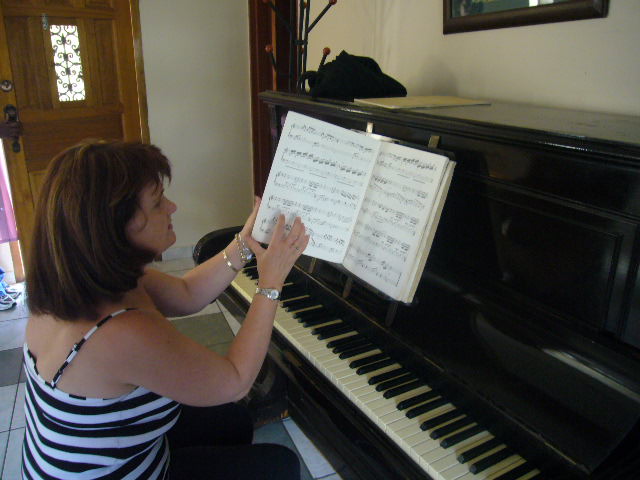
I wish that Vic could have enjoyed her son’s toddler years; that she could have played ball with them, gone on holiday with them. I wish the boys could have known Vic happy and carefree. I wish the boys could remember a day when their Mom was not doubled over in pain, vomiting and sad. I wish they could remember their Mom going to work…looking forward to a normal tomorrow. I wish they could sit and enjoy her playing the piano. I wish that I could wish for Vic to see her son’s finish school, graduate at University, fall in love, get engaged and get married. I cannot. My biggest wish is that my poor child’s suffering will end. That she will truly make peace with giving up… That Vic will stop breathing and that she will float pain free and joyously to join her father and grandparents in Heaven.
Life has many questions. Far more questions than answers. I wonder about the fairness of life. I wonder why Vic has to go through so much pain and agony. I wonder why her boys have to watch her slow decline and painful journey.
I wonder why the bad people, the rapist and murders, thieves and criminals get to live good lives. Why do they have good health?
What has Vic ever done to harm anybody? She was sentenced to a life of pain and misery from conception. PLEASE! I don’t want to hear about the “sins of the fathers” sermon.
A convicted murderer has many appeals before the sentence is executed. A last appeal to the governor or the Supreme Court or who ever for clemency. A terminally ill person does not have that luxury. Their final appeal is to Hospice. Now, what is left for the terminally ill person to do if their last appeal is denied?
They are not kicking and screaming, fighting the sentence anymore. Hospice is their own hope of dying with some dignity and quality of “life” But, like the Supreme Court in the USA and Governor, appeals are rejected quite often. As in Vic’s case.
I will do everything in my power to ensure that Vic is allowed to spend, what is left of her life, as pain free as possible. I will do everything possible to allow her to die with dignity.
I am babbling. And today Vic is having a good day… But tonight lies ahead with it’s pain and terror…
It is 20:00 and Vic has been fed, changed, powdered and medicated. She screamed in pain when I changed her. Seeing my child sick and in pain, every day of her life kills me. I am dying, painfully slowly from my child’s pain.
I don’t know how much longer I can handle this. The chronic pain I am used to but this new pain is pushing all of us over the edge.
Esther called today and wants Danie and I to go to a Spa, close by, and she and Tracey will take turns in looking after Vic… How nice is that!! But I cannot. I cannot leave Vic now. Nobody knows her body the way I do. It is too big a responsibility to hand over to anyone. She needs lots of personal help. Vic needs pain meds’ every four hours, day and night. If she misses med’s she breaks through her pain levels and then it is disastrous. What if she needs help during the night as she so often does? What if she vomits and needs me? No can do!! I cannot desert Vic. Until she breathes her last breath I will be by her side. No matter how long it takes.
Many years ago I promised Vic that I would not let her die alone.
When Jesus was praying in Gethsemane his disciples fell asleep on Him. I am so scared that I will fall asleep on Vic in her final hour. I don’t think Vic is near the end. I have been around dying people enough to know the signs. But she needs me now.
I am posting this extract from the Osteogenesis Imperfectawebsite. It is informative and will give you some idea of the terrible disease called Osteogenesis Imperfecta.The problem with Vic is the Connective Tissue issues. If she had not had the blotched pro-disc surgery she would have been fine.
Vic is terminal due to doctor error! Vic will probably die from her frozen abdomen and the issues that arise from a frozen abdomen. That is the short and the tall of it.
Osteogenesis imperfecta (OI) is a genetic disorder characterized by fragile bones that break easily. It is also known as “brittle bone disease.” A person is born with this disorder and is affected throughout his or her life time.
In addition to fractures people with OI often have muscle weakness, hearing loss, fatigue, joint laxity, curved bones, scoliosis, blue sclerae, dentinogenesis imperfecta (brittle teeth), and short stature. Restrictive pulmonary disease occurs in more severely affected people.
OI is caused by an error called a mutation on a gene that affects the body’s production of the collagen found in bones, and other tissues. It is not caused by too little calcium or poor nutrition.
OI is variable with 8 different types described in medical literature.
The types range in severity from a lethal form to a milder form with few visible symptoms.
The specific medical problems a person will encounter will depend on the degree of severity.
A person with mild OI may experience a few fractures while those with the severe forms may have hundreds in a lifetime.
The number of Americans affected with OI is thought to be 25,000-50,000.
The range is so wide because mild OI often goes undiagnosed.
Genetics
The majority of cases are caused by a dominant mutation to type 1 collagen (COL1A1 or COL1A2) genes
Other types are caused by mutations of the cartilage-associated protein (CRTAP) gene or the LEPRE1 gene. This type of mutation is inherited in a recessive manner.
OI occurs with equal frequency among males and females and among all racial and ethnic groups.
Approximately 35% of children with OI are born into a family with no family history of OI. Most often this is due to a new mutation to a gene and not by anything the parents did before or during pregnancy.
Testing and Diagnosis
Diagnosis for OI is primarily based on signs seen in a doctor’s examination. When there is uncertainty about the diagnosis, it is best to consult a physician who is familiar with OI. Genetic testing is available to confirm a diagnosis of OI through collagen or gene analysis—a skin sample or a blood sample are used to study the amount of Type I collagen or to do a DNA analysis.
Types
Since 1979, OI has been classified by type according to a system based on mode of inheritance, clinical picture, and information from x-rays. The characteristic features of OI vary greatly from person to person, even among people with the same type of OI, and even within the same family. Not all characteristics are evident in each person. The OI type descriptions provide general information about how severe the symptoms probably will be. Health issues frequently seen in children and adults who have OI include:
Short stature
Weak tissues, fragile skin, muscle weakness, and loose joints
Bleeding, easy bruising, frequent nosebleeds and in a small number of people heavy bleeding from injuries
Hearing loss may begin in childhood and affects approximately 50% of adults
Breathing problems, higher incidence of asthma plus risk for other lung problems
Doctors who see children and adults with OI include primary care physicians, orthopedists, endocrinologists, geneticists and physiatrists (rehabilitation specialists). Other specialists such as a neurologist may be needed.
Treatments focuses on minimizing fractures, maximizing mobility, maximizing independent function and general health
Treatments include
Physical therapy and safe exercise including swimming
Casts, splints or wraps for broken bones
Braces to support legs, ankles, knees and wrists as needed
Orthopedic surgery, often including implanting rods to support the long bones in arms or legs
Medications to strengthen bones
Mobility aids such as canes, walkers, or wheelchairs and other equipment or aids for independence may be needed to compensate for weakness or short stature.
The prognosis for a person with OI varies greatly depending on the number and severity of symptoms.
Life expectancy is not affected in people with mild or moderate symptoms.
Life expectancy may be shortened for those with more severe symptoms.
The most severe forms result in death at birth or during infancy.
Respiratory failure is the most frequent cause of death for people with OI, followed by accidental trauma.
Despite the challenges of managing OI, most adults and children who have OI lead productive and successful lives. They attend school, develop friendships and other relationships, have careers, raise families, participate in sports and other recreational activities and are active members of their communities.
Managing OI
Techniques for safe handling, protective positioning and safe movement are taught to parents
Infancy, early childhood and the pre-teen years are often challenging
Growth and hormonal changes can affect the frequency of fractures
Children and youth learn which activities to avoid and how to practice energy conservation
The number of fractures usually decreases in adulthood
Following a healthy lifestyle including not smoking, and maintaining a healthy weight is beneficial
History of OI in Medical Literature
There is evidence that OI has affected people throughout history. OI has been recognized in an Egyptian mummy dating from 1000 BC. It has also been identified as the medical condition suffered by Ivan the Boneless who lived in 9th century Denmark. Prince Ivan, according to legend, was carried into battle on a shield because he was unable to walk on his soft legs.
Case studies of fragile bones and hearing loss have appeared in the medical literature since the 1600s.The term “osteogenesis imperfecta” was originated by W. Vrolik in 1849, and the condition was loosely divided into “congenita” and “tarda” by E. Looser in 1906. Van der Hoeve in 1918 described the occurrence of fragile bones, in combination with blue sclera and early deafness as a distinct inherited syndrome.
In the 1970s, Dr. David Sillence and his team of researchers in Australia developed the system of categorization using “Types” that is currently in use. His original four classifications (Type I, Type II, Type III and Type IV) combine clinical symptoms with genetic components. This listing is based on the number of people in the study who had similar symptoms. The types do not go from mildest to most severe. This classification system has been generally accepted world wide since 1979 but continues to evolve as new information is discovered. In recent years, evidence from bone biopsies and other research led to the addition of Types V, VI, VII and VIII.
 There are times that Vic cannot remember – the times that she was in ICU, ventilated, sedated, critically ill – all of this the boys lived. Vic does not know what tomorrow holds but if Jared is diagnosed with OI he will know exactly what lies ahead of him. I see the helplessness in his eyes when he looks at her. I hear his frustration with her battle… Please, if there is a God of Mercy, let Jared be spared this.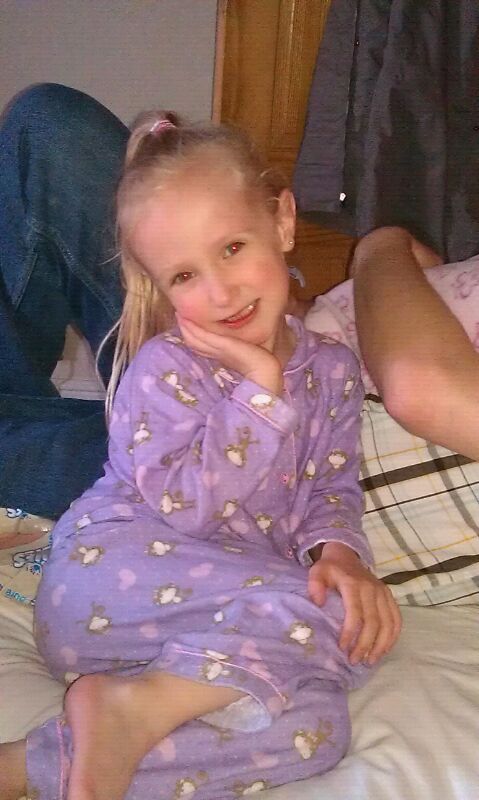

 Vic's Final Journey