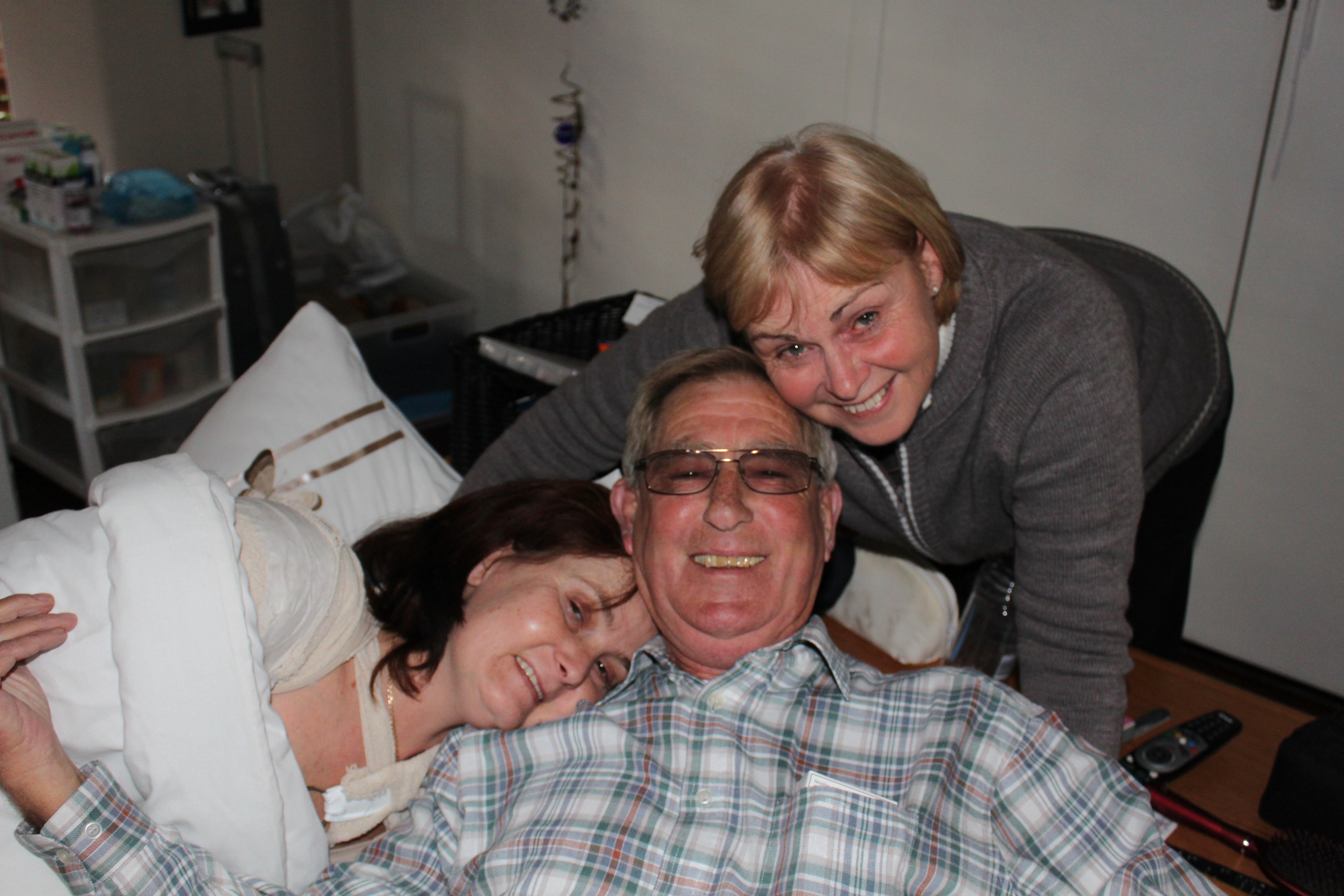
Dying is a lonely journey. Not only for the sick person but also for the family. As hard as we may try to avoid death, the truth is that we do a lousy job of it. Science and medicine will certainly postpone it, even staying healthy might seem to delay it, but the harsh reality is that death does not wait for you, it does not ask you, and it does not listen to you. Death ignores your feelings and wants; you do not matter to death…Death is the only certainty in life! We need to remember that our existence here is fragile, and we never have as much time with people as we think we do. If there is someone or someones out there that you love, don’t neglect that and don’t put off engaging with them because waits for no-one… Vic's Journey ended on 18 January 2013 at 10:35. She was the most courageous person in the world and has inspired thousands of people all over the world. Vic's two boys are monuments of her existence. She was an amazing mother, daughter, sister and friend. I will miss you today, tomorrow and forever my Angle Child.
It was with fear and trepidation that I gave Vic her medication last night. Esther, (Vic’s big sister and a pharmacist) asked me whether the Jurnista replaced the morphine and was just a little surprised that it was in addition to the Morphine, Neurontin, Degrenol and Stilpayne. My research really scared me yet strangely I was at peace.
By 24:00 Vic felt no difference and her pain was at a solid 9. By 02:00 her pain was a little easier. Vic had a fairly good night. But she is having a very good day!!! The Jurnista appears to be working! Vic rested well this morning and went out for coffee with Tracey! How absolutely amazing is that!
Last Sunday, Frik, a Christian colleague phoned me after church and asked me to give Vic a message. “Please tell Vicky that God wants me to tell her that He loves her”… She was too ill and I only told her on Tuesday. I missed the Tuesday Pain Clinic appointment… On Thursday the Pain Clinic doctor is a wonderful, compassionate, young Muslim man who showed mercy and compassion …
My faith has often wavered over the past ten years. Not in God but in a God of Mercy. The actions of the church, Christians, doctors, nursing staff, radiologists, Hospice, family and friends, mostly reflected a cold, loveless society that does not begin to understand what compassion means
When we first received Vic’s death sentence there was an absolute outpouring of love. But I suppose she did not die soon enough and people slowly and discreetly disappeared out of our lives. My blog is three months old and most of you too may get tired of the waiting game and stop reading it and disappear into cyberspace. Well, this time you cannot hurt us because you are faceless.
I am digressing. This week we were reminded that there are still angels around. A compassionate man who prays for pain relief of a young woman he has never met, a doctor who prescribes palliative care medication… The Jurnista could hasten Vic’s imminent demise but I don’t care. I would rather she spend one pain free day with her boys and family than a lifetime in the pain that she lives with.
Many people have left wonderful caring messages on my email, comments on the blog and Facebook. Thank you! It really does mean a lot to us. Vic does not read my blog neither do her boys. But Vic has truly appreciated the contact some of her old school friends have made. As I said before, dying is a lonely business!
But today we celebrate the wonderful new drug! I thank God for sending angels along our way. I thank God for His message through Frik, when I was at the lowest low in my life!! I thank God for Dr Jaffer Hussain! I thank God for your messages of encouragement and above all I thank God for Vic’s good day! Thank you, thank you, thank you God! Even if it is only one good day!
Some people take their time and linger. Some people get it over with quickly. For some dying is hard work. But all of us are heading towards the same destination. Passing through our physical stages of dying. Into death…
“Too often we underestimate the power of a touch, a smile, a kind word, a listening ear, an honest compliment, or the smallest act of caring, all of which have the potential to turn a life around.” Leo Buscaglia
I am disgustingly healthy! I do not get headaches, toe-aches, tummy aches, ear aches or any aches or pains. Every five years or so I get the flu and am totally unable to deal with the discomfort or pain of flu…I will stay in bed and when I hear Danie walking up the stairs to our room I will actually start groaning. It is involuntary. I am a ninny. My family joke with my non-existant pain threshold. Yet I see the doctor once a year for an annual check-up as I did last week.
Liver, lungs, kidneys perfect according to my blood tests. Slightly elevated cholesterol count. Doctor says I am in near perfect health. So how do I understand my child’s pain and discomfort? I don’t! If you were born blind how could you ever understand or appreciate color?
There is a very brave young lady called Katie Mitchell, who suffers from Marfan’s Syndrome. http://connectivetissuedisorders.wordpress.com Katie gives me an insight into pain… She articulates her feelings beautifully. Katie lives, breathes and understands pain… Katie has become my window into Vic’s painful journey…Katie re-posted a blog on pain and I found it so enlightening. I will actually print the document and discuss it with the family.
Katie writes in red and my comments are in black:
Tips for dealing with people in pain:
1.People with chronic pain seem unreliable (we can’t count on ourselves). When feeling better we promise things (and mean it); when in serious pain, we may not even show up.Vic is always trying to go to breakfast with Angela, lunch with Mrs Cramp and coffee with Tracey. Vic very seldom is able to stick to a commitment. It fills her with remorse. She desperately wants some normality in her life. Some semblance of a social life. Pain and ill-health prevent it!
2.An action or situation may result in pain several hours later, or even the next day. Delayed pain is confusing to people who have never experienced it.Oh this I truly relate to…Vic sitting in the sun and crashing later, Vic trying to participate in a family barbecue and spending a week in bed to recover… Every action has a painful consequence! As a family we dread Vic’s brave (but stupid as far as we are concerned) attempts of participating in life. As a family we become angry, frustrated and scared when Vic tries to “live”!
3.Pain can inhibit listening and other communication skills. It’s like having someone shouting at you, or trying to talk with a fire alarm going off in the room. The effect of pain on the mind can seem like attention deficit disorder. So you may have to repeat a request, or write things down for a person with chronic pain. Don’t take it personally, or think that they are stupid. I never realized or appreciated this aspect of pain. I often thought to myself Vic must be doped up, disinterested… As a family we were not aware of this aspect of pain. Vic at times seems totally disinterested in the boys, the family, in life…
4.The senses can overload while in pain. For example, noises that wouldn’t normally bother you, seem too much.Vic battles with too much movement or noise. She becomes very irritated.
5.Patience may seem short. We can’t wait in a long line; can’t wait for a long drawn out conversation.Absolutely!! If Vic wants something she wants it now!
6.Don’t always ask “how are you” unless you are genuinely prepared to listen it just points attention inward.Sometimes I am too scared to ask. Some day’s I say “Oh, you are looking so great today” and Vic will reply “Oh good…” and I know that she is thinking “Tell my body! I am feeling like death”
7.Pain can sometimes trigger psychological disabilities (usually very temporary). When in pain, a small task, like hanging out the laundry, can seem like a huge wall, too high to climb over. An hour later the same job may be quite OK. It is sane to be depressed occasionally when you hurt.Tonight Vic could not rub the hand cream into her little hands. She could not pull a brush through her hair…
8.Pain can come on fairly quickly and unexpectedly. Pain sometimes abates after a short rest. Chronic pain people appear to arrive and fade unpredictably to others. I think Vic is past this stage. Her pain is debilitating relentless and never-ending!
9.Knowing where a refuge is, such as a couch, a bed, or comfortable chair, is as important as knowing where a bathroom is. A visit is much more enjoyable if the chronic pain person knows there is a refuge if needed. A person with chronic pain may not want to go anywhere that has no refuge (e.g. no place to sit or lie down). We are past the visiting stage.
10.Small acts of kindness can seem like huge acts of mercy to a person in pain. Your offer of a pillow or a cup of tea can be a really big thing to a person who is feeling temporarily helpless in the face of encroaching pain.Every small action elicits a “Thank you Mommy” Reuben actually remarked that in the past Vic took everything that I did for her for granted. At this stage of her life Vic drives me absolutely mad with all the “Thank-You’s”
11.Not all pain is easy to locate or describe. Sometimes there is a body-wide feeling of discomfort, with hard to describe pains in the entire back, or in both legs, but not in one particular spot you can point to. Our vocabulary for pain is very limited, compared to the body’s ability to feel varieties of discomfort. Vic’s pain is well-defined but at times she has referred pain.
12.We may not have a good “reason” for the pain. Medical science is still limited in its understanding of pain. Many people have pain that is not yet classified by doctors as an officially recognized “disease”. That does not reduce the pain, – it only reduces our ability to give it a label, and to have you believe us.We do not understand pain. I never have pain. I cannot imagine not being able to walk, run, work, function, drive, live due to debilitating pain. I groan from flu-pain…I don’t know how it feels to have a frozen abdomen, fractured vertebrae, migraines from skeletal collapse, chronic and unrelenting tissue pain…. There are times that I think surely it cannot be that bad? I don’t understand Vic screaming with pain but I KNOW her pain is real!!!
In addition to the above I would like to add some of my own observations…
13. Pain makes people emotionally over-sensitive. Vic often misinterprets what we say. She takes things very personally! She is almost jealous of the boys and my relationship. She feels excluded from so many aspects of our lives. Last week Vic said “You are the fun-Oumie. I don’t make my boys laugh”… She is very sensitive as to who the boys ask permission to do things or go places… It is okay because she is scared of losing everything that is precious and dear to her.
14. Pain makes people selfish. This is a harsh statement. When your body is engulfed in pain it must be very difficult to see reason and to wait. It must be difficult not to lash out at the world. To not stop and think of the effect that your illness has on your family and friends.
15. Chronic pain and depression are closely linked. Chronic pain almost always leads to depression: Why? Just imagine a life consisting of dreadful, mind-blowing, unrelenting pain? Imagine not having anything to look forward to… We try to set little goals for Vic.
16. Fatigue is a definite factor.
23.2.2012
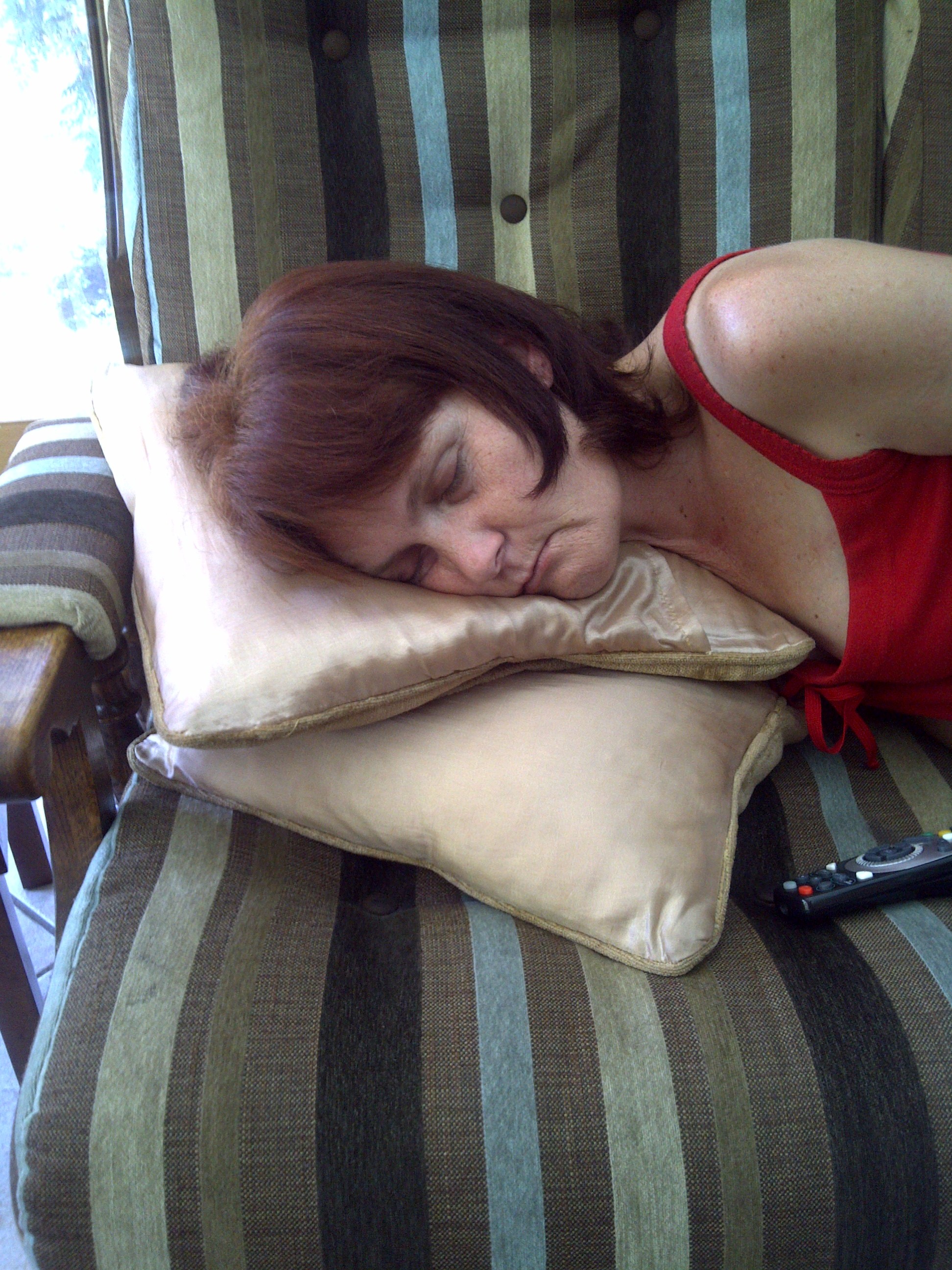
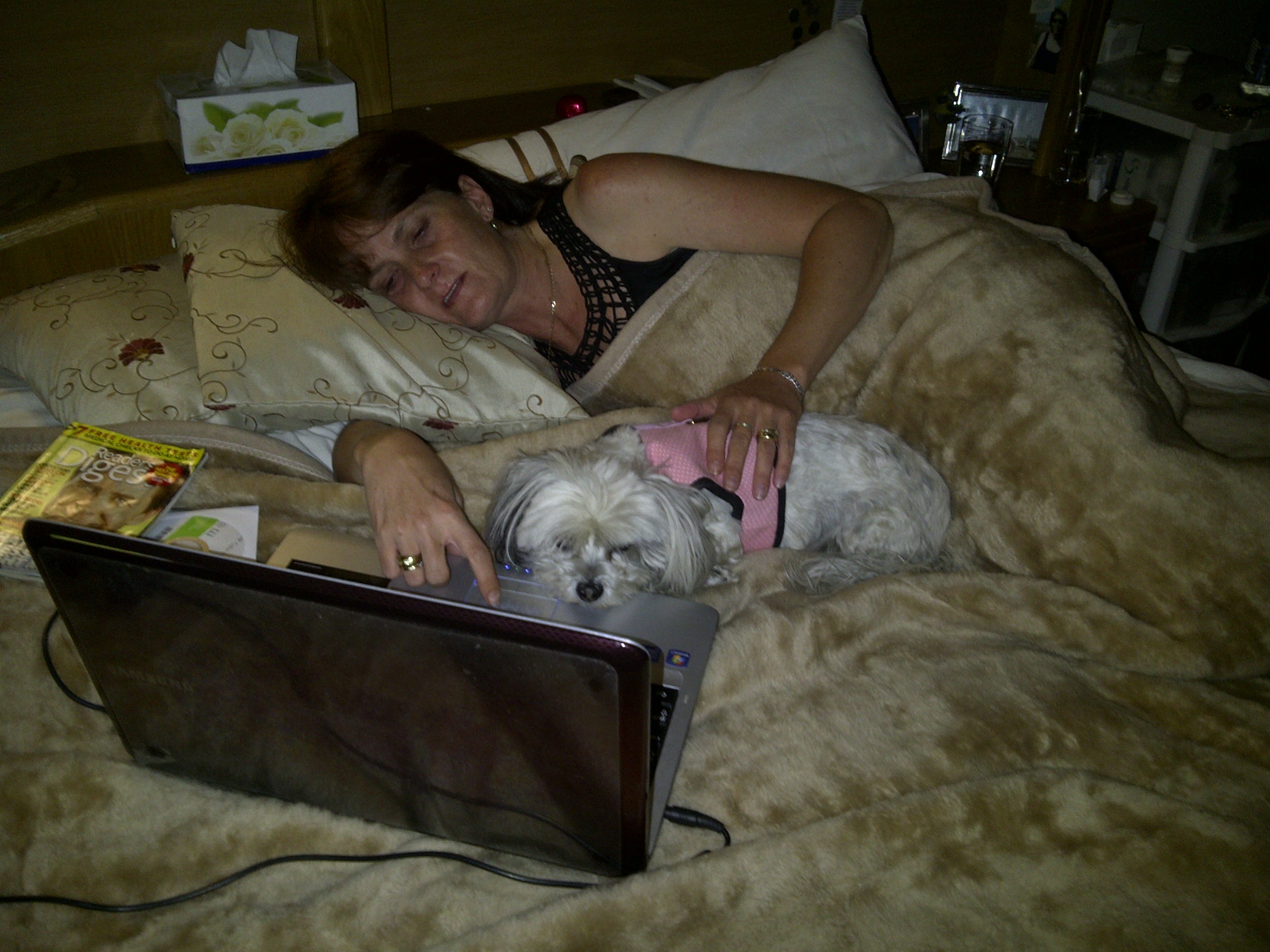
Whether it is the pain medication or the emotional strain of coping with the pain, Vic is chronically and permanently tired. We leave her to sleep. We are far happier seeing her in bed than seeing her battle to walk, sit or participate…It stresses us that she gets up when she is so tired. Vic falls asleep in a chair, the bath, the car, on her feet… We are at loggerheads with Vic in this regard… We want what is best for her…
17. Addiction:- “Patients often fear addiction. Patients with chronic pain do not and cannot get addicted to morphine. This is proved clinically by seeing patients whose pain is abolished (with a nerve block, for example) when even high doses of morphine used for several months can be stopped immediately with no withdrawal effects. Patients who are terminally ill still often fear that they may become addicted to morphine. They and their families can be reassured. This cannot happen when morphine is correctly used to control their pain. http://www.hospiceworld.org/book/morphine.htm“
The amount of medication that Vic takes is a source of great embarrassment to her. Her biggest fear is that people will think of her as a “drug addict”. This often prevents her from taking adequate medication. Do not even jokingly call someone who is chronically ill a drug addict…You have no idea what you are talking about! Quite frankly I don’t care whether Vic is an addict or not…as long as she has some quality of breathing or life as she now knows it.
I wish I could research exotic vacation spots rather than “Tip’s for dealing with people with pain” But this is part of our journey…
It is 20:00 and Vic has been fed, changed, powdered and medicated. She screamed in pain when I changed her. Seeing my child sick and in pain, every day of her life kills me. I am dying, painfully slowly from my child’s pain.
I don’t know how much longer I can handle this. The chronic pain I am used to but this new pain is pushing all of us over the edge.
Esther called today and wants Danie and I to go to a Spa, close by, and she and Tracey will take turns in looking after Vic… How nice is that!! But I cannot. I cannot leave Vic now. Nobody knows her body the way I do. It is too big a responsibility to hand over to anyone. She needs lots of personal help. Vic needs pain meds’ every four hours, day and night. If she misses med’s she breaks through her pain levels and then it is disastrous. What if she needs help during the night as she so often does? What if she vomits and needs me? No can do!! I cannot desert Vic. Until she breathes her last breath I will be by her side. No matter how long it takes.
Many years ago I promised Vic that I would not let her die alone.
When Jesus was praying in Gethsemane his disciples fell asleep on Him. I am so scared that I will fall asleep on Vic in her final hour. I don’t think Vic is near the end. I have been around dying people enough to know the signs. But she needs me now.
I am posting this extract from the Osteogenesis Imperfectawebsite. It is informative and will give you some idea of the terrible disease called Osteogenesis Imperfecta.The problem with Vic is the Connective Tissue issues. If she had not had the blotched pro-disc surgery she would have been fine.
Vic is terminal due to doctor error! Vic will probably die from her frozen abdomen and the issues that arise from a frozen abdomen. That is the short and the tall of it.
Osteogenesis imperfecta (OI) is a genetic disorder characterized by fragile bones that break easily. It is also known as “brittle bone disease.” A person is born with this disorder and is affected throughout his or her life time.
In addition to fractures people with OI often have muscle weakness, hearing loss, fatigue, joint laxity, curved bones, scoliosis, blue sclerae, dentinogenesis imperfecta (brittle teeth), and short stature. Restrictive pulmonary disease occurs in more severely affected people.
OI is caused by an error called a mutation on a gene that affects the body’s production of the collagen found in bones, and other tissues. It is not caused by too little calcium or poor nutrition.
OI is variable with 8 different types described in medical literature.
The types range in severity from a lethal form to a milder form with few visible symptoms.
The specific medical problems a person will encounter will depend on the degree of severity.
A person with mild OI may experience a few fractures while those with the severe forms may have hundreds in a lifetime.
The number of Americans affected with OI is thought to be 25,000-50,000.
The range is so wide because mild OI often goes undiagnosed.
Genetics
The majority of cases are caused by a dominant mutation to type 1 collagen (COL1A1 or COL1A2) genes
Other types are caused by mutations of the cartilage-associated protein (CRTAP) gene or the LEPRE1 gene. This type of mutation is inherited in a recessive manner.
OI occurs with equal frequency among males and females and among all racial and ethnic groups.
Approximately 35% of children with OI are born into a family with no family history of OI. Most often this is due to a new mutation to a gene and not by anything the parents did before or during pregnancy.
Testing and Diagnosis
Diagnosis for OI is primarily based on signs seen in a doctor’s examination. When there is uncertainty about the diagnosis, it is best to consult a physician who is familiar with OI. Genetic testing is available to confirm a diagnosis of OI through collagen or gene analysis—a skin sample or a blood sample are used to study the amount of Type I collagen or to do a DNA analysis.
Types
Since 1979, OI has been classified by type according to a system based on mode of inheritance, clinical picture, and information from x-rays. The characteristic features of OI vary greatly from person to person, even among people with the same type of OI, and even within the same family. Not all characteristics are evident in each person. The OI type descriptions provide general information about how severe the symptoms probably will be. Health issues frequently seen in children and adults who have OI include:
Short stature
Weak tissues, fragile skin, muscle weakness, and loose joints
Bleeding, easy bruising, frequent nosebleeds and in a small number of people heavy bleeding from injuries
Hearing loss may begin in childhood and affects approximately 50% of adults
Breathing problems, higher incidence of asthma plus risk for other lung problems
Doctors who see children and adults with OI include primary care physicians, orthopedists, endocrinologists, geneticists and physiatrists (rehabilitation specialists). Other specialists such as a neurologist may be needed.
Treatments focuses on minimizing fractures, maximizing mobility, maximizing independent function and general health
Treatments include
Physical therapy and safe exercise including swimming
Casts, splints or wraps for broken bones
Braces to support legs, ankles, knees and wrists as needed
Orthopedic surgery, often including implanting rods to support the long bones in arms or legs
Medications to strengthen bones
Mobility aids such as canes, walkers, or wheelchairs and other equipment or aids for independence may be needed to compensate for weakness or short stature.
The prognosis for a person with OI varies greatly depending on the number and severity of symptoms.
Life expectancy is not affected in people with mild or moderate symptoms.
Life expectancy may be shortened for those with more severe symptoms.
The most severe forms result in death at birth or during infancy.
Respiratory failure is the most frequent cause of death for people with OI, followed by accidental trauma.
Despite the challenges of managing OI, most adults and children who have OI lead productive and successful lives. They attend school, develop friendships and other relationships, have careers, raise families, participate in sports and other recreational activities and are active members of their communities.
Managing OI
Techniques for safe handling, protective positioning and safe movement are taught to parents
Infancy, early childhood and the pre-teen years are often challenging
Growth and hormonal changes can affect the frequency of fractures
Children and youth learn which activities to avoid and how to practice energy conservation
The number of fractures usually decreases in adulthood
Following a healthy lifestyle including not smoking, and maintaining a healthy weight is beneficial
History of OI in Medical Literature
There is evidence that OI has affected people throughout history. OI has been recognized in an Egyptian mummy dating from 1000 BC. It has also been identified as the medical condition suffered by Ivan the Boneless who lived in 9th century Denmark. Prince Ivan, according to legend, was carried into battle on a shield because he was unable to walk on his soft legs.
Case studies of fragile bones and hearing loss have appeared in the medical literature since the 1600s.The term “osteogenesis imperfecta” was originated by W. Vrolik in 1849, and the condition was loosely divided into “congenita” and “tarda” by E. Looser in 1906. Van der Hoeve in 1918 described the occurrence of fragile bones, in combination with blue sclera and early deafness as a distinct inherited syndrome.
In the 1970s, Dr. David Sillence and his team of researchers in Australia developed the system of categorization using “Types” that is currently in use. His original four classifications (Type I, Type II, Type III and Type IV) combine clinical symptoms with genetic components. This listing is based on the number of people in the study who had similar symptoms. The types do not go from mildest to most severe. This classification system has been generally accepted world wide since 1979 but continues to evolve as new information is discovered. In recent years, evidence from bone biopsies and other research led to the addition of Types V, VI, VII and VIII.
What a lovely surprise. Gillian and Len popped around for a cup of tea! What makes it unusual is the fact that they live in White River and have just been to the Sani Pass. Vic was so happy. She cried tears of happiness when she saw Len. For a precious hour today we were able to laugh and visit with dear friends.
Len is the second “oldest” living male role figure in Vic’s life. My brother Johan is the “oldest” living male role model. Gill and Len have been my dearest friends for the past 34 years. Is oldest the correct word? Len is older than Johan and yet Johan is the “oldest” male…So “oldest” in this case means the “longest around”…
Gill was so amazed. When she last saw Vic she was convinced that she would not see Vic alive again… In the meantime Vic has had her fall and technically speaking should be so much worse off. But Vic has once again bounced back.
I decided that maybe I should check the difference between critical, chronic and terminal illness. Maybe Vic is just chronically ill and the doctors got the terminology wrong.
“A chronic condition is a human health condition or disease that is persistent or otherwise long-lasting in its effects.[1] The term chronic is usually applied when the course of the disease lasts for more than three months.[1] Common chronic diseases include arthritis, asthma, cancer, COPD, diabetes and HIV/AIDS”. From Wikipedia
Critical illnesses are serious illnesses that put the afflicted in danger of possibly dying. The illnesses that are considered critical tend to vary. Typically the big four critical illnesses that are covered would be heart attack, cancer, stroke and coronary artery by-pass surgery.
“Terminal illnessis a medical term popularized in the 20th century to describe a disease that cannot be cured or adequately treated and that is reasonably expected to result in the death of the patient within a short period of time. This term is more commonly used for progressive diseases such as cancer or advanced heart disease than for trauma. In popular use, it indicates a disease which will eventually end the life of the sufferer”. From Wikipedia
So according to Wikipedia Vic squarely falls into the terminal illness category.
The experience of death and dying has been transformed over time by significant advances in medical care and technologies, from a short-term event into one that usually involves a prolonged time of slow decline from chronic degenerative conditions.
Let’s look at Vic. Vic was diagnosed with Osteogenesis Imperfectaas the age of 18 months. By her 3rd birthday Vic had had 41 fractures. The prognosis: – Vic would not live to be older than 12
Vic survived her 12th birthday and got married at the age of 21. Vic fell pregnant 6 weeks after the wedding. The prognosis: Vic would not survive the birth of her baby.
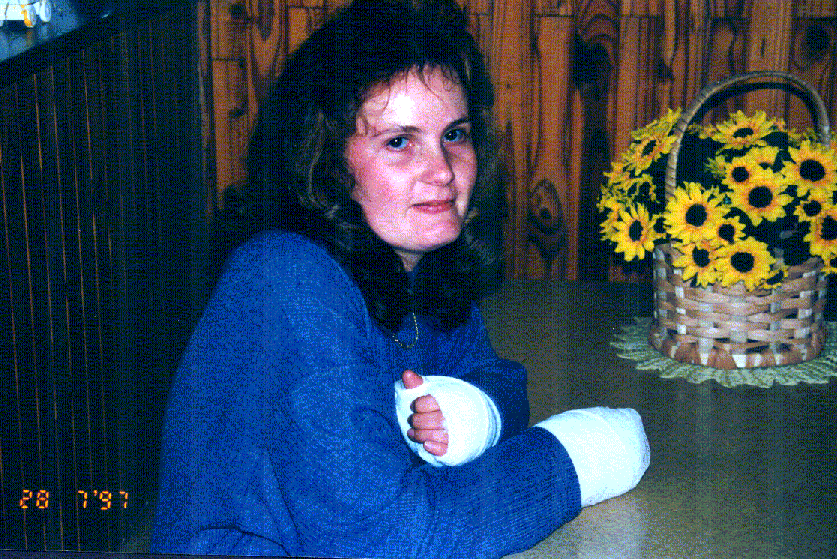
Vic survived the birth of Jared. When he was 7 months old Vic needed surgery to both her wrists. She had fractured both her wrists and torn the ligaments picking up her baby. When Jared was 13 months old Vic fell pregnant for the second time. The prognosis: Vic and the baby would not survive the pregnancy. Vic was on bed rest when she was 3 months into her 2nd pregnancy.
It was a difficult pregnancy. Vic survived and so did Jon-Daniel.
At the age of 26 Vic had a hysterectomy. Age 27 Vic had her blotched pro-disc surgery. Life threatening sepsis resulted in 80, mainly abdominal surgeries. Now in 2012 there is no further treatment or surgeries available. Over the past 10 years Vic has bounced between life and death. She has certainly had good times as well as bad times over the past 10 years. She has loved and hated, laughed and cried. She has had good days and real bad days. She has raised two beautiful boys to be compassionate, caring, responsible young men. Boys that have brought so much joy to their mother’s life and that make us all so proud. Young men that we know will honor their mother and their upbringing for the rest of their lives.
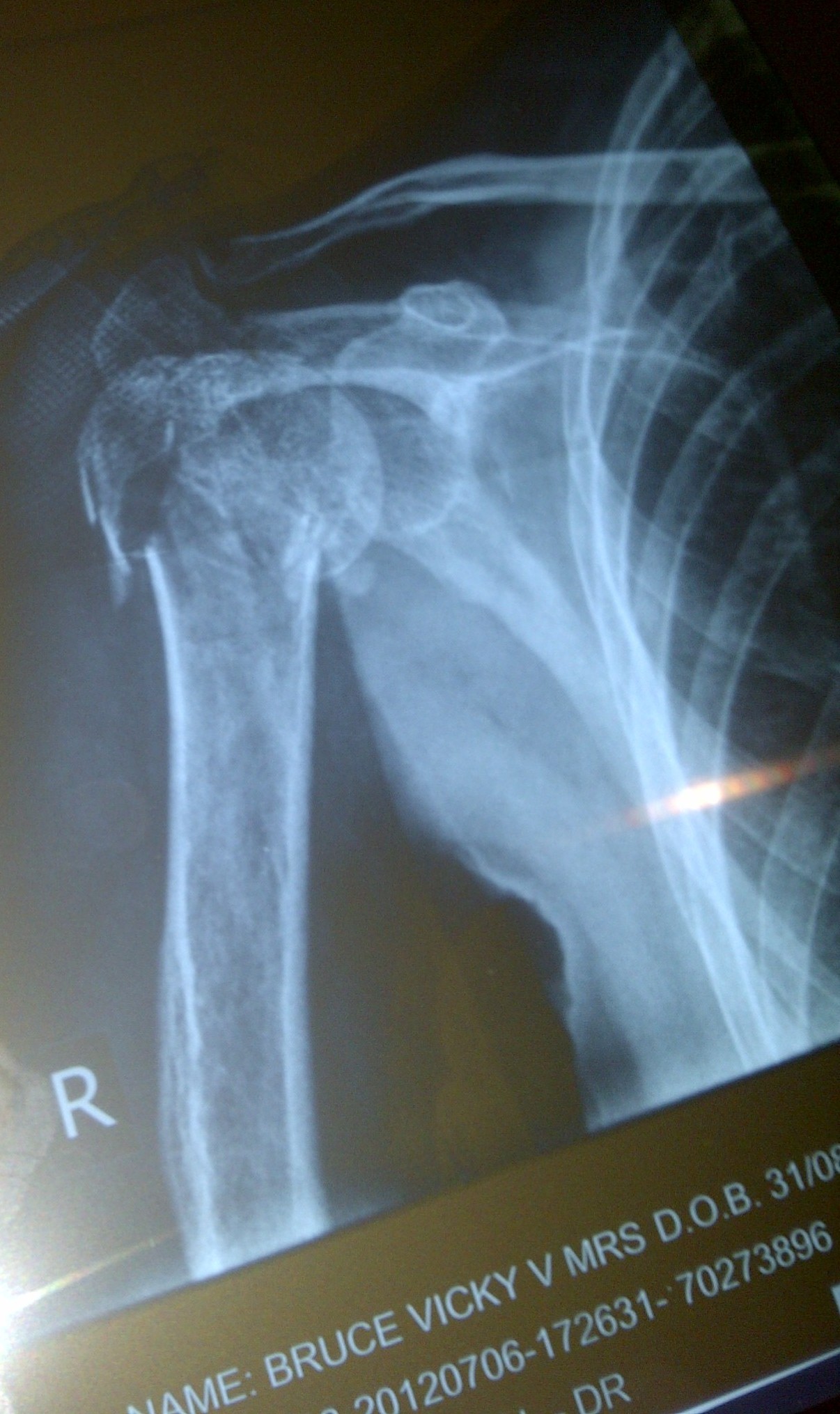
The difference however is that this year I believe Vic went from chronic illness to terminal illness. This year the medical profession has given up hope. Brendon has categorically stated he will perform no further gastrointestinal operations on Vic, The orthopedic surgeon refuses to pin her arm and the physician cancels blood tests… On Friday we went back to the orthopod as her hand is so swollen and the pain is getting worse in the arm. The X-rays showed that the fracture has been aggravated. The displacement worse and yet he cannot do anything. The sepsis from the spine and abdomen will spread to the arm.
Everyone has given up on Vic.
It is so soul destroying that no-one is prepared to try anymore. This year every darn doctor has refused me. I have always been able to bully them into trying one more time…just one more time. I cannot take Vic to another gastroenterologist because someone who does not know the condition of her abdomen will certainly cause her death.
Tonight, after Vic’s 23:00 medication she just sobbed and sobbed. I know her arm is really hurting. She asked me to lay with her and I held her until her sobs subsided and her breathing became deep and peaceful. She kept murmuring “I am sorry Mommy…”
Sorry for what? Vic is sorry that she has “let me down”. That she has failed at surviving and truly bouncing back. Being able to maintain a “life” and assuming responsibility for her own household and family.
Gill gently suggested that I blog happy moments… So when I sat down tonight I tried to think of happy moments to share but I could not! Gill says my blog is sad and I suppose it is. The blog however mirrors my deepest feelings.
I am sad for my beautiful little girl. I am sad seeing Vic deteriorate and her suffering increase. I am sad for my beautiful grandsons and the despair in their eyes when they look at their Mom…
 Vic's Final Journey