Relax, it’s just a bend, not the end!


Relax, it’s just a bend, not the end!.

Thank you God! 20.7.2012


Thank you God! 20.7.2012.

Thank you God! 20.7.2012


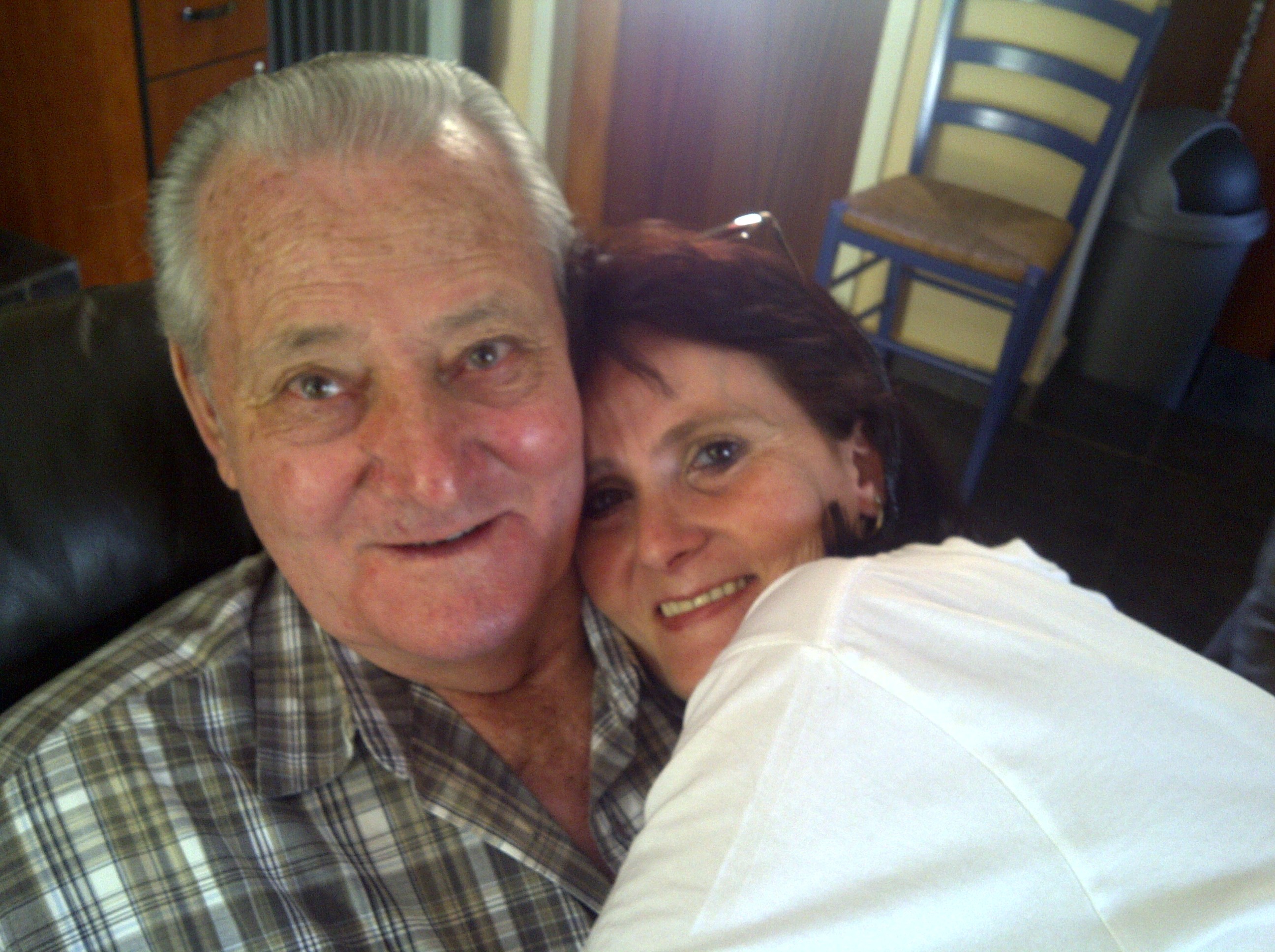
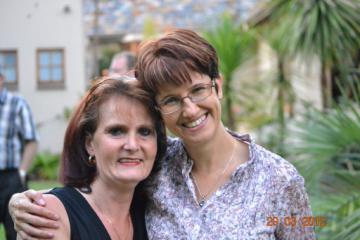
Vic and her big sister Esther

It was with fear and trepidation that I gave Vic her medication last night.  Esther, (Vic’s big sister and a pharmacist) asked me whether the Jurnista replaced the morphine and was just a little surprised that it was in addition to the Morphine, Neurontin, Degrenol and Stilpayne.   My research really scared me yet strangely I was at peace.

By 24:00 Vic felt no difference and her pain was at a solid 9.  By 02:00 her pain was a little easier.  Vic had a fairly good night.  But she is having a very good day!!!  The Jurnista appears to be working!  Vic rested well this morning and went out for coffee with Tracey!  How absolutely amazing is that!

Last Sunday, Frik, a Christian colleague phoned me after church and asked me to give Vic a message.  “Please tell Vicky that God wants me to tell her that He loves her”…   She was too ill and I only told her on Tuesday.  I missed the Tuesday Pain Clinic appointment… On Thursday the Pain Clinic doctor is a wonderful, compassionate, young Muslim man who showed mercy and compassion …

My faith has often wavered over the past ten years.  Not in God but in a God of Mercy.  The actions of the church, Christians, doctors, nursing staff, radiologists, Hospice, family and friends, mostly reflected a cold, loveless society that does not begin to understand what compassion means

When we first received Vic’s death sentence there was an absolute outpouring of love.  But I suppose she did not die soon enough and people slowly and discreetly disappeared out of our lives.  My blog is three months old and most of you too may get tired of the waiting game and stop reading it and disappear into cyberspace.  Well, this time you cannot hurt us because you are faceless.

I am digressing.  This week we were reminded that there are still angels around.   A compassionate man who prays for pain relief of a young woman he has never met, a doctor who prescribes palliative care medication…  The Jurnista could hasten Vic’s imminent demise but I don’t care.  I would rather she spend one pain free day with her boys and family than a lifetime in the pain that she lives with.

Many people have left wonderful caring messages on my email, comments on the blog and Facebook.  Thank you!  It really does mean a lot to us.   Vic does not read my blog neither do her boys.  But Vic has truly appreciated the contact some of her old school friends have made.  As I said before, dying is a lonely business!

But today we celebrate the wonderful new drug!  I thank God for sending angels along our way.  I thank God for His message through Frik, when I was at the lowest low in my life!!  I thank God for Dr Jaffer Hussain!  I thank God for your messages of encouragement and above all I thank God for Vic’s good day!  Thank you, thank you, thank you God!  Even if it is only one good day!

For some dying is hard work. 18.7.2012


Some people take their time and linger. Some people get it over with quickly. For some dying is hard work.  But all of us are heading towards the same destination. Passing through our physical stages of dying.  Into death…

via For some dying is hard work. 18.7.2012.

I am going to smile and make you think I am happy 17.7.2012


I am going to smile and make you think I am happy 17.7.2012.

A day in the life of Vic 15.7.2012


A day in the life of Vic.

Addison’s and Vic’s Brazilian Blow-Dry 12.7.2012


Addison’s and Vic’s Brazilian Blow-Dry 12.7.2012.

I wish for Vic….10.7.2012


Like this:LikeBe the first

via I wish for Vic….10.7.2012.

I am dying 9.7.2012


I am dying 9.7.2012.

I am dying 9.7.2012


Vic and JD. (JD = Jared’s Dog)

It is 20:00 and Vic has been fed, changed, powdered and medicated.  She screamed in pain when I changed her.  Seeing my child sick and in pain, every day of her life kills me.  I am dying, painfully slowly from my child’s pain.

I don’t know how much longer I can handle this.  The chronic pain I am used to but this new pain is pushing all of us over the edge.

Esther called today and wants Danie and I to go to a Spa, close by, and she and Tracey will take turns in looking after Vic…  How nice is that!!  But I cannot.  I cannot leave Vic now.  Nobody knows her body the way I do.   It is too big a responsibility to hand over to anyone.    She needs lots of personal help.  Vic needs pain meds’ every four hours, day and night.  If she misses med’s she breaks through her pain levels and then it is disastrous.  What if she needs help during the night as she so often does?  What if she vomits and needs me?  No can do!!  I cannot desert Vic.  Until she breathes her last breath I will be by her side.  No matter how long it takes.

Many years ago I promised Vic that I would not let her die alone.

When Jesus was praying in Gethsemane his disciples fell asleep on Him.  I am so scared that I will fall asleep on Vic in her final hour.  I don’t think Vic is near the end.  I have been around dying people enough to know the signs.  But she needs me now.

Facts about Osteogenesis Imperfecta


 I am posting this extract from the Osteogenesis Imperfectawebsite.  It is informative and will give you some idea of the terrible disease called Osteogenesis Imperfecta.The problem with Vic is the Connective Tissue issues.  If she had not had the blotched pro-disc surgery she would have been fine.

Vic is terminal due to doctor error!  Vic will probably die from her frozen abdomen and the issues that arise from a frozen abdomen. That is the short and the tall of it.


Osteogenesis imperfecta (OI) is a genetic disorder characterized by fragile bones that break easily. It is also known as “brittle bone disease.” A person is born with this disorder and is affected throughout his or her life time.

  • In addition to fractures people with OI often have muscle weakness, hearing loss, fatigue, joint laxity, curved bones, scoliosis, blue sclerae, dentinogenesis imperfecta (brittle teeth), and short stature. Restrictive pulmonary disease occurs in more severely affected people.
  • OI is caused by an error called a mutation on a gene that affects the body’s production of the collagen found in bones, and other tissues. It is not caused by too little calcium or poor nutrition.
  • OI is variable with 8 different types described in medical literature.
    • The types range in severity from a lethal form to a milder form with few visible symptoms.
    • The specific medical problems a person will encounter will depend on the degree of severity.
  • A person with mild OI may experience a few fractures while those with the severe forms may have hundreds in a lifetime.
  • The number of Americans affected with OI is thought to be 25,000-50,000.
    • The range is so wide because mild OI often goes undiagnosed.

Genetics

  • The majority of cases are caused by a dominant mutation to type 1 collagen (COL1A1 or COL1A2) genes
  • Other types are caused by mutations of the cartilage-associated protein (CRTAP) gene or the LEPRE1 gene. This type of mutation is inherited in a recessive manner.
  • OI occurs with equal frequency among males and females and among all racial and ethnic groups.
  • Approximately 35% of children with OI are born into a family with no family history of OI. Most often this is due to a new mutation to a gene and not by anything the parents did before or during pregnancy.

Testing and Diagnosis

Diagnosis for OI is primarily based on signs seen in a doctor’s examination. When there is uncertainty about the diagnosis, it is best to consult a physician who is familiar with OI. Genetic testing is available to confirm a diagnosis of OI through collagen or gene analysis—a skin sample or a blood sample are used to study the amount of Type I collagen or to do a DNA analysis.

Types

Since 1979, OI has been classified by type according to a system based on mode of inheritance, clinical picture, and information from x-rays. The characteristic features of OI vary greatly from person to person, even among people with the same type of OI, and even within the same family. Not all characteristics are evident in each person. The OI type descriptions provide general information about how severe the symptoms probably will be. Health issues frequently seen in children and adults who have OI include:

  • Short stature
  • Weak tissues, fragile skin, muscle weakness, and loose joints
  • Bleeding, easy bruising, frequent nosebleeds and in a small number of people heavy bleeding from injuries
  • Hearing loss may begin in childhood and affects approximately 50% of adults
  • Breathing problems, higher incidence of asthma plus risk for other lung problems
  • Curvature of the spine

See Types of OI for a detailed description.

Treatment

Doctors who see children and adults with OI include primary care physicians, orthopedists, endocrinologists, geneticists and physiatrists (rehabilitation specialists). Other specialists such as a neurologist may be needed.

  • Treatments focuses on minimizing fractures,  maximizing mobility, maximizing independent function and general health
  • Treatments include
    • Physical therapy and safe exercise including swimming
    • Casts, splints or wraps for broken bones
    • Braces to support legs, ankles, knees and wrists as needed
    • Orthopedic surgery, often including implanting rods to support the long bones in arms or legs
    • Medications to strengthen bones
    • Mobility aids such as canes, walkers, or wheelchairs and other equipment or aids for independence may be needed to compensate for weakness or short stature.

Treatments Being Studied

  • Medications
    • Bisphosphonates such as ©Aredia (pamidronate), ©Fosamax (alendronate) or ©Reclast (zoledronic acid)
    • ©Forteo (teriparatide injections) for adults only
  • Growth Hormone
  • Increased vitamin D intake
  • Physical activity
  • Potential for gene therapy

At this time, there is no cure.

Prognosis

The prognosis for a person with OI varies greatly depending on the number and severity of symptoms.

  • Life expectancy is not affected in people with mild or moderate symptoms.
  • Life expectancy may be shortened for those with more severe symptoms.

The most severe forms result in death at birth or during infancy.
Respiratory failure is the most frequent cause of death for people with OI, followed by accidental trauma.

Despite the challenges of managing OI, most adults and children who have OI lead productive and successful lives. They attend school, develop friendships and other relationships, have careers, raise families, participate in sports and other recreational activities and are active members of their communities.

Managing OI

  • Techniques for safe handling, protective positioning and safe movement are taught to parents
  • Infancy, early childhood and the pre-teen years are often challenging
  • Growth and hormonal changes can affect the frequency of fractures
  • Children and youth learn which activities to avoid and how to practice energy conservation
  • The number of fractures usually decreases in adulthood
  • Following a healthy lifestyle including not smoking, and maintaining a healthy weight is beneficial

History of OI in Medical Literature

There is evidence that OI has affected people throughout history. OI has been recognized in an Egyptian mummy dating from 1000 BC. It has also been identified as the medical condition suffered by Ivan the Boneless who lived in 9th century Denmark. Prince Ivan, according to legend, was carried into battle on a shield because he was unable to walk on his soft legs.

Case studies of fragile bones and hearing loss have appeared in the medical literature since the 1600s.The term “osteogenesis imperfecta” was originated by W. Vrolik in 1849, and the condition was loosely divided into “congenita” and “tarda” by E. Looser in 1906. Van der Hoeve in 1918 described the occurrence of fragile bones, in combination with blue sclera and early deafness as a distinct inherited syndrome.

In the 1970s, Dr. David Sillence and his team of researchers in Australia developed the system of categorization using “Types” that is currently in use. His original four classifications (Type I, Type II, Type III and Type IV) combine clinical symptoms with genetic components. This listing is based on the number of people in the study who had similar symptoms. The types do not go from mildest to most severe. This classification system has been generally accepted world wide since 1979 but continues to evolve as new information is discovered. In recent years, evidence from bone biopsies and other research led to the addition of Types V, VI, VII and VIII.

More Information

http://www.oif.org/site/PageServer?pagename=AOI_Facts

Chronic Illness versus Terminal Illness


Chronic Illness versus Terminal Illness.

Who is taking care of the caregiver? 5.7.2012


Who is taking care of the caregiver? 5.7.2012.

Who is taking care of the caregiver? 5.7.2012


When my Dad was ill with Alzheimer’s, I subscribed to two forums/support groups.  I suppose I am not good at letting go because I have not left the groups despite the fact that my dad lost his fight against AD on the 20th of May 2011.  On the other hand Alzheimer’s is a terminal illness and there is a lot of synergy between my Dad and Vicky’s journeys.  I don’t think I would have gotten through my Dad’s journey if it had not been for the Caring.com group.  http://www.caring.com/home-care.  The practical advice of caring for an AD patient was of immeasurable help.  The members support helped us as a family in understanding the destruction of Alzheimer’s and recognizing the stages of the disease.
So when I received the latest post: “Who is Taking Care of the Caregiver While the Caregiver is Taking Care?” written By Carol Blackwell Alzheimer’s Reading Room, I was delighted.  I am in such a depression and totally at a lost as how to get out of it. http://www.alzheimersreadingroom.com/2010/05/whos-taking-care-of-caregiver-while.html

I just knew there would be solid, practical advice in the article.

Carol Blackwell’s opening question is: “Are you taking care of yourself? You can’t be there for them if you aren’t there for ‘you.’ Your mood and stress affects their mood. It surely isn’t easy and life is sometimes stressful and difficult. Here are some things that helped me—you can decide if they will work for you.”

Exercise

Carol Blackwell wrote “I know you may be thinking you have no time to exercise because you are so busy taking care of your loved one and too tired at the end of the day. I say, that is exactly why we need to exercise.”

Right on Carol.  I don’t have time.  My days are very long and I don’t get a lot of off-time.  Last year Danie and I went for a walk every night.  Sometimes the boys joined us.  It was great and I miss it.  But I have decided that I will start exercising today!

Volunteer for service to others.
Carol Blackwell wrote:  “I imagine you are now thinking I am really weird. How can we find time to work for others when we are struggling ourselves? For me, initially, I found it was easy to sit in the house and feel sorry for us. We didn’t sign up for this disease invading our lives, we had just had gotten to the point where we could be free from work constraints, etc. Etc. Unfortunately, sitting in the house feeling sorry for us didn’t help much. It wasn’t fun and served no purpose except to make me crabby and Bob depressed. No one wants to be around crabby people.”

Carol you are weird.  I don’t have time to sit and do anything.  I have a career, a household to run, two grandsons to fetch and carry, Vic to take care of…  For many years I was very involved in working with the less fortunate.  I however believe that in the Chinese Proverb “Give a man a fish and you feed him for a day. Teach a man to fish and you feed him for a lifetime.”  Done and dusted.  One day I would love to do some community work again but for the time being I have to concentrate on my family and their survival.  Selfish – maybe…  For now that is the way it has to be.

Do things you enjoy—you deserve it. 
Carol Blackburn wrote:  “What do you find fun and what gives you pleasure? It is different for all of us. I enjoy Wii games—I love the Wii Fitness Plus activities. They are fun. “

Tick.  I love my Children and grandchildren.  I love the patter of little children’s feet in the passages of our home, the sound of children’s laughter, and their little arms around my neck.  I desperately miss my UK grandchildren.  I am permanently miserable when I think of them.  I miss them with every fiber of my body.  Sometimes I am so weepy that I cannot even Skype with them.

I am so happy that Lanie and Tom have moved to Johannesburg.  Now we see them and the girls on a regular basis.  We spend a lot of quality time together.

Yuri, our youngest grandson asks his Mom whether he can’t come visit his Oumie every day before school…

Liza (the youngest daughter) and her husband have finished sailing around the world.  I look forward to flying down to Cape Town to visit with them.  As soon as Vic is able to cope without me we will fly off…

Vic finds the noise a little distressing.  But the little ones know Aunty Vic is ill and are so good!

Carol is right.   I enjoy having the grandchildren around and I deserve to have my grandchildren around me.  Grandchildren are the joy of my life!  And I love playing Cityville on Facebook.

Consider meditation/yoga.
Carol wrote:  “Research has found that taking time to meditate and to engage in yoga is beneficial in reducing stress.”

Maybe one day when I have time… and the energy.

Don’t be a martyr.
Carol wrote:  “Martyrs may be noble, but they really aren’t much fun. You can’t do it all and you shouldn’t have to. Find help if you need it.  Are you in a support group? Check the Alzheimer’s Association link to fine one near you. Join it—it will help to find others who are going through what you are. “

“Is there someone who can come in for a few hours and let you take a break? Someone from church?  A friend? There are people who would love to help us, but we don’t ask. Ask. You owe it to yourself and your loved ones!”

My dearest friend, Gillian, wrote:”I would like to half your work and cares.  Put you in a bed for sleep therapy.  But I know you won’t trust a soul with your family”.  Few people know me as well as Gillian does.  I cannot leave Vic.  There is that beautiful John Lennon song “He ain’t heavy, he’s my brother”.  Vic ain’t heavy she is my baby.

I am trying to get Hospice involved.  Danie does help a lot and so do the boys.  Esther bathed Vic on Tuesday whilst I was at a meeting.  The church and I deserted one another some time back.  I don’t have many friends.

People have their own lives.  We live in a world where we don’t have time for other people’s problems.

Only a mother who has watched her child suffer will understand the despair of another mother.  Will understand how difficult it is to face every day, the depth of despair when you cradle your vomiting child in your arms….to say “Just one more hour baby” when she begs you for pain medication…

Smile or laugh each day.
Carol Blackwell wrote:  
We do.  Today I watched Rango with the boys.  It was so funny.

Cut yourself some slack.
The wise Carol Blackwell wrote:  “Everyone has ‘blue’ days. It’s OK to have a ‘pity party’ once in a while. It just doesn’t help to let those days happen too frequently. Also, don’t beat yourself up. We can’t always be calm, patient, understanding and saint-like. We are all just doing the best we can. Wallowing in guilt for occasional impatience won’t help either.”

This week I am truly wallowing in self-pity.  I have been guilty of impatience, I have lacked understanding.  I am petrified that Vic’s pain and suffering will continue for many more years.  It is strange that Vic is having a better week than she has had in three months.  As Esther said, her eyes are bright and she has mobilised pretty well.  She is less tired… What if this vicious cycle of pain and suffering continues?

Don’t lose hope.
Carol Blackwell wrote:  “There IS a cure for this awful disease. Out there—somewhere, someone is working on it. We just don’t know it yet. It will come. Keep the faith, baby!”

Just as there is no cure for Alzheimer’s at this stage there is no cure for Osteogenesis Imperfecta.  But there may just be a cure for the adhesions that I believe will ultimately cause a fatal obstruction.  Today I found a website where a doctor who claims great success with the treatment of frozen abdomens.  On the surface it seems very positive.  http://www.prweb.com/releases/2012/5/prweb9432209.htm

Anyone who has ever wrestled with God can understand the bargaining prayer. I have bargained with God all of Vic’s life.  If there is a cure I will do this or that…. For MANY years I have put the Church and God ahead of Vic and my family and yet all my love and commitment has resulted in further pain and suffering.  I know this paragraph will result in many emails or comments but I ask of you “Do not judge me if you have not walked ten miles in my moccasins!”

So for today and maybe the rest of the week I will hold onto my new hope.  “Hope removes the blinders of fear and despair. Hope opens up our minds and allows us to think positive under dire circumstances.”  Until I receive a reply to my enquiries…

To all my friends, cyber friends and family thank you for your support and love!  Yesterday I considered stopping the blog as it has opened up fears that I have suppressed for so many years. I however think it is something I must do – for myself.
“I’m tired of living but I do not deserve to die. I am motivated by nothing yet I move on… “


“I’m tired of living but I do not deserve to die. I am motivated by nothing yet I move on… “.