A Mother’s Love explained in poetry


Thank you Shirley!!

Ray's Mom's avatarJUSTICE FOR RAYMOND

A MOTHER’S LOVE
Helen Steiner Rice

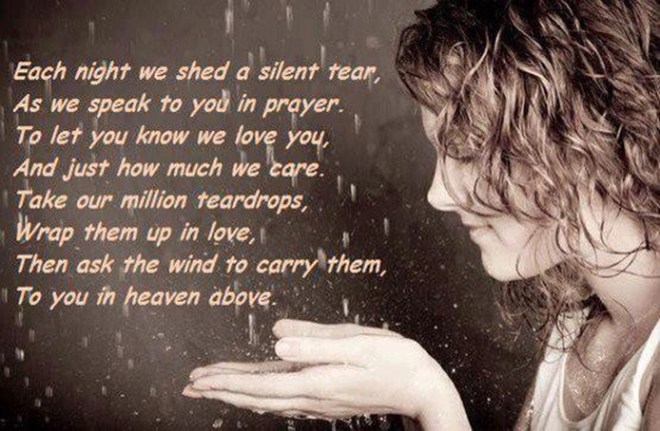
A Mother’s love is something

that no one can explain,

It is made of deep devotion

and of sacrifice and pain,

It is endless and unselfish

and enduring come what may

For nothing can destroy it

or take that love away . . .

It is patient and forgiving

when all others are forsaking,

And it never fails or falters

even though the heart is breaking . . .

It believes beyond believing

when the world around condemns,

And it glows with all the beauty

of the rarest, brightest gems . . .

It is far beyond defining,

it defies all explanation,

And it still remains a secret

like the mysteries of creation . . .

A many splendored miracle

man cannot understand

And another wondrous evidence

of God’s tender guiding hand.

View original post 41 more words

This Touched Me Deep in My Soul


This has been reblogged by quite a few people.  It is a hauntingly beautiful true story.  Please read it.

Vic would have said ….


Life is truly known only to those who suffer, lose, endure adversity and stumble from defeat to defeat. Anais Nin

147

“Who wants to die? Everything struggles to live. Look at that tree growing up there out of that grating. It gets no sun, and water only when it rains. It’s growing out of sour earth. And it’s strong because its hard struggle to live is making it strong. My children will be strong that way.” ― Betty SmithA Tree Grows in Brooklyn  

730

Sometimes in tragedy we find our life’s purpose – the eye sheds a tear to find its focus.  ~Robert Brault, www.robertbrault.com

090913_1833_Thefinalfin2.jpg

Watch a man in times of… adversity to discover what kind of man he is; for then at last words of truth are drawn from the depths of his heart, and the mask is torn off.  ~Lucretius, On the Nature of Things

When it is dark enough, you can see the stars.  ~Ralph Waldo Emerson

Alberton-20121021-01096

When the Japanese mend broken objects, they aggrandize the damage by filling the cracks with gold.  They believe that when something’s suffered damage and has a history it becomes more beautiful.  ~Barbara Bloom

IMG_1262-001

The soul would have no rainbow had the eyes no tears.  ~John Vance Cheney

IMG_3456

The darkest hour has only sixty minutes.  ~Morris Mandel


The final finish line


Things don’t always work out the way we want them to.

For 9 months we carry a precious little human being in our wombs. We give birth to the love of our lives… Then we spend our lives loving and cherishing this little bundle. Nurturing it from cradle to grave…

I was in our new Hospice building today and I was overwhelmed by sadness and anger. I was unbelievable sad when I stood in the door of a Dignity Room and I realised that I was stroking a door! Gentle feelings whelmed up in me – “This is Vic’s legacy” I thought! Then bitterness and tears simultaneously pushed through to my eyes and throat.

How can my child be reduced to a frigging room??? I want to hold my child, love her, and cherish her. I want her to sit next to MY death bed and tell me it is okay to go….. I want to spend birthdays with her – not burn flippen candles. I want to buy her flowers and see the pleasure in her eyes instead of planting flippen flowers in a memory garden. I want to hug her not run my hand over a wooden casket containing her crushed ashes. I WANT MY CHILD BACK!!!!!


What brought this about? I don’t know. Maybe it is a YouTube video that I watched about another champion.

Like Vic, this young man started off in the starting block as a favourite to medal in the 400 meter Olympic race (1992). Derek Redmond tore a hamstring halfway through the race.

 Olympians could fill a pool with their tears, on a quadrennial basis. The nature of the competition ensures that however many dream of glory, most will only experience disappointment. At that moment, the bitter taste not just of a single defeat but of four years of wasted effort can simply be too much for some to handle. More than that, quite a few athletes can’t even win without tears. But no Olympic emotional outburst is ever likely to dislodge Derek Redmond’s in the minds not just of Britons but of anyone old enough to remember the 1992 Games. What made this moment special was that it brought into focus not just the near-heroic desperation of a single professional athlete but a much more universal theme: the nature of parenthood.

“I still get people coming up to me in the street because of what happened,” said Redmond in February 1993, six months after the 1992 Olympics. “But as nice as it is to know that they care, I would like to put it all behind me and not be remembered just for that.”

Redmond travelled to two Olympics and both ended with injury-induced heartache, once in the most public circumstances. For all his ability as an athlete – and he was considered likely to win a medal in Barcelona – he will forever be remembered for tearfully completing his 400m semi-final using his father as a crutch. His body never gave him the opportunity to redefine the way the world perceived him: two years after the Barcelona Games, following an 11th operation on his achilles tendon, his athletics career was over. This was his last race of any significance.

Redmond had missed the 1986 Commonwealth Games in Edinburgh with a hamstring injury, and withdrew from the 1988 Seoul Olympics minutes before his first heat having failed to recover from tendinitis, having had two painkilling injections that morning in an effort to make it on to the track. The following summer, still plagued by injuries, he came close to giving up sport altogether. What the world witnessed in 1992 was a man who had been continually brought low by injury simply refusing to submit yet again.

His body had given him some hope: in the first round Redmond had run his quickest 400m for four years. “I was feeling absolutely 100% before the race,” he told me in 2006. “I’d had two really good rounds without even trying and the night before the semi-final I’d talked with my father and my coach and we’d decided I was going to push a bit harder and try to get a good lane for the final.

“On the day everything went smooth. I got a really good start, which was unusual for me. I think I was the first to react to the pistol. My normal tactics were to get round the first bend and then put the burners on for 30m, accelerate hard. But by the time I’d got upright I was almost round the bend, much further than usual, and I decided not to bother, to save my energy in case I had to fight for the line. About three strides later I felt a pop.”

It was his hamstring. Redmond collapsed to the floor, clutching his leg. Most athletes would have been quietly carried off the track and towards medical attention, but as the Red Cross workers approached Redmond instead pushed himself back to his feet. “I got up quicker than I got out of my blocks,” he said. “I said to myself: ‘There’s no way I’m going to be stretchered out of these Olympics.’ I didn’t know where I was. I really, really believed I could still qualify.”

Bizarrely, the reason Redmond first started limping around the track was a belief that if he limped fast enough he might still overtake four people and qualify for the final. “Believe me, at the time I thought I was running,” he said later. “It’s only when I see the playback I realise I wasn’t actually running very quick at all.”

Meanwhile, Redmond’s father Jim was fighting his way on to the track. “When I saw Derek hit the deck, I thought it was my mind playing tricks on me,” he told the Guardian. “I’m very involved in his training so I knew just how fit he was. All I can remember after that is telling the coach, Tony Hadley [not the lead singer in Spandau Ballet], to look after my camera. The next thing I knew, I was on the track.”

Jim told his son to stop, in case the injury might heal in time for him to compete in the relay. Derek refused. “Well then,” Jim said, “we’re going to finish this together.” And finish it they did, slowly, and with the younger man’s anguish becoming visibly greater with every pace.

Back in Northampton Redmond’s mother, Jennie, was watching events unfold on television, weeping. She later told the press that the last time she had seen her son so unhappy was when he didn’t get the bike he wanted for his sixth birthday. Redmond’s 28-year-old sister Karen was nine months pregnant; as she watched her brother’s world collapse she started to feel contractions.

Back in Barcelona, father and son batted away a succession of officials who tried and failed to convince them to clear the track. Jim, it turned out, was as much bouncer as buttress. “I’d never heard my dad using four-letter words,” Derek said the following day. “I learned a few new ones.”

“Even now, it’s hard to say how or why I did it,” said Jim. “It was a spontaneous reaction, as if I had seen him hit by a car. I certainly didn’t run down to help him finish – if anything it was to stop him. I could accept the fact that my son was injured, but not that he was going to carry on in pain, causing himself even greater damage.”

“After I crossed the line I was taken to the doctors and I was crying like a baby the whole time,” Redmond told me. “I had no idea how the crowd had reacted until I saw the video – they were the last thing on my mind. It could have gone one of two ways: they’d either think ‘what a complete prat’ or ‘good on him’. Luckily they chose the second one.”

Not everyone. Though the Redmonds were pictured on the front page of the following day’s newspaper, the Guardian’s athletics correspondent at the time, John Rodda, who was covering his ninth and last Olympic Games for the paper, decided that the incident merited only a mention in the 18th and penultimate paragraph of his main report, calling it “a display of histrionics which the crowd saw as courage but must have bewildered many”.

Most observers, though, were genuinely moved by what they witnessed. On his way from the stadium Redmond met Linford Christie, Britain’s team captain. The pair were far from friendly, and their enmity had become public after Christie criticised the 4x400m relay team that won gold at the 1991 World Championships in Tokyo. “These guys are not my sort of guys,” he said. “I don’t like their attitude.” Christie added that the four – of whom Redmond was one – should have toned down their celebrations because they had “mucked up” their individual events. Redmond replied: “There’s a saying going around among the athletes that Linford is the most balanced runner in Britain because he’s got a chip on both shoulders. For once in his life he was upstaged in Tokyo and he didn’t like it.”

But that day, in the bowels of Barcelona’s Estadi Olympic, Christie approached his team-mate and the pair wordlessly embraced. “Tears started and we both broke down,” said Redmond. “I know it sounds soppy but it was Mills and Boon sort of stuff. I’ve changed my views of him completely. It shows that this sport isn’t just about coming here and making money.”

Perhaps not, but as it happens Redmond’s courage that day allowed him to enjoy a second career as a motivational speaker. That wasn’t the only lasting effect of those injury-plagued years, however: in Barcelona the swimmer Sharron Davies, another British athlete who had endured a disappointing Games, sought out Redmond to express her sympathy. The pair married two years later (but divorced in 2000). More long-lasting, it transpired, are the chronic stomach ulcers induced by Redmond’s use of painkilling medication. “I would never encourage anyone to do what I did,” he said, “but I didn’t need encouragement. I went out and did it myself.”

At the 1992 Olympics the athletes had access to a rudimentary computerised messaging system. This allowed them to log on to one of the Olympic computers, which were distributed around the athletes’ village, and send someone else a message that they would be able to pick up when they next logged on – a kind of electronic mail, if you will. It’s never really caught on. Anyway, in the days after the race Redmond received scores of messages from his fellow competitors, including this from a Canadian competitor he had never met:

“Long after the names of the medallists have faded from our minds, you will be remembered for having finished, for having tried so hard, for having a father to demonstrate the strength of his love for his son. I thank you, and I will always remember your race and I will always remember you – the purest, most courageous example of grit and determination I have seen.”

It is as true today as it was 19 years ago.
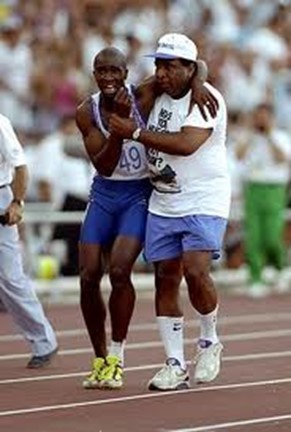

So, I suppose I related this to Vic – her life ended but her death bed wish will live on to change the community. She may be remembered for being the inspiration behind Stepping Stone Hospice & Care Services.

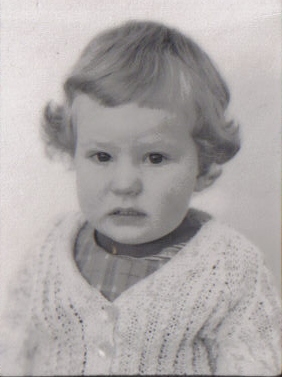
I remember her for being a perfect little new-born with my nose and her father’s toes. I remember the doctor saying “She is so perfect. She is destined to be a Miss World”….

Vic’s finish line was death….

http://www.youtube.com/watch?v=rCAwXb9n7EY

When a child dies…


“When you are sorrowful look again in your heart, and you shall see that in truth you are weeping for which has been your delight”. ~ Kahlil Gibran.

At times the pain and feelings of desolate loss is overwhelming.  I know it is because I loved Vic so much.  I am grieving because I miss my child, the mother of my grandchildren, my friend.  I miss drinking endless cups of tea…. sometimes laughing and sometimes weeping.

I have grown used to not constantly checking my text messages when I sit in meetings.  I have actually forgotten my phone at home on two occasions.  I miss the countless phonecalls, finding little notes everywhere…. a soft kiss on the forehead.

When a parent dies, you lose your past; when a child dies, you lose your future. – Anonymous


IMG_7339


Extra tablets for your birthday…


A year ago I posted this…

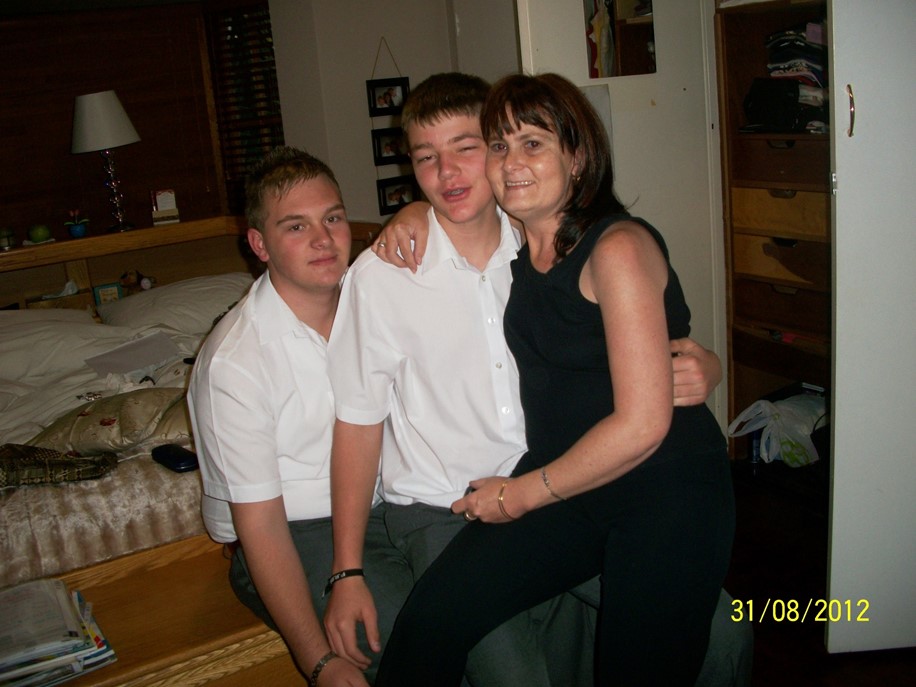
Tomorrow, on the 31st of August, we will once again celebrate Vic’s life!  Every year, for the past 10 years, we expected it to be Vic’s last birthday.  Today I know that Vic will live forever.  She will continue to fight for another day, week, month, year…. Tomorrow we celebrate life!!

Tonight I sat doing Vic’s medication for the next 24 hours, and I popped an extra Jurnista into tomorrow morning’s tablets.    Janis Ian sings “and in the winter extra blankets for the cold…” and I sing ” and on your birthday extra tablets for the pain…..  My gift to Vic an extra tablet so she can a better day.

So, on the eve of my child’s birthday I am sitting thinking of what my prayer for Vic would be if I still knew how to pray.

I would pray for adequate pain relief.  I would pray for some quality of life time for Vic with her boys.  I would pray for Vic to have financial independence.   I would pray for Vic to have peace of mind.  I would pray that Vic would have enough faith in her dad and I to know it is okay to let go…the boys will be safe with us.

I do thank God that Vic is still alive.  I thank God for Dr Jabber Hussain and Jurnista.  I thank God for Vic’s incredible boys.  I thank God for the brave decision that Vic made not to have further surgery.  Above all, I thank God that Vic is home.

Tomorrow Vic will have a busy day.  She has a 08:00 breakfast appointment with Lee, a 10:00 manicure booked by Estherafternoon tea (at home) with Robbie Cramp and then dinner at a restaurant of her choice with the boys and us.   I know it will take a superhuman effort but I have “rests” scheduled for the birthday girl in between events.

What is a relatively quiet day for us is a marathon for anyone as ill as Vic.  I know that she will try so hard to survive the  birthday and the party day.  Somehow I don’t think she will manage it all.  I just hope that she has a good day so she can spend some constructive time with her boys.  They will need to remember this as a good birthday in years to come…..

On Saturday we will celebrate all the August/September birthdays.  Vic on the 31st of August, Henk on the 2nd of September and Tom on the 4th of September….  I hope Vic will be able to handle two busy days in a row.  Maybe the birthday high will carry her through it!

We have a family tradition of doing “birthday eulogies”.  Everyone present gets to say something nice about the birthday person.  Over the years I have told Vic how brave she is, what a fighter she is, how beautiful she is.  This year I will I will merely thank her for being here!

Everything else has been said.

082813_1847_15.jpg

38 forever…


I was reading a comment from Lucinda @ http://sophieandemile.wordpress.com/ Elliot  – “Still cheering you on, Tersia, though I often don’t know what to say; others must know much better. In that photo, Vic, though desperately ill at the time, still looks lovely. She will always be lovely and young in your memory, though you would have loved to see her turn grey in late middle age. You are right to hold on to the ashes if it feels right to have them as part of the house.” when I started giggling.

I realised, that Vic is sitting in Heaven giggling because she fooled Father Time… Vic is 38 forever!

Forever my beautiful baby girl

Thank you Lucinda!


In three day’s time…


In three day’s time we will celebrate Vic’s birthday.

On Monday, at Heathrow airport, I unthinkingly picked up a bottle of “Beautiful” perfume. I looked at the bottle of perfume and put it down as if it was a snake that was ready to strike… Vic is dead. This year she will not wake up to the sound of us singing “Happy Birthday”. There will be no shrieks of “Oh, thank you! This is EXACTLY what I wanted!” There will be no birthday party this year.

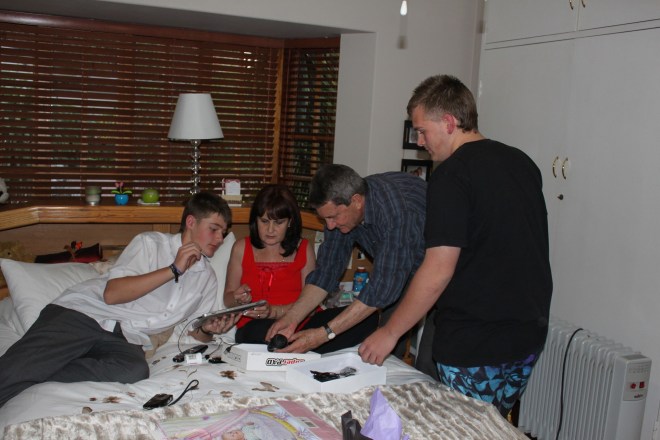
Vic opening her birthday gift from her Dad last year. The boys were so excited and everyone wanted to set up the “iPad”…

This year we will light candles for a precious mother, child, friend… We will send prayers to Heaven.

We whisper your name…


Some days I sense Vic’s closeness. I sometimes smell her. But I cannot touch her. I cannot hear her voice.

The boys and I light candles for you my precious baby…

We whisper your name

The boys write your name in the sand…

You send us feathers from Heaven….

How we miss your brave smile…

How I miss reaching out and being able to touch you

Holding you my precious child…

Yesterday, today, forever……

I love you Angel Child!

William Penn


“They that love beyond the world cannot be separated by it. Death cannot kill what never dies.” ~ Williams Penn

nPosted from WordPress for BlackBerry.

Selfless love


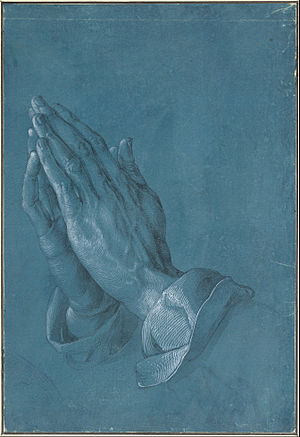
Albrecht_Dürer_-_Praying_Hands,_1508_-_Google_Art_Project

“Selfless love means to love regardless of your personal needs. You love whole heartedly without loving yourself, without any personal gain. It is the opposite of selfish love.” http://www.ask.com/question/meaning-of-selfless-love

We live in a world where we are encouraged to develop our own individuality. We are brought up in a competitive world.  The desire to “win” or “be superior” to others often dominate our lives and the lives of our children.

We subconsciously seek to gain “something” from situations and persons we encounter. Many people enter into relationships in order to fill the huge gap of longing to be whole. This desire-based motivation is the main obstacle to loving unconditionally.

When we evaluate and categorize everything through the filter of past experiences, we calculate love through feelings of attraction, aversion, or indifference, and our behavior reflects this.

In this process, we miss any possibility of true love.

When I read this amazing story about selfless love I felt I had to share it.  True and selfless love is rare…

Reposted from http://morningstoryanddilbert.wordpress.com/2013/08/13/2616/

Vintage Dilbert
August 13, 2003

Back in the fifteenth century, in a tiny village near Nuremberg, lived a family with eighteen children. Eighteen! In order merely to keep food on the table for this mob, the father and head of the household, a goldsmith by profession, worked almost eighteen hours a day at his trade and any other paying chore he could find in the neighborhood. Despite their seemingly hopeless condition, two of Albrecht Durer the Elder’s children had a dream. They both wanted to pursue their talent for art, but they knew full well that their father would never be financially able to send either of them to Nuremberg to study at the Academy.

After many long discussions at night in their crowded bed, the two boys finally worked out a pact. They would toss a coin. The loser would go down into the nearby mines and, with his earnings, support his brother while he attended the academy. Then, when that brother who won the toss completed his studies, in four years, he would support the other brother at the academy, either with sales of his artwork or, if necessary, also by laboring in the mines. They tossed a coin on a Sunday morning after church. Albrecht Durer won the toss and went off to Nuremberg.

Albert went down into the dangerous mines and, for the next four years, financed his brother, whose work at the academy was almost an immediate sensation. Albrecht’s etchings, his woodcuts, and his oils were far better than those of most of his professors, and by the time he graduated, he was beginning to earn considerable fees for his commissioned works.

When the young artist returned to his village, the Durer family held a festive dinner on their lawn to celebrate Albrecht’s triumphant homecoming. After a long and memorable meal, punctuated with music and laughter, Albrecht rose from his honored position at the head of the table to drink a toast to his beloved brother for the years of sacrifice that had enabled Albrecht to fulfill his ambition. His closing words were, “And now, Albert, blessed brother of mine, now it is your turn. Now you can go to Nuremberg to pursue your dream, and I will support you.”

All heads turned in eager expectation to the far end of the table where Albert sat, tears streaming down his pale face, shaking his lowered head from side to side while he sobbed and repeated over and over, “No … no … no … no.”

Finally, Albert rose and wiped the tears from his cheeks. He glanced down the long table at the faces he loved, and then, holding his hands close to his right cheek, he said softly, “No, brother. I cannot go to Nuremberg. It is too late for me. Look … look what four years in the mines have done to my hands! The bones in every finger have been smashed at least once, and lately I have been suffering from arthritis so badly in my right hand that I cannot even hold a glass to return your toast, much less make delicate lines on parchment or canvas with a pen or a brush. No, brother … for me it is too late.”

More than 450 years have passed. By now, Albrecht Durer’s hundreds of masterful portraits, pen and silver-point sketches, watercolors, charcoals, woodcuts, and copper engravings hang in every great museum in the world, but the odds are great that you, like most people, are familiar with only one of Albrecht Durer’s works. More than merely being familiar with it, you very well may have a reproduction hanging in your home or office.

One day, long ago, to pay homage to Albert for all that he had sacrificed, Albrecht Durer painstakingly drew his brother’s abused hands with palms together and thin fingers stretched skyward. He called his powerful drawing simply “Hands,” but the entire world almost immediately opened their hearts to his great masterpiece and renamed his tribute of love “The Praying Hands.”


A picture of the "Praying Hands" Can be found at:
 https://www.facebook.com/photo.php?fbid=10201402047003494&l=1d9c179e7e


Share this:


I miss you Angel Child


At 10.35 today it will be exactly 7 months since my beautiful child lost her battle to live.  It will be 213 days…..

  • 18,403,200 seconds
  • 306,720 minutes
  • 5112 hours
  • 213 days
  • 30 weeks and 2 days

306265_414915845264516_1681744410_n

Precious Gift – adapted


When times seemed too hard to bear and I felt like giving up
I saw your beautiful face, the twinkle of your eyes and things of such
The bond we created from my womb to the day you were born
Is a mother and daughter bond that can never be torn
With the strength and guidance of God and the blessings He pours down from above
I wanted to be the best mom I could be to you and embraced you with all my love
You were as precious as a flower and as gorgeous as a rose
You were specially made to the very tip of your nose
You were as sweet as honey; such an innocent young child
You were brighter than any star in the sky every time you smiled
I wanted you to be proud of who you were and strive to be the best
I taught you to put effort into achieving your goals and let God do the rest
I was always your mother, but also your friend
You are the most precious gift, that I’ve ever been given

With All My Love,

Mommy

Precious Gift © Sherri Lawrence

Source: Precious Gift, Mother Daughter Poem http://www.familyfriendpoems.com/poem/precious-gift-2#ixzz2bezERmvm
Family Friend Poems 


That flight…


Aarthi Raghavan has once again honoured Vic and I with a beautiful poem… Aarthi is a brilliant poet whose work I love! This poem moved me to tears
I honestly know nothing about Aarthi. I do not know whether Aarthi is male or female, single or married, childless of parent…All I know is the heart of this amazing poet.

Aarthi has a pure and compassionate soul, is giving and soulful…Thank you Aarthi for these beautiful words and remembering my precious child.

You have a Gift! And you share it!

After I read this post I printed it and went outside and sat on the swing in Vic’s Angel Garden. The sun was gently setting and the air was cool. I felt Vic’s presence next to me. I feel stupid to write this but I spoke to her out loud. I told her how much I missed her and how huge the void is in my life without her. I read Aarthi’s words to Vic.

I felt her presence in the breeze, I heard her whisper “I love you Mommy” I felt at peace.

Thank you Aarthi for remembering Vic and honouring her with your beautiful words!!! You would truly have adored her.


that flight.

by ART


Vic and Tersia.. they occupy many of my thoughts, day, night, or times when I look for inspiration.. not words.. just inspiration.. that can make me smile, make my heart beat soft, constant and in comfort… I wish to dedicate this poem to a wonderful mother and her amazing daughter, for I know they are inseparable :)

often she smiled
thought to herself
why she had to deserve
all that which was unfair

she thought about her mom
her tears, her smiles
her heart beating in worry
and out of care, out of deep love

she lived her life like none of us
she smiled for special reasons
not fake, real special they were
for they reached your heart

they tried so hard
to seek happiness together
make memories forever
loving all that was on offer

even in the middle of
uncertainties
they managed
to share their stories

they made me wonder
of the beauty of love,
motherhood
of all things truly beautiful in this world

that flight
which she eventually took
must have been beautiful
freeing her from a lot of things

making her ever more precious
in our hearts
in our memories
in our thoughts
in our lives…

i wish i could have seen her
in person
made her smile
and then had a chance
to smile with her

it would have been bliss
indeed
to have a friend like her
to have been happy as her
for she is truly special…

:) I love you guys.. and I love your words Tersia… I will forever be glad to have met you.. even if it were through words…

http://citystone.wordpress.com/2012/10/23/to-vic-and-her-wonderful-mom/

http://citystone.wordpress.com/2013/08/06/that-flight/

https://tersiaburger.com/tag/httpsickocean-wordpress-comauthormysticparables/

http://sickocean.wordpress.com/category/poetry/

http://citystone.wordpress.com/2013/08/06/even-if-i-write-it/

Where is Auntie Vicky’s skin?


Those of you that follow my blog will know that my UK grandkids are visiting. They are the cutest, brightest and busiest little girls in the world. They are a source of immense pleasure and joy in my life.

They left South Africa exactly two years ago. I cried for a week. In the two years I have seen them 5 times. In terms of international travel it is a lot but in terms of a grandmother’s heart it is not nearly enough. When they lived in South Africa we saw them at least once a week.

Osama (the eldest terrorist) is 5.5 years old. She is bright as a button and full of tricks. She told me, in confidence, that when she turns 6 she is going to marry her “boyfriend” Freddy… I tried to use the impending marriage as a bargaining tool to encourage her to help tidy up her room.

Me: “Sweetie if you want to marry Freddy you will have to learn to tidy your room. What do you think his Mommy will say if she sees your toys lying around? He won’t marry an untidy girl…”

Osama: “That’s okay Oumie. Then I will marry someone else…”

This little girl has a mind of her own. She is heartbreakingly beautiful. Her eyes sparkle with the joy of life and intelligence. She is also kind and caring (a little manipulative as well). She has me twisted around her little finger! She also has an amazing memory!

She was 3, 5 years old when they left South Africa.

She was so excited to visit South Africa and kept sayings things like “I remember your big (dining room) table; where will I sleep? In my old room?” She always throws in the odd “Do you remember….?” She remembers their South African home and her school. She remembers the sunshine. She remembers Vic.

“Oumie….why did Auntie Vicky die?” is her daily question.

Her mommy and daddy have told her that Auntie Vicky’s soul is in Heaven with “Baby” Jesus… She is happy that Auntie Vicky is no longer sick. The big question is however “Where is Auntie Vicky’s skin?”

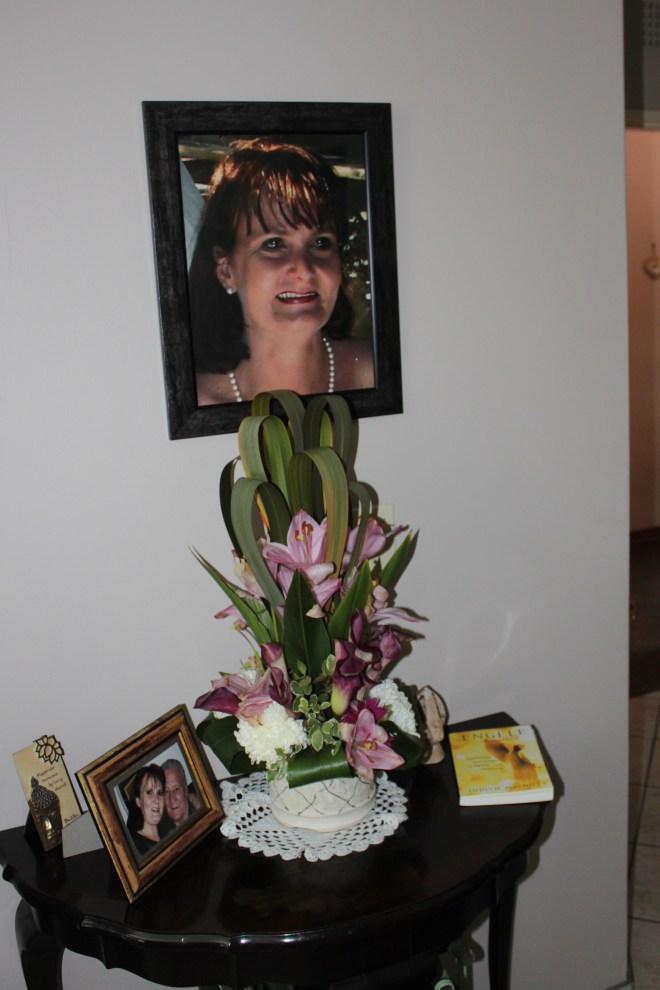
This is a difficult question to answer honestly. If I told the little poppet that her precious Auntie Vic is lying on the antique sideboard table, in a little box with a brass plate on the lid, she would be distressed… So I sort of implied that she was buried…

“Is Auntie Vicky’s skin in a box (coffin)?” she asks

“Yes” I would say. “But remember, Auntie Vic does not need her skin anymore. She has a new skin and beautiful angel wings in Heaven.”

“Is Auntie Vicky a Zombie?” – She shivers and says “Oooohhhhhh, I am so scared of Zombies!”

“No sweetie, she is an angel.” I said

I am sharing an excellent guide to help

the young, understand something that most adults battle with! http://www.hospicenet.org/html/understand.html

Children’s understanding of Death is provided by Hospice of Southeastern Connecticut Bereavement Program. This chart is meant to be used as a guideline and not a checklist. All children develop at different rates and it is important to remember that the parents know their own child the best.

Newborn to Three Years
Child’s Perception: Infant/Toddler can sense when there is excitement, sadness, anxiety in the home; can sense when a significant person is missing, presence of new people

  1. No understanding of death
  2. Absorbs emotions of others around her/him
  3. May show signs of irritability
  4. May exhibit changes in eating, nursing patterns, crying, and in bowel and bladder movements
  5. Depends on nonverbal communications; physical care, affection, reassurances

Providing Support:

  1. Keep normal routines and structure whenever possible
  2. Be verbally and physically affectionate and reassuring
  3. Provide warm, loving caretaker when parent is not available
  4. Exhibiting healthy coping behaviors

Three to Six Years
Child’s Perception: Child thinks death is reversible; temporary, like going to sleep or when a parent goes to work; believes that people who die will come back

  1. “Magical thinking”; believes their thoughts, actions, word caused the death; or can bring deceased back; death is punishment for bad behavior
  2. Still greatly impacted by parent’s emotional state
  3. Has difficulty handling abstract concepts such as heaven
  4. Regressive behaviors; bed wetting, security blanket, thumb sucking, etc.
  5. Difficulty verbalizing therefore acts out feelings
  6. Increased aggression – more irritable, aggressive play
  7. Will ask the same questions repeatedly in efforts to begin making sense of loss
  8. Only capable of showing sadness for short periods of time
  9. Escapes into play
  10. Somatic symptoms
  11. Hungers for affection and physical contact, even from strangers
  12. Connects events that don’t belong connected
  13. May exhibit little anxiety due to belief that deceased is coming back

Providing Support:

  1. Keep normal routines and structure whenever possible
  2. Provide opportunities to play, draw
  3. Read books on death & loss with child
  4. Help to verbalize feelings and fears
  5. Help to identify feelings and reactions
  6. Be honest and tell a child if you do not have an answer
  7. Explain in specific, concrete language – not euphemisms; explain what has happened giving specific explanations about physical reality of death
  8. Gently confront magical thinking
  9. Make sure child does not feel responsible for the death
  10. Be tolerant of regressive behaviors
  11. Modelling healthy coping behaviors
  12. Avoid clichés; “At least you have another brother”, “You can always get a new pet”
  13. Use specific, concrete words – not euphemisms; Avoid “Mommy has gone to sleep”, “God has taken Grandpa”

Six to Nine Years
Child’s Perception: Child begins to understand the finality of death; some do and some may not.

  1. Sees death as a taker or spirit that comes and gets you
  2. Fear that death is contagious and other loved ones will “catch it” and die too
  3. Fascinated with issues of mutilation; very curious about what body looks like
  4. Connects death with violence and may ask, “Who killed him?”
  5. 3 categories of people. who die: Elderly, handicapped, klutzes
  6. Asks concrete questions
  7. Guilt – blames self for death
  8. May worry how the deceased can eat, breathe, etc.
  9. Continues to have difficulty expressing feelings verbally
  10. Increased aggression
  11. Defends against feeling helpless
  12. Somatic symptoms
  13. School phobia (especially if single parent)
  14. Continues to have difficulty comprehending abstractions such as heaven, spirituality

Providing Support:

  1. Talk with child
  2. Ask questions
  3. Make sure child’ does not feel responsible in any way
  4. Identify specific fears
  5. Provide opportunity for play, drawing, art
  6. Normalize feelings & fears
  7. Address distortions & perceptions
  8. Be honest and tell a child if you do not have an answer
  9. Help to cope with impulse control
  10. Help them share bad dreams
  11. Help them with positive memories of the deceased
  12. Model healthy coping behaviors
  13. Avoid clichés; “Don’t worry, things will be O.K.”, “You’re such a strong boy/girl”
  14. Use specific, concrete words – not euphemisms; Avoid “Grandma went to sleep and is now in heaven”, “Grandma was very sick and the sickness made her die”

Nine to Thirteen Years
Child’s Perception: Child’s understanding is nearer to adult understanding of death; more aware of finality of death and impact the death has on them

  1. Concerned with how their world will change; with the loss of the relationship, “Who will go with me to the father-daughter banquet?”
  2. Questions have stopped
  3. Fragile independence
  4. Reluctant to open up
  5. Delayed reactions – at first seems as if nothing has happened, then grief reaction May show strong degree of affect
  6. Beginning to develop an interest in rituals (spiritual effects of life)
  7. Disrupted relationships with peers
  8. Increased anger, guilt
  9. Somatic symptoms
  10. School phobia
  11. Self-conscious about their fears (of own death, remaining parents)

Providing Support:

  1. Encourage discussion of their concerns
  2. Provide & encourage expressive experiences such as writing or drawing
  3. Address impulse toward acting out and allow opportunity to identify their feelings
  4. Allow for regressive behaviors
  5. Be honest and tell a child when you do not have an answer
  6. Gently relieve child from attempts to take over adult responsibilities
  7. Model healthy coping behaviors
  8. Avoid clichés; Avoid “You must be strong so I don’t have to worry about you”, “Big boys don’t cry”

Thirteen to Eighteen Years
Adolescent’s Perception: Adolescent has adult understanding about death

  1. Death is viewed as an interruption. Death is an enemy
  2. Bodily changes emphasize growth and life. Death is a contrast
  3. Increased vulnerability due to many other changes and losses simultaneously occurring
  4. A sense of future becomes part of their psychology
  5. Increased risk taking in effort to reduce anxiety or to defy fate
  6. May intellectualize or romanticize death
  7. May act indifferent to death of someone close as a protection against feelings
  8. May show full range of affect or almost no affect
  9. Wants to grieve with her/his peers not adults
  10. May need permission to grieve
  11. Suicidal thoughts
  12. Represses sadness, feels anger, depression
  13. Escapes; drives fast, uses drugs or alcohol sexually acts out
  14. Denial – tries not to think about it, doesn’t want to talk about it
  15. Difficulty with long term plans
  16. Somatic symptoms
  17. Questions religious/spiritual beliefs

Providing Support:

  1. Don’t assume they can handle themselves and their problems without help, support
  2. Be available, but don’t push
  3. Help them find peers who will support their feelings
  4. Or find other trusted adults
  5. Give permission for regression
  6. Be honest and say when you do not have an answer
  7. Assist in relieving adolescent of burden of adult responsibilities
  8. Help impulse control toward reckless behavior
  9. De-romanticize death
  10. Discuss feelings of helplessness
  11. Model healthy coping behaviors
  12. Avoid clichés; “You’ve got to be strong to help your mother”; “You seem to be taking this so well”, “Now you’re the man of the house.”