We were one


24.12.2012
24.12.2012

I had my first counselling session with the Hospice psychologist.  It was terribly difficult and emotional.

So often when Vic and I chatted Vic would say “I am so worried about you Mommy…”

In November last year when Dr Sue, Vic’s palliative care physician, broke the news to Vic that her organs were failing Vic’s first words were “Oh Mommy, I am so worried about you – How will you cope?”

When our housekeeper went on leave late December, Vic said to her that they would not see one another again…that she was dying…. Vic asked our Betty to look after me because she was worried about me…

My standard answer to Vic was “I will be okay baby!” 

Vic would say “I know, but I worry about you.  Promise me you will see someone professional after I am gone?”

“I will be fine.  I will be grateful that your suffering is over…But I promise I will!”

I did not know what I was talking about when I said I would be fine… Vic knew me better than I know myself.  Nothing could have prepared me for the tsunami of grief that hit me, the void in my life…

So I walked into Alan’s office this morning.  I noticed the strategically placed box of tissues, the crumpled ones in the little wastebasket next to the chair…I crossed my mind that he only deals with grief.

We spoke briefly about the boys, but Alan firmly said that today we would focus on me… 

I bravely started talking without waiting to be prompted.  After all, that is why I was there.

“I knew that I would miss Vic after her death but nothing could prepare me for this” I said

“Vic was diagnosed with Osteogenesis Imperfecta at 18 months.  The doctors said she would not live to be older than 12 years.”. 

I spoke clearly and succinctly about Vic’s medical history.  It was familiar territory.  I have share this information with many doctors, research centres, medical professionals… I spoke about Vic’s blotched back surgery and the devastating effect it had on the rest of her life.  I ranted about Drs S + V.  I articulated my hatred of them, my anger at their arrogance.

I spoke at length about how I fought doctors, tried to find solutions, cures… How I would not leave Vic’s side when she was in hospital or ICU.  I told him about the ventilator been switched off and Vic starting to breathe on her own again…

I sobbed my way through Vic’s uncontrolled pain; the doctors telling her that she was a morphine addict…The doctors refusing her adequate pain control post-surgery because of her so-called morphine addiction…

I battled to tell him of Vic’s incredible will to live – sobs wracked through my body.

I share with him my guilt at being the one who administered her sedation at the end of her life.  It took me a couple of minutes to get Vic’s final words of “Mommy, I love you…” out.

I saw Alan look at the clock on the wall.  I knew our time was almost up. 

He sat forward on his chair, his elbows on his knees.  His voice and eyes were gentle with compassion.

“Tersia, it is normal to grieve.  Vic has taken up all your time and energy for 38 years.  You never separated from her.  In your mind you were one…”

That is so true.  That is why I feel as if part of me has died.  Vic and I were so close.  She always remained my baby girl.  I never became Ma, Mom or anything but “Mommy”. 

On the 9th of October 2012 I posted these words

https://tersiaburger.com/2012/10/09/is-there-pain-after-death-post-2/

As a family we have lived with Vic’s pain and her excruciatingly slow journey towards death for the past eleven years.  For eleven years we have heard her scream with pain, moan with discomfort, we hold her hair back when she is doubled up over a toilet bowel, vomiting until she fractures a vertebrae.  We have nursed open wounds, changed colostomy bags…. We have watched our daughter and mother suffer the most horrendous symptoms.

So baby, if you read this post, know that we will miss you.  We don’t want you to leave us behind, but we want your suffering to end.  We will continue to love you until we are reunited one day.  You have to trust us that you will always be “my baby” and the boys’ mummy.  But know that we will be grateful when your little body is freed from its pain and suffering.  You will be at peace…  You will not suffer more pain after death.  We will mourn you, but we will also be at peace…  We will think of you and smile…

It is okay to let go my angel child.

Vic and I discussed this post… We cried then, and I cry now.

I pray that I will find peace.  

29 days – Promises Kept


My beautiful Angle Child

Today it was 29 long miserable days since you stopped breathing.

I have continued to breathe, walk, talk, eat, drink tea; I have attended meetings, cried and even laughed.  My life has continued yet part of me is dead.  I have lost my words today.  I just want to have a cup of tea with you.  I want to tell you how much I love you and how much I miss you.

Promises Kept

I’ve kept my promise,
of what I would do.
To continue to live,
my life without you.

I get up each morning,
I get through the day
struggling past tears,
every step of the way.

I go on with life with,
a forced happy face.
My heart aches badly,
for what I can’t replace.

I don’t know what to do,
to deaden this pain
It’s so hard, here without you,
where I must remain.

But I will keep my promise
and I must believe,
That you’ll be there waiting,
when it’s my time to leave.
-unknown


Daddy don’t leave me….


Daddy don’t leave me…..

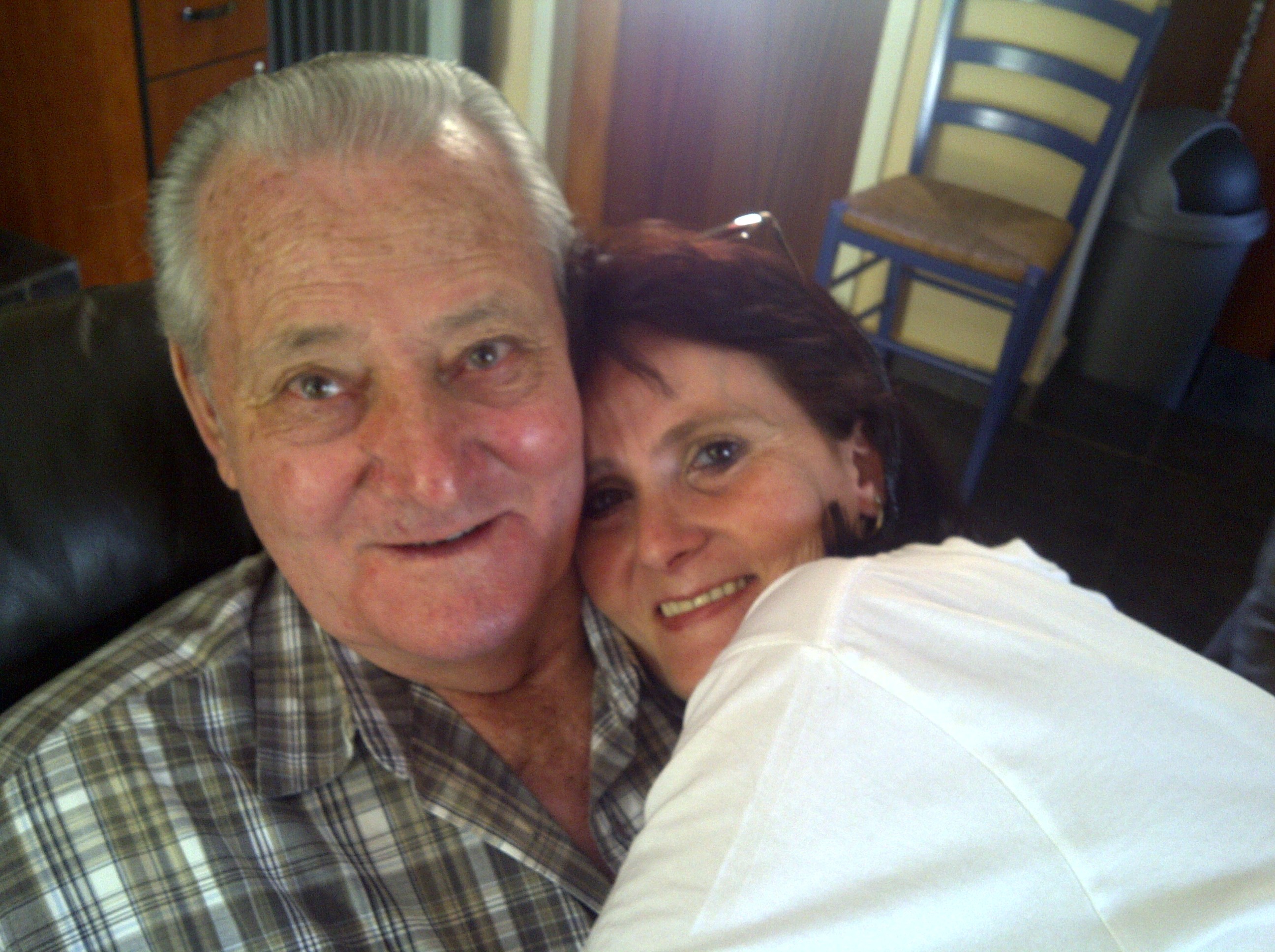
Gramps was here…..


Vic and her Gramps 1.4.2011

Monday 7.1.2013  was a crazy day.  Vic was not in a good space.

Angela, Vic’s BFF came to visit.  She is not only beautiful but also a calm and serene person.  She radiates goodness.  Angela being here gives me some time because I really trust her.  I am able to get some essential chores done knowing that she is keeping an eye on Vic.

“Gramps was here” Vic said.

“How is he?” I asked

“I don’t know.  He just came to tell me how much he loves us all…” Vic replied

My Dad forgot how to breathe on the 15th of May 2011.  He died in our home (in the very same room as Vic) surrounded by his beloved family.  At times he was a stranger in the world.   Some days he woke up in a room he could not remember from one nap to the next, lived with “strangers” and thought I was my Mom.  Despite the advanced Alzheimer’s, he never forgot who Vic was and that she was ill.  At times he forgot whether she was in hospital or out but he never forgot her or that she was ill.

“He has come to take you by your hand Sweetie…”  I said

“I KNOW Mommy” she said impatiently.

Lee, Jared’s BFF mom popped around with a huge basket of exquisite flowers.  Of course, Vic immediately got a bee in her bonnet and had to get out of bed.  Always the social animal!

Esther arrived and Vic burst into tears when she saw her sister.

“I am so scared Sis” Vic cried in her sisters arms.

Esther has become Vic’s “coach”.  She has the love for Vic to ask her what is holding her back; she tells Vic to run towards the light; to let go – the boys are safe are cared for.  She holds Vic and dries her tears….

Danie took the boys for a haircut and new school uniforms.

In the afternoon Joanna, one the Jon-Daniel’s primary school friends’ Mom, popped in for a visit.  It was touching when she spoke with Vic and apologized for coming to visit too late.  Vic was sleeping and not aware of the visit.  Joanna left with tears streaming down her cheeks.  She left a little gift for Vic

“I wrote your name in the sand
But the waves blew it away
Then I wrote it in the sky
But the wind blew it away
So I wrote it in my heart
And that’s where it will stay.”

 Siza arrived and told me that Sue would be in tomorrow morning to assess Vic.  She said Vic’s colour is very poor and the circulation in her legs bad.  Siza is of the opinion that the most humane thing to do for Vic would be to sedate her…  Her body is building up so much adrenalin fighting death that it is preventing her from dying – despite the organ failure.

I am torn.  My poor child’s anguish and pain sears through every nerve ending in my body.  Not only mine but also the rest of the family’s…..I want the emotional side of her journey to end.  But when I think that I will never hear her voice again, that I will never hear her cry and plead again… I want to die.  Sedation can end her emotional anguish, but deprive us of last words.

When I walked into Vic’s room after Sr Siza left Vic said “I just saw Dries.  He came to visit.  I have thought of him the whole day….”

Dries is a dear family friend who died last year…

In the evening Judy (Dries’ widow) popped around for a visit.  When I told her that Vic had seen Dries she burst into tears.  She said, her sister Lida, a deeply religious woman, told her earlier in the day that she had dreamt of Dries and that Dries was going to come and “fetch” Vic…

I pointed out to Judy that Dries, who was a tour guide by profession, would take Vic on the scenic route…

We laughed.

Later in the evening Bella, one of the ministers in my Church, and James, the senior elder, came to visit.  Bella, a dear friend over the years, spoke to the boys with so much compassion.  He grew up in a home with a mother who was ill.  He said that the congregation has never stopped praying for us as a family.  He said the congregation carries us in their hearts.  (One day I will still blog about Bella and his amazing ability to “pray Vic out of the claws of death”…)

We all stood holding hands around Vic’s bed whilst Bella said a beautiful prayer for Vic and the family.  Someone stifled a little sob.  There was absolute peace and a Godly presence in Vic’s room.

Related posts:

Rest in peace dear friend    https://tersiaburger.com/2012/08/07/rest-in-peace-dear-friend-7-8-2012/

For some dying is hard work   https://tersiaburger.com/2012/07/18/487/

Another birthday…..


South African grandchildren

Yesterday I celebrated (another) birthday.

Late Saturday night Vic’s restlessness was indicative that she was determined to be the first to wish me.  At 11.30 pm she came through and said “another half hour….. I want to be the first to wish you Mommy.  I just want 30 minutes alone with you on your birthday…”

“No problem angel.  I’ll switch the kettle on.” I said

“I will be back in a minute” she said

I made coffee and checked some e-mails.  At 12:00pm I expected her to come through singing “Happy Birthday” but no Vicky….

I went through to her room and the poor baby had fallen asleep on her bed…

Jon-Daniel came through and brought me a cup of tea on a tray, with a gift and card and a rose!  “Happy birthday Oumie” he said.

He had bought a book I have wanted to read for a while “The Elephant Whisperer” – It is an inspiring, true life drama of a herd of wild African elephants on an African game reserve. The herd is destined to be shot for dangerous behaviour when this special human being, Anthony, intervenes to try to save their lives.  I was so thrilled that he remembered.

Just before 01:00 am Vic shuffled into my TV lounge.

“Oh Mommy, I am so sorry I fell asleep.  I thought I would just close my eyes for 5 minutes whilst you make the coffee…”

We sat and chatted for a while.  Vic shared her good wishes with me and we just sat and spoke.  We spoke about our very special mother-daughter relationship.  We spoke about years gone by and how blessed we are to have this time together. (I cannot imagine Vic married and living in someone else’s home on her final journey.)

The girls, Esther and Lani, arrived at 10:00am with gifts, a cooked meal, dessert and cake.  The grandchildren set the table…  My sister Lorraine and dear friend Judy arrived bearing armloads of gifts.  The grandchildren had written me letters and cards – it was so special.  Vic bravely cooked a pot of rice and had lunch with the family.  All the grandchildren swam and played tug-a-war!   We laughed and joked.

It was a perfect day.

Esther and Lani planned the day to start early whilst Vic is at her best.  As the day progresses so her energy levels decrease.  Immediately after lunch Vic went to bed.  She was in so much pain and absolutely exhausted.

All the grandchildren wanted to stay.

Sunday evening we Skyped my son and his family in the UK.  Vic and Danie spoke.  Vic and Danie Jnr have a special bond.

DIGITAL CAMERA

Twenty two years ago I married Danie Sr and his four children; Esther 23, Lani 18, Liza 16 and Danie 11…  Danie married me and one, sick, very protected, spoilt brat, Vicky, aged 16.  Vic and Danie Jnr were the two kids who lived with us.  Vic embraced her new family.  (I was petrified of the children!)

Vic’s siblings have been amazing over the years.  I could never have coped as well as I do if it was not for their love, support and encouragement.  The siblings are fiercely protective of their little sister.

Vic and Danie Jnr spoke for at least 10 minutes last night.  It was a sad conversation between a brother and his older, little sister.

“I miss you so much Little Brother” Vic said

“I miss you too Vic.  How are you feeling?”  Jnr asked

“I am battling Boetie (Little Brother) Vic said

“We are coming to visit in April then I will see you Vic”

“I don’t know if I am going to make it to April” Vic said

“Just hang in there Vic.  It is not that long to April…” Jnr consoled her

“I know but I am tired.  I am just missing you” Vic cried

“I will fly over for a weekend.  I want to see you again” Danie promised

Vic was so tired last night.  Her little body cannot handle parties anymore.  She tries so hard.  This weekend we will have Jared’s 16th birthday.  It is only his birthday on the 26th but most of his friends are away for Christmas so we have his friend party an early in December.

I know this will more than likely be another last for Vic.

Esther, Vic and Lani


“Next year my mom and I are going to Italy”


DSC00053

Sue saw Vic this morning.   Her liver is very distended and exerting pressure on the right lung.   I now have to use her little arms and legs as injection sites.  I HATE injecting her in the legs.  The doctor fears that she will develop abscesses on her bum.  The entire derriere area is full of lumps and bruises.  When I inject her the injection site becomes “lemon-peely”.  The immediate area swells and becomes hard.  Sometimes there is a fair amount of bleeding or serum loss.  Her tissue is POOR!!!

I discussed various central line options with Sue.  Vic refused point-blank to even consider it.  Vic has been mainlined so many times.  She always asked the anaesthetists to not tape her hair to the central line….  Vic went into septic shock from a CVV, had the needle inserted into an accessory vein and had to be returned to theatre for the removal of the needle and the cauterization of the puncture wound in the vein….  Due to her poor tissue and bleeding tendencies it took two hours!

So we discussed the way forward.

Sue gave us a script for Pethidine.  We will alternate the morphine and Pethidine six-hourly.  The poor pharmacist….  She went into shock when she heard that the morphine is NOT being replaced by the Pethidine… that it is in addition to the morphine.

Now it is only a matter of time.  Vic’s organs are slowly shutting down.  My child is gently being eased into death.

The entire day it echoed through my mind “we cannot stop this.  It is happening”

Vic is calm and serene.

“Next year my mom and I are going to Italy” she told Sue today.

“Then I can die…”

“We will find a way my love” Sue said…

“It is closer that she realises” Sue said to me at her car

Do I tell her?” I asked

“No, her body will…” Sue said

I cannot bear the thought of living without Vic.


We need a miracle again….


Daniel and Vic 29-01-07

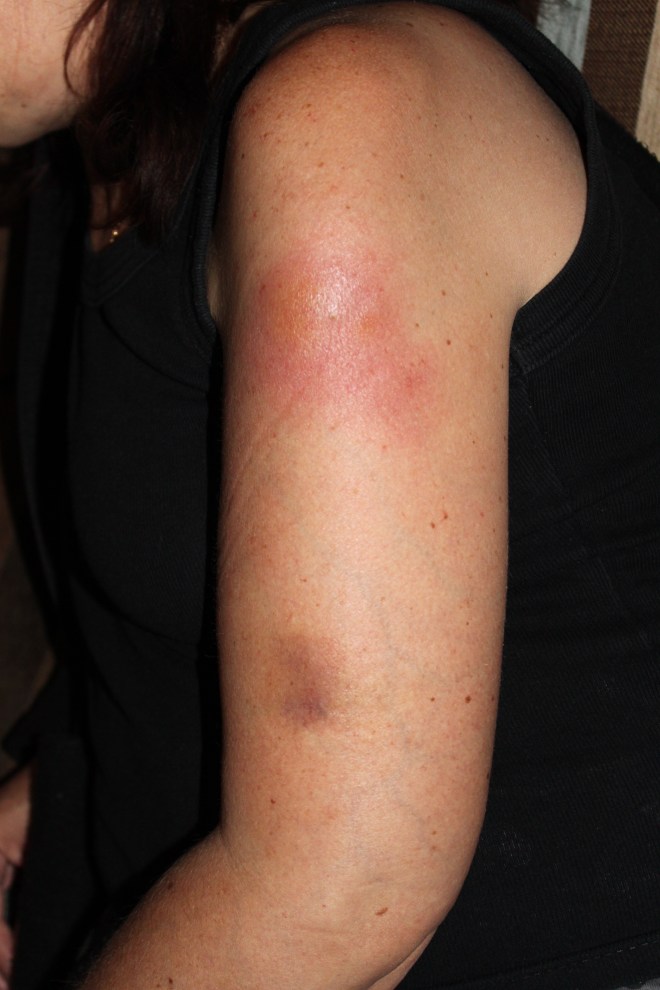
Sr Siza examined Vic today.  She phoned Dr Sue who will be in tomorrow morning.  She also brought a script with for Dalacin antibiotics.  The cellulitis has spread to all three the subcutaneous sites.

Siza expressed her concern at Vic’s decline…

Last Friday Danie, my husband, came and sat next to me and said “I know everyone says it will be better for Vic to die than live in this pain but I was thinking how hard it will be for us without her…”

That statement really shook me.  Up until now death has been a hypothetical issue… Doctors diagnoses and prognosis…predictions…  I have never really considered living without my child.

Last week Siza and I met with the CEO of Amcare, a large community project that provide community based feeding schemes, HIV/AIDS Counselling, Home-based care, skills development, ARV Clinic, women and children shelters.   We are hoping that they will “host” our Hospice at their premises.

The CEO knows Vicky and the boys.  Jared was confirmed in his church earlier this year.

I shared with them how difficult it was to get a terminally ill person into a Hospice Program and that 95% of the dying population die in pain.  Vernon (CEO) quietly listened to us and explained how difficult fundraising is.  Christians are tight with their money…

Vernon then shared the following with us.

“In 2007 I was driving home from a meeting when I felt this urgent need to see Vicky.  I knew she was in hospital as she was on the prayer list.  I drove to the Donald Gordon (Hospital) and was directed to the ICU.  The nurses welcomed me although it was way past visiting time.”

“Pray for her.  We are switching the machines off tomorrow morning…” they said.

I stood next to her bed, raised my arms and prayed that God would spare Vicky for her little boys.  I stood next to a dead person that night.  Two days later I heard that Vicky did not die when the machines were turned off…”

I just stared at him.  I was speechless…  I had no idea!   It was the first time I had ever heard the story!

In June 2007 Vic had developed ARDS (Acute Respiratory Distress Syndrome) after a series of operations trying to close up an abdominal fistula.  Her body was excreting up to 7 litres of faecal matter a day and she had every superbug the ICU could offer.  On the Tuesday Vic went into respiratory failure and was ventilated.  I was talking to her when the doctors rushed us out of ICU and put her onto the ventilator.  By the Thursday her kidneys and liver had started shutting down.

ARDS is a severe lung syndrome (not a disease) caused by a variety of direct and indirect issues. It is characterized by inflammation of the lung parenchyma leading to impaired gas exchange with concomitant systemic release of inflammatory mediators causing inflammation, hypoxemia and frequently resulting in multiple organ failure. This condition is often fatal, usually requiring mechanical and admission to an intensive care unit.   http://en.wikipedia.org/wiki/Acute_respiratory_distress_syndrome

My BFF, Gillian drove 350 kilometres to be with me.  On the Thursday there was absolutely no sign that Vic could or would recover.  Vic had a DNR and a living will that she had provided the hospital.

That evening one of the ICU doctors, Liam, hugged me and said “Mommy, Vic is tired.  You must let her go…”

Gill, Leeann (Vic’s friend) and I went home after visiting hour to talk to the boys.  They were already in bed when we arrived home.  We sat with them

Guys, you know how ill Mommy has been….Mommy’s lungs are not able to work on their own.  Mommy’s kidneys and liver is also not working that well anymore.  The doctors feel that Mommy will not be able to breathe without the machines and that Mommy has suffered too much.  They think it will be better for Mommy to be taken off the machines…”

Jared quietly started to cry.  Jon-Daniel was stoic.  Jared was 10 years old and Jon-Daniel 8 years old.

“What will happen with us Oumie” Jon-Daniel asked.

“Sweetie, Oumie and Oupie will ALWAYS be here for you.  This is your home.”

Jared cried himself to sleep.  Jon-Daniel just clung to me.  The three of us shared a bed that night.

The next morning early Gill, Lee and I set off to hospital.  When we arrived I said “I am not going into that hospital until I have prayed in the Chapel.”

The three of us prayed and it was with absolute certainty that I KNEW Vic would not die that day.

Family and friends drifted in and out of the waiting room the whole day.  My minister came and prayed for my child.  Everyone said goodbye.

That afternoon Danie and I were allowed to see Vic.  The “invasive” ventilator had been disconnected and she had a mask-like ventilator covering her face.  It was a grotesque sight.

Danie held her little hand and his tears dripped onto her arm.

Oh sweetie” he said, the sorrow and pain raw in his voice.

Vic opened her eyes and said “Daddy”….

Three days later Vic was discharged from ICU….. It was not her time.

Today I looked at her and fear struck at my heart.  My child is slowly slipping away.  Her little body is tired of the pain.  Her little organs are enlarged and diseased.  Her bones weak….

And the realisation hit home…. We need another miracle.

God please have mercy on my child.

Where to now?


IMG_7374

The subcutaneous driver is down.  By this morning it was obvious that Vic’s tissue was just not holding up. 

On Friday morning I removed and repositioned the driver.  Serum leaked out of the syringe hole for almost two days.  The area is inflamed, hot to the touch, swollen and painful.  Cellulitis has struck!  Yesterday evening I repositioned the driver again and this afternoon I removed it.  So I will now administer the 150mg of morphine and  the 60 ml Stemitil IM.  Vic’s derriere is black and blue and lumpy from the injections. 

Where to from here?  How are we going to control this poor child’s pain?  I can only think that they will have to fit a central line…  Will they do it?  She will have to go into theatre for that!  There is absolutely no way I would allow the procedure without sedation!  Central lines are very susceptible to infection and sepsis.  

Poor baby.  She is so ill.

Today I said to my BFF, Gillian, that it is almost as if, now the decision has been made regarding “her” Hospice, she is at peace.  I sat next to her and thought to myself “I wonder if she will make Christmas?”  But then I thought to myself “Wait a minute…This is Vic…She bounces back!”

Tomorrow her doctor will come and see her, she will go onto a course of antibiotics and bounce back again.  Then we will decide how to deal with her pain…

Central venous catheter   http://en.wikipedia.org/wiki/Central_venous_catheter


From Wikipedia, the free encyclopedia
Central venous catheter
Intervention
MeSH D002405

Central line equipment

CVC with three lumens

In medicine, a central venous catheter (“central line”, “CVC”, “central venous line” or “central venous access catheter”) is acatheter placed into a large vein in the neck (internal jugular vein), chest (subclavian vein or axillary vein) or groin (femoral vein). It is used to administer medication or fluids, obtain blood tests (specifically the “mixed venous oxygen saturation”), and directly obtain cardiovascular measurements such as the central venous pressure.

Contents

[hide]

Types

There are several types of central venous catheters:[1]

Non-tunneled vs. tunneled catheters

Non-tunneled catheters are fixed in place at the site of insertion, with the catheter and attachments protruding directly. Commonly used non-tunneled catheters include Quinton catheters.

Tunneled catheters are passed under the skin from the insertion site to a separate exit site, where the catheter and its attachments emerge from underneath the skin. The exit site is typically located in the chest, making the access ports less visible than if they were to directly protrude from the neck. Passing the catheter under the skin helps to prevent infection and provides stability. Commonly used tunneled catheters include Hickman catheters and Groshong catheters.

Implanted port

port is similar to a tunneled catheter but is left entirely under the skin. Medicines are injected through the skin into the catheter. Some implanted ports contain a small reservoir that can be refilled in the same way. After being filled, the reservoir slowly releases the medicine into the bloodstream. An implanted port is less obvious than a tunneled catheter and requires very little daily care. It has less impact on a person’s activities than a PICC line or a tunneled catheter. Surgically implanted infusion ports are placed below the clavicle (infraclavicular fossa), with the catheter threaded into the right atrium through large vein. Once implanted, the port is accessed via non-coring “Huber” needles inserted through the skin. The health care provider may need to use topical anesthetic prior to accessing port. Ports can be used for medications, chemotherapy, TPN, and blood. As compared to CVC or PICC catheters, ports are easy to maintain for home-based therapy.

Ports are typically used on patients requiring only occasional venous access over a long duration course of therapy. Since the port must be accessed using a needle, if venous access is required on a frequent basis a catheter having external access is more commonly used.

PICC line

A peripherally inserted central catheter, or PICC line (pronounced “pick”), is a central venous catheter inserted into a vein in the arm rather than a vein in the neck or chest.

Technical description

Triluminal catheter

Depending on its use, the catheter is monoluminal, biluminal or triluminal, dependent on the actual number of lumens (1, 2 and 3 respectively). Some catheters have 4 or 5 lumens, depending on the reason for their use.

The catheter is usually held in place by an adhesive dressing, suture, or staple which is covered by an occlusive dressing. Regular flushing with saline or a heparin-containing solution keeps the line patent and prevents thrombosis. Certain lines are impregnated with antibiotics, silver-containing substances (specifically silver sulfadiazine) and/or chlorhexidine to reduce infection risk.

Specific types of long-term central lines are the Hickman catheters, which require clamps to make sure the valve is closed, and Groshong catheters, which have a valve that opens as fluid is withdrawn or infused and remains closed when not in use. Hickman lines also have a “cuff” under the skin, to prevent bacterial migration[citation needed] and to cause tissue ingrowth into the device for long term securement.

Indications and uses

Indications for the use of central lines include:[2]

Central venous catheters usually remain in place for a longer period of time than other venous access devices, especially when the reason for their use is longstanding (such as total parenteral nutrition in a chronically ill patient). For such indications, a Hickman line, a PICC line or a portacath may be considered because of their smaller infection risk. Sterile technique is highly important here, as a line may serve as a porte d’entrée (place of entry) for pathogenic organisms, and the line itself may become infected with organisms such as Staphylococcus aureus and coagulase-negative Staphylococci.[citation needed]

Triple lumen in jugular vein

Chest x-ray with catheter in the right subclavian vein

The skin is cleaned, and local anesthetic applied if required. The location of the vein is then identified by landmarks or with the use of a small ultrasound device. A hollow needle is advanced through the skin until blood is aspirated; the color of the blood and the rate of its flow help distinguish it from arterial blood (suggesting that an artery has been accidentally punctured), although this method is inaccurate.[citation needed] Ultrasound probably now represents the gold standard for central venous access and skills, within North American and Europe, with landmark techniques are diminishing.[3][4]

The line is then inserted using the Seldinger technique: a blunt guidewire is passed through the needle, then the needle is removed. A dilating device may be passed over the guidewire to slightly enlarge the tract. Finally, the central line itself is then passed over the guidewire, which is then removed. All the lumens of the line are aspirated (to ensure that they are all positioned inside the vein) and flushed.[citation needed] A chest X-ray is typically performed afterwards to confirm that the line is positioned inside the superior vena cava and, in the case of insertion through the subclavian vein, that no pneumothorax was caused as a side effect. Vascular positioning systems can also be used to verify tip placement during insertion without the need to a chest X-ray, but this technique is not yet a standard of practice.

Videos are available demonstrating placement of a central venous catheter without[5] and with ultrasound guidance.[6]

Complications

Central line insertion may cause a number of complications. The benefit expected from their use therefore needs to outweigh the risk of those complications.

Pneumothorax

Pneumothorax (for central lines placed in the chest); the incidence is thought to be higher with subclavian vein catheterization. In catheterization of the internal jugular vein, the risk of pneumothorax can be minimized by the use of ultrasound guidance. For experienced clinicians, theincidence of pneumothorax is about 1.5-3.1%. Some official bodies, e.g. the National Institute for Health and Clinical Excellence (UK), recommend the routine use of ultrasonography to minimize complications.[7]

Central-Line Associated Bloodstream Infections (CLABSIs)

All catheters can introduce bacteria into the bloodstream, but CVCs are known for occasionally causing Staphylococcus aureus andStaphylococcus epidermidis sepsis. The problem of central line-associated bloodstream infections (CLABSI) has gained increasing attention in recent years. They cause a great deal of morbidity and deaths, and increase health care costs. Historically, a small number of CVC infections were considered an acceptable risk of placing central lines. However, the seminal work by Dr. Peter Pronovost at Johns Hopkins Hospital turned that perspective on its head. Additionally, the Institute for Healthcare Improvement (IHI) has done a tremendous amount of work in improving hospitals’ focus on central line-associated bloodstream infections (CLABSI), and is working to decrease the incidence of this particular complication among US hospitals.

The National Patient Safety Goals NPSGs and specifically NSPG 7.04 address how to decrease infections.[8] The NSPG 7.04 has 13 elements of performance to decrease CLABSIs.

The 13 Elements of Performance (EPs):

  • EP 1 & 2 deal with educating staff and patients about Central Vascular Catheters and their potential complications
  • EP 3 specifically directs facilities to implement policies and practices to reduce CLABSI
  • EP 4 & 5 are about how to perform surveillance for Central-Line Associated Bloodstream Infections (CLABSIs)
  • EP 6-13:

– Institute for Healthcare Improvement (IHI) bundle

  • 1. Hand Hygiene
  • 2. Full body drape
  • 3. Chlorhexidine gluconate skin anti-septic
  • 4. Selection of Optimal site for Central venus Catheter (CVC)
  • 5. Daily review of ongoing need for CVC

– Disinfection of intravenous access ports before use

National Patient Safety Goals require documentation of a checklist for CVC insertion and Disinfection of intravenous (IV) access ports before use (scrub the hub). Some literature has suggested the use of a safer vascular access route – such as intraosseous (IO) vascular access – when central lines are not absolutely necessary (such as when central lines are being placed solely for vascular access). Infection risks were initially thought to be less in jugular lines, but this only seems to be the case if the patient is obese.[9]

If a patient with a central line develops signs of infection, blood cultures are taken from both the catheter and from a vein elsewhere in the body. If the culture from the central line grows bacteria much earlier (>2 hours) than the other site, the line is the likely source of the infection. Quantitative blood culture is even more accurate, but this is not widely available.[10]

Generally, antibiotics are used, and occasionally the catheter will have to be removed. In the case of bacteremia from Staphylococcus aureus, removing the catheter without administering antibiotics is not adequate as 38% of such patients may still develop endocarditis.[11]

In a clinical practice guideline, the American Centers for Disease Control and Prevention recommends against routine culturing of central venous lines upon their removal.[12]The guideline makes a number of further recommendations to prevent line infections.[12]

To prevent infection, stringent cleaning of the catheter insertion site is advised. Povidone-iodine solution is often used for such cleaning, but chlorhexidine appears to be twice as effective as iodine.[13] Routine replacement of lines makes no difference in preventing infection.[14]

Thrombosis

CVCs are a risk factor for forming venous thrombosis[15] including upper extremity deep vein thrombosis.[16]

Other complications

Rarely, small amounts of air are sucked into the vein as a result of the negative Intra-thoracic pressure and insertion technique. Valved insertion devices can reduce this risk.[citation needed] If these air bubbles obstruct blood vessels, this is known as an air embolism.

Hemorrhage (bleeding) and formation of a hematoma (bruise) is slightly more common in jugular venous lines than in others.[9]

Arrhythmias may occur during the insertion process when the wire comes in contact with the endocardium. It typically resolved when the wire is pulled back.[citation needed]


What gives life will hasten death


Courtesy of: http://www.flickr.com/photos/violetteultracore/7442358584/lightbox/


I am so tired.  I think it is emotional more than physical.

Vic went to the movies with her friend Tracey today.  As she wanted to leave, Hospice arrived.  Sr Siza was VERY dubious whether she should go…  Anyway the boys went with to make sure she was okay.  They are so protective of her.

When Tracey dropped her at home she was so tired she could not lift her feet.  She immediately got into bed and I know it will take days for her to recover.  I am grateful that she enjoyed the movie.  I cannot believe my child went and saw The Twilight Saga Breaking Dawn Part 2!!  She is the most anti-vampire person I know!

She said “Oh Mommy, the one part was scary but it was so much fun!”

I have read up on the effects of continued morphine administration when someone is in Renal and Liver Failure.  We have no option but to continue the pain medication regime… It will help her live and yet it will certainly contribute even hasten her death.

I don’t care.  I want Vic to be as pain-free as possible.  It is becoming increasingly difficult to do so.  She is literally on a “morphine on demand” regime.  She cannot overdose – she is too used to Morphine.  The dosages have been titrated over many years…

It will be a difficult night.


A night out of hell


Vic had a night out of hell!  The nausea was vicious and unrelenting.  Pain reduced Vic to a whimpering bundle of human flesh.

Vic’s palliative Care physician, Dr Sue, visited Vic this morning.  I think she was a little taken aback by Vic’s condition.

Sue is an amazing person.  She was so gentle with Vic.  Vic’s heart rate is fast and her blood pressure is 101/58.  Vic has a bronchial infection, her liver is taking severe strain and the sepsis has flared up – badly.  Her oxygen saturation levels are low – 90%.

Sue gently explained that although Vic is running a fever her body’s “warning systems” have started shutting down….. Vic is very warm to the touch yet the thermometer only reflects a temperature of 36.8⁰.

I asked her what I was doing wrong because sometimes, when I inject Vic and withdraw the needle, blood and/or the injection fluid spews out!  Sue explained that it because Vic’s collagen is so poor…. In layman’s terms; the flesh does not “seal” when I extract the needle….  That is why the subcutaneous syringe driver did not work and blood and whatever else spews out.

Vic is such as gentle, beautiful, caring human being.  Last night when I gave her an additional morphine injection, in desperation, she said “Mommy, what do poor people do who have no access to pain medication?

As a layman with access to Google I Googled “low oxygen saturation” and nearly had a heart attack of my own.

Basically, a saturation of 97% of the total amount of hemoglobin in the body is filled with oxygen molecules. A range of 96% to 100% is generally considered normal. Anything below 90% could quickly lead to life-threatening complications. The margin between “healthy” saturation levels (95-98%) and respiratory failure (usually 85-90%) is narrow. If oxyhemoglobin is low (below 90%) inadequate amounts of oxygen will reach body cells!

As a rule of thumb, respiratory failure usually occurs when saturation (SpO2) falls to 90%, although some patients with chronic respiratory disease may tolerate lower saturations. http://www.favoriteplus.com/oxygen-saturation.php

Every time your blood oxygen level falls below 92% saturation your body suffers drastic consequences Insufficient oxygen level is an immediately life threatening issue. http://www.heartfailuresolutions.com/34/oxygen/low-oxygen-levels-how-low-is-too-low-and-should-you-worry

By tomorrow afternoon we should start getting the results in from the blood tests and blood gases.  In the interim Sue has increased the amount of intravenous anti-nausea medication as well as the pain medication.  Dr Sue will make a call tomorrow whether Vic should go onto oxygen or not.

We have cancelled all our vacation plans.  We desperately wanted to take the boys away for a couple of days to give them a break, but it is not possible.  We will have the best Christmas ever.  A Christmas filled with love and togetherness….  Maybe our last.


Signposts for Dying


Yesterday I posted on “time”.  Today after the visit from the Hospice sister I actually realized that just maybe Vic has entered the first stages of dying 

Some of the stages of dying start to be discernible a few months before death occurs.  

 Vic has become less active; she rests more, sleeps more and has withdrawn into her own inner realm. 

 Vic is reliving memories and spends a lot of her awake time talking to the boys about her childhood, her “illustrious” school career and their childhoods.  This year she relived every minute of her father’s final journey… Vic has started living in the past.  

 I read that it is the terminally ill’s way of taking stock of their lives and making their peace with it.

 Vic no longer eats big meals and I seldom hear her say “I am ravenous”.  Due to the 81 abdominal surgeries and multiple bouts of septicemia  Vic’s absorption is very poor.  (Poor absorption = BIG appetite!)  Vic used to have the appetite of a horse – always nibbling and scrounging for food.  Now it is sheer discipline that keeps her eating.  She knows she cannot have medication without eating first.  Strange thing is that she is not really losing weight.  Hospice says it is due to the high levels of cortisone she takes…  I have been told by Hospice not to worry about her loss of appetite.  Her body does not need a lot of fuel (food) anymore because it is not burning a lot of energy anymore….

 The effect of the reduced food and liquid intake is that the body starts producing chemicals that create a feeling of mild euphoria.  Our bodies actually start relaxing into this stage of dying. 

 Vic still drinks a fair amount of coffee.  She used to drink it warm but now she dozes off before she has finished her cup of coffee.  She will wake up and take a sip of cold coffee… A cup of coffee now lasts a long time.

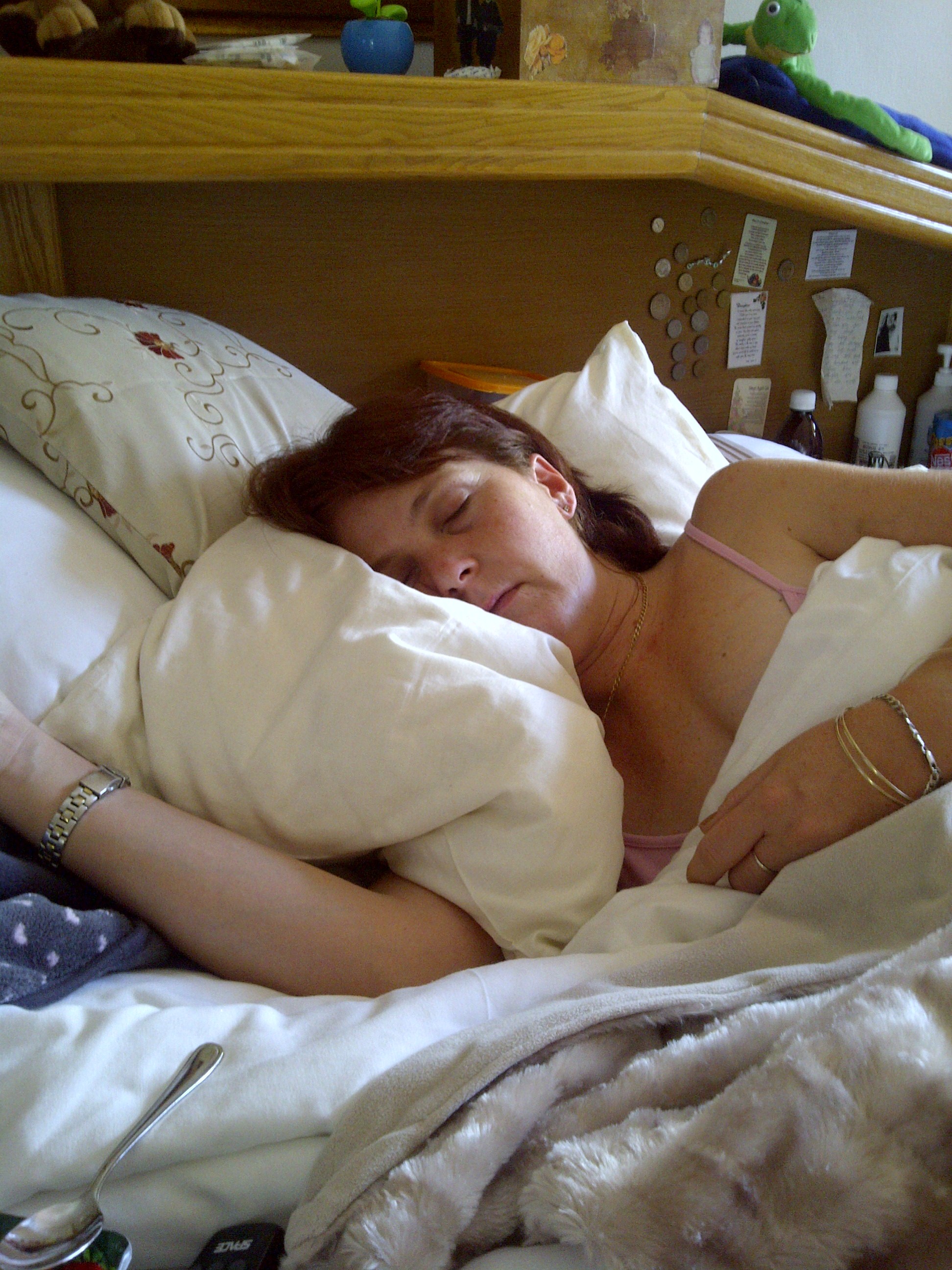
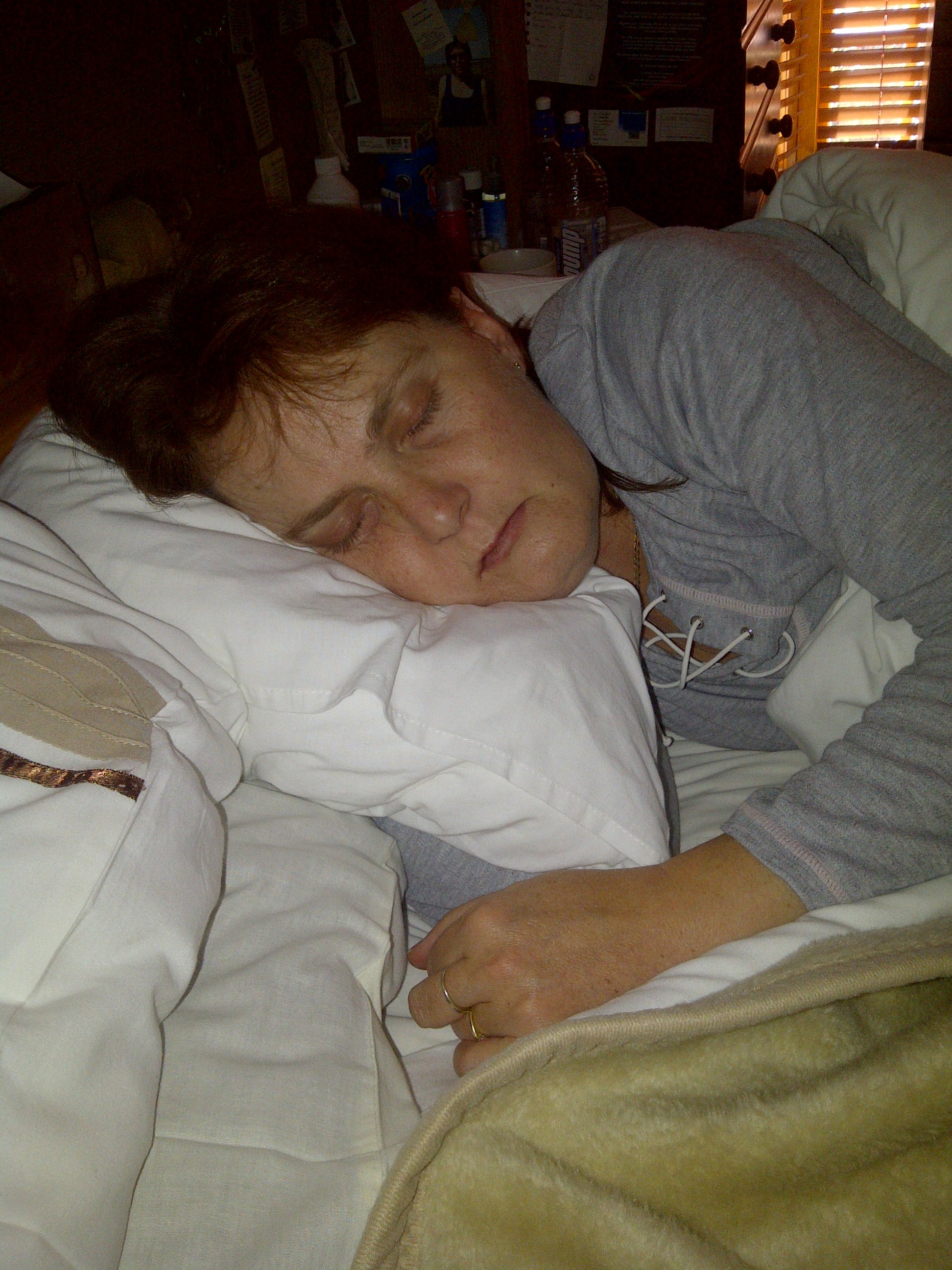
Vic spends the majority of the day in bed, gently dozing…. It is not a deep sleep.  It is as if her little body is preparing to hibernate….preparing for what lies beyond death whether it is Heaven, Nirvana or the Other Side…. 

 Reduced appetite and increased sleep is called “Signposts for dying”.

 A couple of weeks ago Vic was very emotional.  She would tear up without any reason.  This stage has passed.  It is as if her tears cleansed her soul. 

 Vic is battling with loneliness.  She hates being alone.  If she could she would have one of us around her all the time.  She often complains that we do not spend time with her.  We do spend a lot of time with her.  She just dozes off and then we leave to carry on with our lives…  The boys are writing exams – they have to study; I have to work…. Dying is a lonely journey

 Vic is not in good shape at all.  She is suffering severe cramping and nausea that is not responding to any of the medication.  The Hospice Sister called the doctor this afternoon and asked her to see Vic in the morning.  She also suggested that Vic be admitted to Hospice In-Patient’s.  Vic and I firmly declined…

 It is obvious that Vic has one or other infection.  I think it is the abdominal sepsis.  She seems flushed and feels hot and cold.  The thermometer does not reflect her running a fever.  This is obviously something as Ceza mentioned it to the doctor.  She explained that this happens when the auto-immune system is compromised.  I have tried to Google it but without too much success.  I will ask the doctor tomorrow morning.

 Vic is in terrible pain tonight.  I have already given her double her normal evening morphine injections; double the quantity of morphine syrup; I have changed her Durogesic patches…. I lay behind her back and gently held her until her breathing became deep and even.  She whimpered in her drug-induced sleep….

 I know the shutting down process has started.  Not because Hospice told me but because Vic told me. 

 Will my poor baby’s hell ever end?  If there is a lesson to be learnt PLEASE God show me what it is so I can learn it!!  This has come to an end!


“How did it get late so soon” – Dr Seuss


Two minutes to twelve…..

Today I read a lovely blog that Andrew had reblogged.  http://lymphomajourney.wordpress.com/2012/11/10/living-with-cancer-its-about-time-nytimes-com/

Several studies have suggested that when dealing with terminal illnesses, especially cancer, doctors are usually incorrect in their prognosis, nearly always tending to believe that their patients will live longer than they actually do. 

In one study involving patients in Chicago hospice programs, doctors got the prognosis right only about 20 % of the time, and 63% of the time overestimated their patients’ survival.

Interestingly, the longer the duration of the doctor-patient relationship, the less accurate was the prognosis. “Disinterested doctors . . . may give more accurate prognoses,” the authors wrote, “perhaps because they have less personal investment in the outcome.” http://www.kevinmd.com/blog/2012/04/doctors-incorrect-prognosis-terminal-illness.html

Eight years ago we were told that Vic’s life was “compromised” and that she would die within the next 5 years.  Eight years later Vic is still alive.    Maybe Vic’s doctor is too close to Vic….

Eleven years ago Vic had blotched back surgery setting her off on a journey filled with pain, 81 abdominal surgeries, years in hospital and millions of rands worth of medical expenses.

Vic realized that her life had been compromised and started saying “If only I can see Jared go to school…”  I remember her joy the first day Jared went to school.  Then she said “If only I can live to see Jon-Daniel go to school…”  I remember how desperately ill she was the day Jon-Daniels started school….

Now both her boys are in High School.  I never hear Vic saying “I wish” anymore.

Tonight we discussed going to the coast for a week in January.  Vic just shook her head sadly and said “It is too far Mommy.  Even if I fly down I think it will be too much for me…”

It is all about time.

Time grinds to a halt when Vic needs her 4 hourly pain medication and there is an hour to go… when she screams from pain and her blood pressure is too low for more pain medication to be administered…

The longest nights are the nights before surgery and after surgery.  The longest passage is the passage outside the operating theater and ICU.

Whilst I was in the UK Vic did well.  She fired her nurse and administered her own injections into her legs!  I have been home for six days and Vic is really ill.  I expected her to have the “up-time” whilst I was gone.  I knew that she would use every ounce of her residual strength to be “good” while I was gone.  Vic bounced around and amazed everyone who came into contact with her.  Cr Ceza, her Hospice sister, however spoke to her in the presence of Danie and Esther and told her that the ONLY reason she was feeling great was because her pain control was optimal.  Her body would however betray her.  She said that Vic’s body has started shutting down….slowly but surely.  The process is inevitable… I believe that Hospice is wrong.  They have to be wrong.

Tonight I am sitting here just wondering where time has gone.

The Blog I read today articulated my thoughts and emotions so accurately

“In the immortal words of Dr. Seuss, “How did it get so late so soon?” Without much of a future, surely time will again change.   A lot can happen in a year — think of the helpless infant becoming a walking, talking toddler in 9 or 10 months. Time moves more slowly for small children, since a year of a 2-year-old’s life is 50 percent of that life. A terminal diagnosis may also slow down time. The next year might be 100 percent of what’s left of my existence.”

Sometimes the time left seems too long; too many catastrophes could injure those I love. Sometimes it seems too short; there are so many suspenseful stories unfolding around me, and I want to see how they will turn out. Those for whom time’s chariot is indeed winged often attest to a heightened appreciation of their fast-fading prospects. And then there is always the dream of borrowed time, that numinous period beyond the predicted end, like a stay of execution, which must be fraught with its own blessings and curses. .  http://lymphomajourney.wordpress.com/2012/11/10/living-with-cancer-its-about-time-nytimes-com/

We have already had so many “extra” years.  But the fact remains that Vic is ill.  Today she is more ill than yesterday or even last week or last month.  It is not an UTI causing the pain and fever.  Her pain control is good enough to mask symptoms.  Waves of severe nausea and cramping remain…

I don’t even want to consider the possibility that the pain is caused by Vic’s organs slowly starting to shut down….. One organ after another….  I have read that it feels “uncomfortable”.  It is called terminal agitation.

Only time will tell….  Time is all we have….

How did it get late so soon?

Related Posts:

https://tersiaburger.com/2012/10/15/remission-15-10-2012/https://tersiaburger.com/2012/08/02/5-stages-of-dying/  https://tersiaburger.com/2012/08/08/dummys-guide-for-the-parents-of-a-terminally-ill-child/ 

https://tersiaburger.com/2012/07/02/vic-regrets-not-going-to-italy/ https://tersiaburger.com/2012/07/20/thank-you-god-20-7-2012/  https://tersiaburger.com/2012/08/05/what-can-we-hope-for-when-there-is-no-hope/ 

“Being prepared to die is one of the greatest secrets of living.” George Lincoln Rockwell


26.6.2012 Before Hospice

Pain at the end of life is inescapably interwoven with, and often amplified by, multiple levels of emotional and spiritual angst as the inevitability of death looms. Fear, a potent pain magnifier, is the dominant emotion – fear of pain, fear of death, fear of the unknown…..

It is a fact that people at the end of life fear pain even more than they fear death. Sadly, for many dying patients, pain seems like the ultimate torment, and death is its cure. It does not have to be this way, and if you or a loved one is facing death, you have every right to ask that your final days not be consumed by pain.

It is estimated that a maximum of 5% of people who die from terminal illness in South Africa have access to adequate palliative care. Even in hospitals, treatment is far from ideal, because doctors and nurses have seldom had training in palliative care and have little idea of what to do with the patients.

Dying patients are often prey to a host of anxieties about the state of their affairs, about the fate of those who will grieve their loss, and about how their behaviour will be seen, and possibly judged, during their final hours. And of course, there are often deep spiritual and religious questions to address. Did my life have meaning? Will my soul survive my body? Am I at peace with myself, my family, and my friends?

Not least of all these concerns, people at the end of life worry about how their pain will be managed. Will they be under medicated and have to ask, or even beg for relief? Will they be over-medicated and lose consciousness during their precious waning days and hours?

They may even be afraid to complain. If they do, will they be seen as whiners or quitters? If they ask for narcotics, will they be judged by their doctors as drug seeking, drug addicts or even cowardly? Or will their medical care be relegated to comfort measures only, while all efforts to cure their illness are suspended?

I read the post of an amazing woman who is suffering from congenital heart failure.  She is in so much pain.  I cried when I read her post.  http://thedrsays.org/2012/11/08/  She replied to a question whether better pain control was possible…..  “there is nothing that will let me participate in life and have relief. so at this point i am going for being lucid over some so-so pain relief. who knows how long before i cave. when the time comes i plan to take advantage of whatever is available to me. just my personal choice right now.”

Vic has received a new lease on life.  Vic has 100% better quality of life since her pain is under control. We discovered, through the expertise of a wonderful palliative care team that Vic’s body did not absorb monstrous quantities of morphine! Now she is not only functioning, she is LIVING!  Vic is more lucid than she was before.

The pain was killing Vic… Palliative care has given her life.

Living life to the full!

 Being prepared to die is one of the greatest secrets of living.   George Lincoln Rockwell 


Hospice Day 11


Last night was an absolute night out of hell.

The subcutaneous syringe driver was halted as Vic’s tissue is so bad.  Vic is now on 100mg Durogesic patches and morphine syrup.  Initially it appeared to be an okay solution.  Then the nausea started…. The pain steadily increased to absolute intolerable levels by last night.

Yesterday morning Vic was great!  She obviously still has some of the intravenous morphine in her system.  (I also gave her extra morphine syrup as a precaution).  She went to breakfast with her friend Angela and had a wonderful time.  She glowed when she got back.  Gill, my BFF, popped in for a cup of tea and was amazed (once again) at how well Vic was looking.  Madam was even wearing a shoe with a little heel (which we made her take off).

In the afternoon Vic started looking grim.  She was nauseous and suffering from abdominal cramping.  Her tummy was distending.

By 10pm last night Vicky was sobbing with pain.  By 11pm she was vomiting uncontrollably.  She has severe intestinal pain and I believe she fractured a vertebra with the vomiting.

This morning I had an early meeting.  Half an hour into the meeting Vic phoned sobbing uncontrollably.  I was unable to hear what she was saying through her sobs.  I just said “Baby, I am on my way…”

When I arrived at home Sr Ciza from Hospice was here.  She had given Vic a morphine injection and an additional 25mg Durogesic patch.  Vic was already looking so much better.  Ciza encouraged me to get a night nurse to assist me… She had written a motivational letter to the medical aid without my knowledge.  I don’t think I am ready for that yet.

Whilst she was vomiting last night I thought of how quickly she “crashes” and how the good times have almost disappeared.  Yesterday morning Angela actually looked at me with a question mark in her eyes when Vic said she wanted to go out for breakfast.  I nodded my “consent”.  You see I had just read a comment from an incredible brave lady.

my husband has expressed the same concerns you have over your daughter pushing too hard when she does feel better. it is so important to me when i do have a good day to get out or make dinner, even doing laundry makes me happy. it is a reminder that i am still me. while i see your point and his, i know how vic feels and know that for me it is worth the price i pay afterward to have that time where i feel like the old me. the me before.  My heart goes out to you all and say a little prayer for your continued wisdom and love. http://thedrsays.org/” 

Today I would also like to quote my “mentor into the world of pain” Tracy Rydzy   http://ohwhatapain.wordpress.com/author/ohwhatapain

The concept of illness as a way of telling you to slow down is frustrating, as I have always lived life in the proverbial fast lane.  Since my first surgery, my life has basically come to a screeching halt.  Any living I do is now in the slow lane, sometimes I never even make it off the shoulder.  I think one of the most difficult aspects of pain, especially during a flare, is the comorbid (I have to use my expensive Master’s Degree vocabulary sometimes) depression and mood swings. 

It’s hard to deal with the slow down.  I mean, generally, this is something that comes with age and is a natural part of life, but when it happens at 33, how the heck do you reconcile that?  Before “all this” I felt so strong.  I felt like I could take on the world.  I used to be busy everyday, all day and the craziness of my schedule was like a high.  Now, I have maybe a quarter of that activity, some days, I have none.  The worst part about slowing down is that the pain slows down my body, but not my mind (thankfully), so in my head I still feel like the woman who can go all day, do it all, run around all day and still have energy left to cook dinner and clean the house.  Nowadays I get up at 1030am on a good day, workout and do maybe one chore, and by the time I am done I want to cry from pain and exhaustion.  But I am still me.  I refuse to let the pain change who I am.

I still feel like I can do it all, but I can’t. The constant drive to push and do more is, at times, a gift and a curse.  I still push  myself to do more, even if it comes with the cost of a day in bed.  When it comes to physical therapy (and the accompanying weight loss), I know that I push myself too far, too often.  That part of my brain that refuses to accept this “new normal” can’t give up certain things.  One thing I can do is physical therapy, so I will do it as hard as I can and push myself, regardless of the cost to my body.  A couple of weeks ago I hurt my back (more) while driving and the surgical nurse, who knows me well by this point, actually said, “I tell most patients to slow down for a little while, but I won’t bother telling you that, I know you won’t.”

Sometimes the slow down causes resentment.  I get angry that those around me have a life and are busy and that adds to the mood swings and depression.  The weekends are the hardest because I want to do so much more than I realistically can, yet I watch friends and family run from event to event with no need to stop and rest.  For me, a trip to Wal-mart requires a rest.

Flares do bring up an interesting realization, though.  Until things get as bad as they are right now, I didn’t realize that I was in less pain before.  So, in essence, flares tell your body to slow down and take it easy, but at the same time, for me at least, it takes something bad to make me realize that before this, I was feeling a little better, at least by comparison.  Now if only I could return to feeling like crap instead of complete crap…

So, the bottom line is, what do you do when life slows you down?  http://ohwhatapain.wordpress.com/2012/09/26/flares

I wish I had understood Vic’s pain-filled world earlier.  I am so sorry for getting angry with her for trying to live.  I wish we had more time.

Hospice counseling….


We met with Alan, the Hospice counselor, today.

On our way to Hospice Jon-Daniel sat with his arms crossed muttering “I don’t need to see anyone” under his breath.  “I am like you Oumie.  We don’t talk…”

Yeah”  I said.  “But I really think the time has come for us to talk to someone.  Besides it is part of the Hospice thing.  We have to do it!”

The whole day I was thinking of shrink jokes” Jared said.  “Do you think I can ask him ‘how does this make you feel?‘”

We all laughed.

Guys if we don’t talk to the counselor we may have to come back…. Let’s answer all the questions and get it over and done with….” I cautioned

Alan is a short young man.  I think he is in his early thirty’s.  We shook hands and he asked us how we wanted to “do it?”

The boys went in on their own.  I sat in the waiting room saying a little prayer that they would open up to this professional stranger who is an expert in dealing with death.  Thirty minutes later I was invited in.

The boys tell me they are coping well.  They don’t see the reason for seeing me…..What do you think?  Are you guys coping?”

I was truly taken aback.  “Yes, I think we are coping.

So Tersia, why do you think the boys need to see me?”

I did not speak for a couple of minutes.  I was grappling with my brain as to how much I should tell this stranger.

I think the emotional roller coaster is getting to us.  We have said our goodbyes so many times and Vic always bounces back!” I eventually said.

“Yes, Jon-Daniel said so” Alan replied.

“I worry that the boys live in a home where death lingers.  There is not enough laughter in our home.  It saddens me when they stand next to their Mom’s bed and I see the helplessness in their eyes!” I mused

“I get impatient with Vic.  When she has half a breath she will organize a party.  When the pain medication works she will not pace herself.  She will hurt herself and  then I have to pick up the pieces.  Sometimes I am scared that her suffering will not end. ” I continued.

What type of party will she organize?” Alan asked.

The boys and I laughed!

“It is only a figure of speech….” we explained.  “She will try and do things with the boys and hurt herself.”

What type of things?” Alan asked

Drive and take us for a milkshake” Jared replied.

“Mom forgets things and she thinks we are all against her…  Yesterday she said to me that I must not feel guilty if she dies and I am cross with her…Mom always thinks we are fighting with her….” Jon-Daniel said.

It is not about the final moments.  It is not the final words or even the final disagreement.  It is about the life and all the years of loving before death and dying…. You must not ever blame yourself for anything.  Life is hard for all of you right now.  It is okay to be scared and to get irritated.  You must tell your Mom how you feel.  I am not saying you must back-chat.  What I am saying is that you must tell your Mom how her actions and illness makes you feel.  The household consists of more than one person…. You all have the right to living…”

The boys asked to see Alan for another session….  Thank you God for another angel!