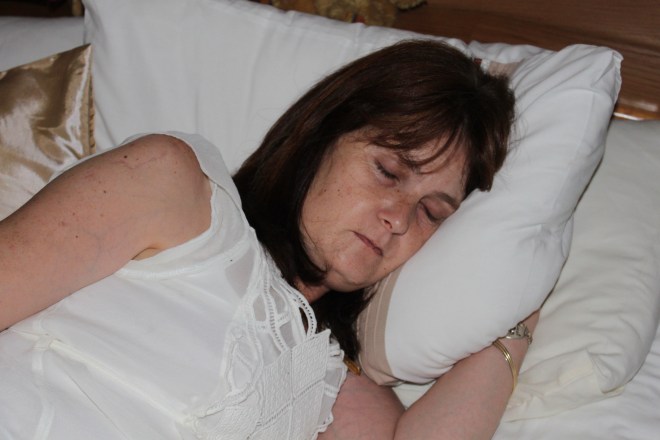
Vic is sleeping peacefully


IMG_4860

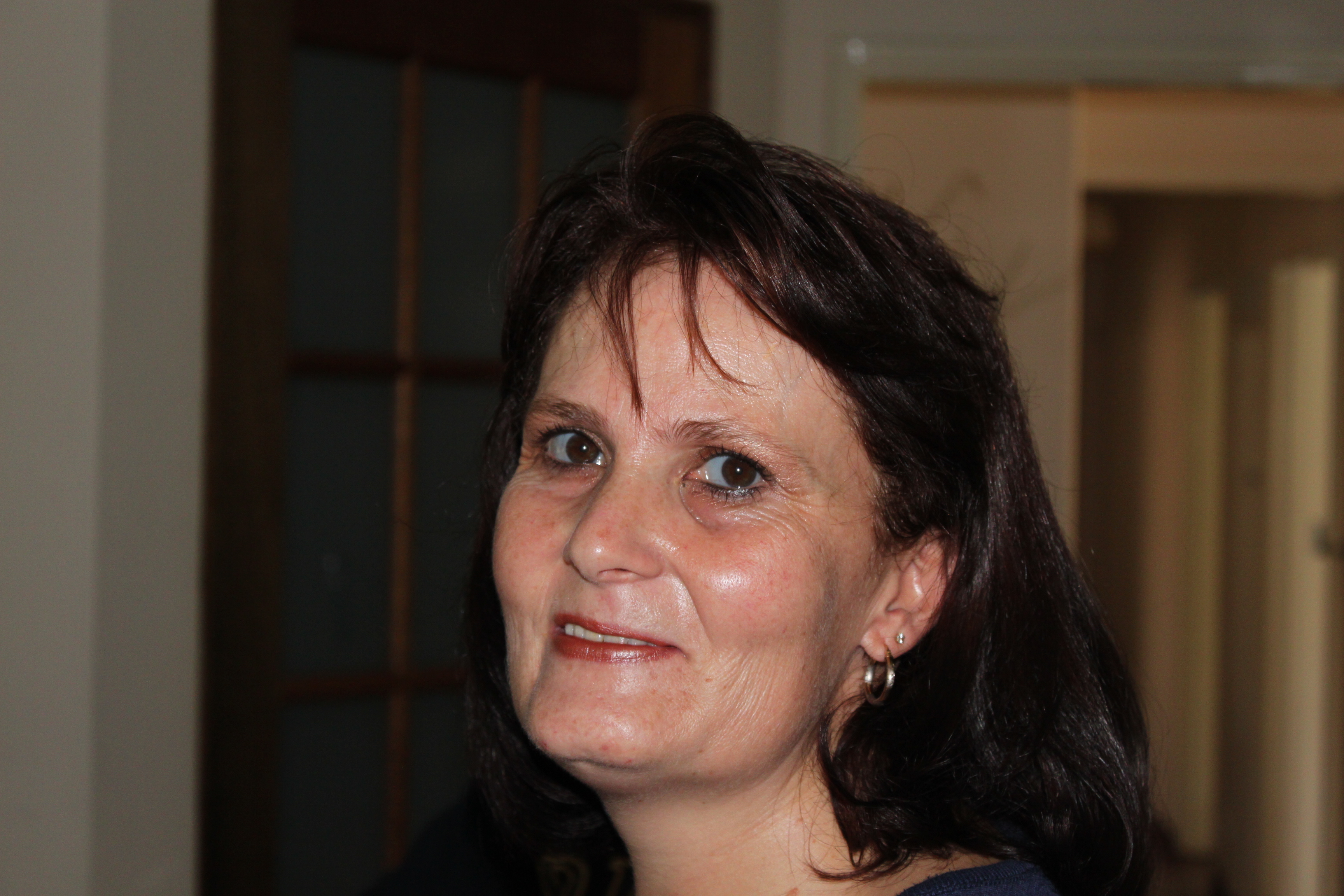
It is 12:42am and Vic is sleeping peacefully.  She had a “good” day. In between her naps she had lunch with a friend, a visit from Esther and a walk in the garden with Jared!

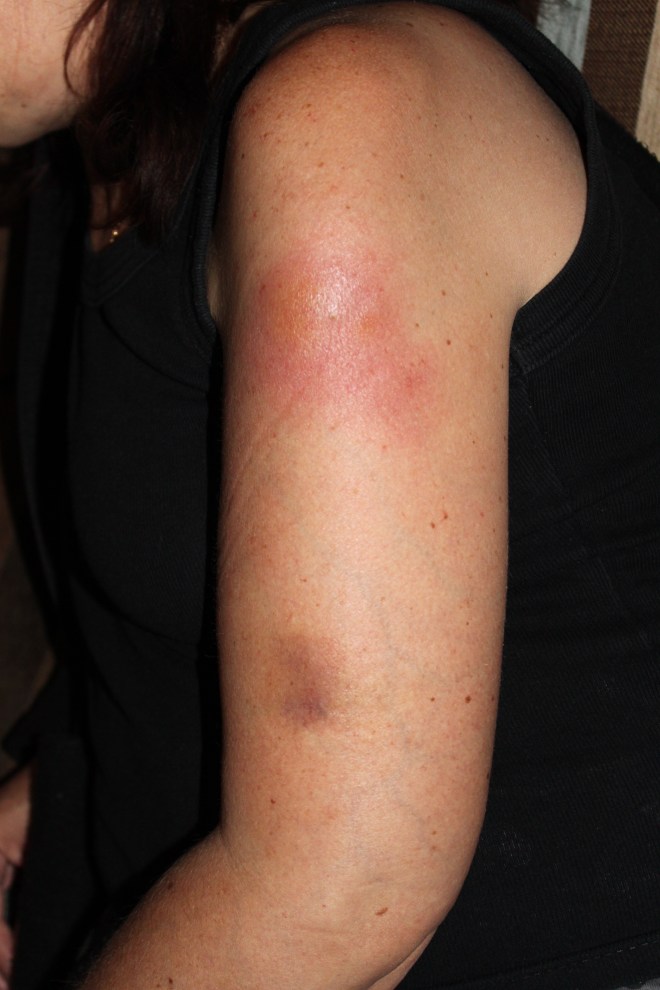
Vic’s legs are growing very weak.  The cellulitis on her arm has worsened despite the antibiotics.  It is now oozing pus.  Sr Siza will see her tomorrow, and I believe Vic will have to go onto IV antibiotics.  She had a violent vomiting spell just after she took her antibiotic tablets tonight.  It is very difficult for her to keep tablets and food down.  Despite the six-hourly anti-nausea injections she has….  And of course there is the problem of the poor absorption.

“I can’t do this anymore…” Vic mumbled to herself tonight after the vomiting episode.

The situation is getting to Danie.  My poor husband tries so hard to be strong and make life easier for the rest of us.  Jared and Jon-Daniel are deeply conscious of the situation.

“Life will be horrible without Mommy” Jared said today.  “She takes so much of our time, and such a big space in our lives….  Mommy has such a presence Oumie…”

We spoke about his little brother and Jon-Daniel’s inability and aversion to discuss his emotions.

I realised that the boys are already starting to dread the void Vic’s passing will leave.  Anticipatory grief is a killer.  It is unfair that these two beautiful boys have to experience so much pain and hardship in their young lives.  They should be riding their bikes and getting up to mischief.  Now they are stressed out because their mother is dying.

I am too tired to write anything that makes sense.  I just need to record today.  I never want to forget today.

I want to remember how I felt when I lay with my child this afternoon.  I want to remember her tears when she spoke to her sister.  I want to remember the smell of her vomit.  Maybe it will make it easier to accept later on.

We need a miracle again….


Daniel and Vic 29-01-07

Sr Siza examined Vic today.  She phoned Dr Sue who will be in tomorrow morning.  She also brought a script with for Dalacin antibiotics.  The cellulitis has spread to all three the subcutaneous sites.

Siza expressed her concern at Vic’s decline…

Last Friday Danie, my husband, came and sat next to me and said “I know everyone says it will be better for Vic to die than live in this pain but I was thinking how hard it will be for us without her…”

That statement really shook me.  Up until now death has been a hypothetical issue… Doctors diagnoses and prognosis…predictions…  I have never really considered living without my child.

Last week Siza and I met with the CEO of Amcare, a large community project that provide community based feeding schemes, HIV/AIDS Counselling, Home-based care, skills development, ARV Clinic, women and children shelters.   We are hoping that they will “host” our Hospice at their premises.

The CEO knows Vicky and the boys.  Jared was confirmed in his church earlier this year.

I shared with them how difficult it was to get a terminally ill person into a Hospice Program and that 95% of the dying population die in pain.  Vernon (CEO) quietly listened to us and explained how difficult fundraising is.  Christians are tight with their money…

Vernon then shared the following with us.

“In 2007 I was driving home from a meeting when I felt this urgent need to see Vicky.  I knew she was in hospital as she was on the prayer list.  I drove to the Donald Gordon (Hospital) and was directed to the ICU.  The nurses welcomed me although it was way past visiting time.”

“Pray for her.  We are switching the machines off tomorrow morning…” they said.

I stood next to her bed, raised my arms and prayed that God would spare Vicky for her little boys.  I stood next to a dead person that night.  Two days later I heard that Vicky did not die when the machines were turned off…”

I just stared at him.  I was speechless…  I had no idea!   It was the first time I had ever heard the story!

In June 2007 Vic had developed ARDS (Acute Respiratory Distress Syndrome) after a series of operations trying to close up an abdominal fistula.  Her body was excreting up to 7 litres of faecal matter a day and she had every superbug the ICU could offer.  On the Tuesday Vic went into respiratory failure and was ventilated.  I was talking to her when the doctors rushed us out of ICU and put her onto the ventilator.  By the Thursday her kidneys and liver had started shutting down.

ARDS is a severe lung syndrome (not a disease) caused by a variety of direct and indirect issues. It is characterized by inflammation of the lung parenchyma leading to impaired gas exchange with concomitant systemic release of inflammatory mediators causing inflammation, hypoxemia and frequently resulting in multiple organ failure. This condition is often fatal, usually requiring mechanical and admission to an intensive care unit.   http://en.wikipedia.org/wiki/Acute_respiratory_distress_syndrome

My BFF, Gillian drove 350 kilometres to be with me.  On the Thursday there was absolutely no sign that Vic could or would recover.  Vic had a DNR and a living will that she had provided the hospital.

That evening one of the ICU doctors, Liam, hugged me and said “Mommy, Vic is tired.  You must let her go…”

Gill, Leeann (Vic’s friend) and I went home after visiting hour to talk to the boys.  They were already in bed when we arrived home.  We sat with them

Guys, you know how ill Mommy has been….Mommy’s lungs are not able to work on their own.  Mommy’s kidneys and liver is also not working that well anymore.  The doctors feel that Mommy will not be able to breathe without the machines and that Mommy has suffered too much.  They think it will be better for Mommy to be taken off the machines…”

Jared quietly started to cry.  Jon-Daniel was stoic.  Jared was 10 years old and Jon-Daniel 8 years old.

“What will happen with us Oumie” Jon-Daniel asked.

“Sweetie, Oumie and Oupie will ALWAYS be here for you.  This is your home.”

Jared cried himself to sleep.  Jon-Daniel just clung to me.  The three of us shared a bed that night.

The next morning early Gill, Lee and I set off to hospital.  When we arrived I said “I am not going into that hospital until I have prayed in the Chapel.”

The three of us prayed and it was with absolute certainty that I KNEW Vic would not die that day.

Family and friends drifted in and out of the waiting room the whole day.  My minister came and prayed for my child.  Everyone said goodbye.

That afternoon Danie and I were allowed to see Vic.  The “invasive” ventilator had been disconnected and she had a mask-like ventilator covering her face.  It was a grotesque sight.

Danie held her little hand and his tears dripped onto her arm.

Oh sweetie” he said, the sorrow and pain raw in his voice.

Vic opened her eyes and said “Daddy”….

Three days later Vic was discharged from ICU….. It was not her time.

Today I looked at her and fear struck at my heart.  My child is slowly slipping away.  Her little body is tired of the pain.  Her little organs are enlarged and diseased.  Her bones weak….

And the realisation hit home…. We need another miracle.

God please have mercy on my child.

Where to now?


IMG_7374

The subcutaneous driver is down.  By this morning it was obvious that Vic’s tissue was just not holding up. 

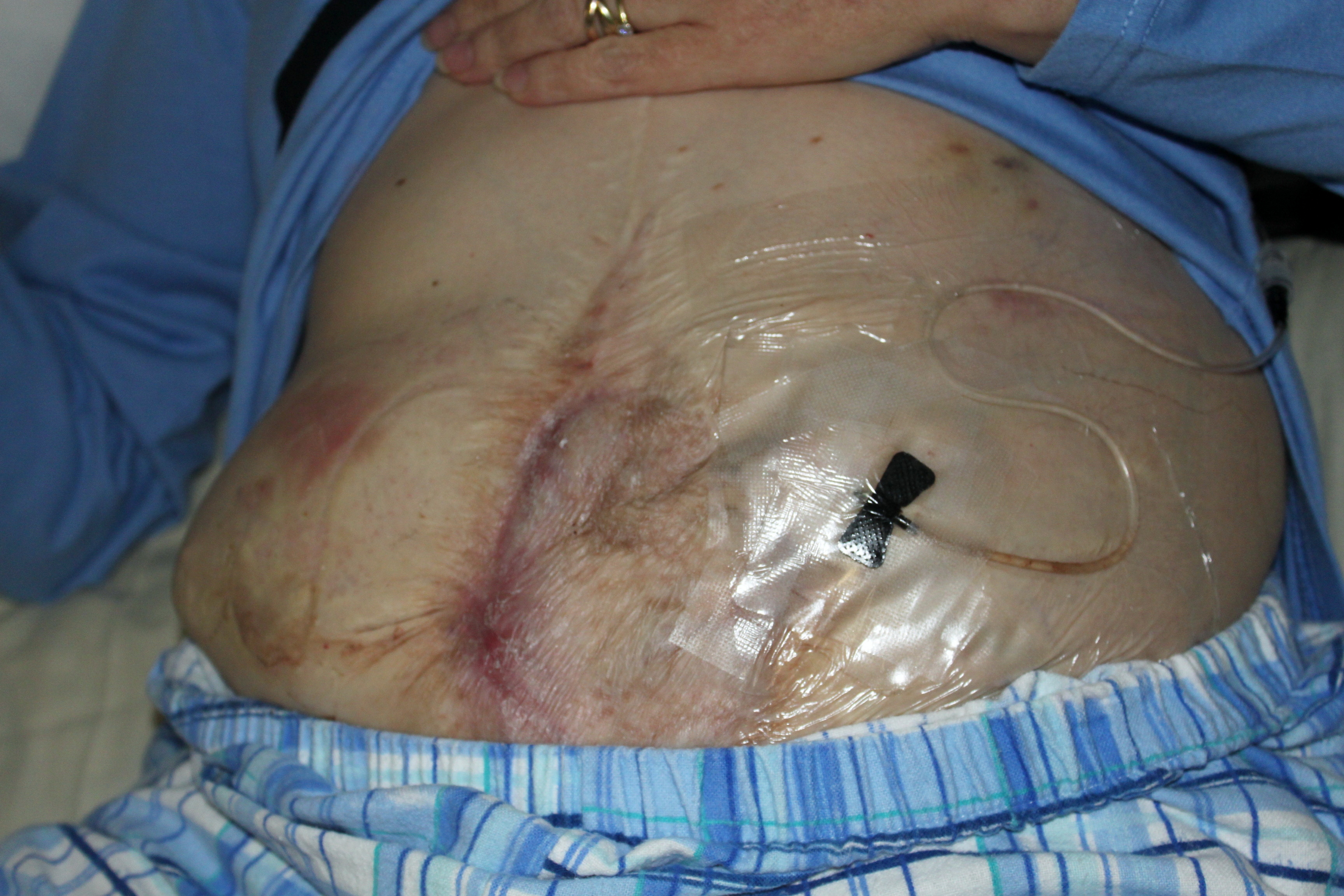
On Friday morning I removed and repositioned the driver.  Serum leaked out of the syringe hole for almost two days.  The area is inflamed, hot to the touch, swollen and painful.  Cellulitis has struck!  Yesterday evening I repositioned the driver again and this afternoon I removed it.  So I will now administer the 150mg of morphine and  the 60 ml Stemitil IM.  Vic’s derriere is black and blue and lumpy from the injections. 

Where to from here?  How are we going to control this poor child’s pain?  I can only think that they will have to fit a central line…  Will they do it?  She will have to go into theatre for that!  There is absolutely no way I would allow the procedure without sedation!  Central lines are very susceptible to infection and sepsis.  

Poor baby.  She is so ill.

Today I said to my BFF, Gillian, that it is almost as if, now the decision has been made regarding “her” Hospice, she is at peace.  I sat next to her and thought to myself “I wonder if she will make Christmas?”  But then I thought to myself “Wait a minute…This is Vic…She bounces back!”

Tomorrow her doctor will come and see her, she will go onto a course of antibiotics and bounce back again.  Then we will decide how to deal with her pain…

Central venous catheter   http://en.wikipedia.org/wiki/Central_venous_catheter


From Wikipedia, the free encyclopedia
Central venous catheter
Intervention
MeSH D002405

Central line equipment

CVC with three lumens

In medicine, a central venous catheter (“central line”, “CVC”, “central venous line” or “central venous access catheter”) is acatheter placed into a large vein in the neck (internal jugular vein), chest (subclavian vein or axillary vein) or groin (femoral vein). It is used to administer medication or fluids, obtain blood tests (specifically the “mixed venous oxygen saturation”), and directly obtain cardiovascular measurements such as the central venous pressure.

Contents

[hide]

Types

There are several types of central venous catheters:[1]

Non-tunneled vs. tunneled catheters

Non-tunneled catheters are fixed in place at the site of insertion, with the catheter and attachments protruding directly. Commonly used non-tunneled catheters include Quinton catheters.

Tunneled catheters are passed under the skin from the insertion site to a separate exit site, where the catheter and its attachments emerge from underneath the skin. The exit site is typically located in the chest, making the access ports less visible than if they were to directly protrude from the neck. Passing the catheter under the skin helps to prevent infection and provides stability. Commonly used tunneled catheters include Hickman catheters and Groshong catheters.

Implanted port

port is similar to a tunneled catheter but is left entirely under the skin. Medicines are injected through the skin into the catheter. Some implanted ports contain a small reservoir that can be refilled in the same way. After being filled, the reservoir slowly releases the medicine into the bloodstream. An implanted port is less obvious than a tunneled catheter and requires very little daily care. It has less impact on a person’s activities than a PICC line or a tunneled catheter. Surgically implanted infusion ports are placed below the clavicle (infraclavicular fossa), with the catheter threaded into the right atrium through large vein. Once implanted, the port is accessed via non-coring “Huber” needles inserted through the skin. The health care provider may need to use topical anesthetic prior to accessing port. Ports can be used for medications, chemotherapy, TPN, and blood. As compared to CVC or PICC catheters, ports are easy to maintain for home-based therapy.

Ports are typically used on patients requiring only occasional venous access over a long duration course of therapy. Since the port must be accessed using a needle, if venous access is required on a frequent basis a catheter having external access is more commonly used.

PICC line

A peripherally inserted central catheter, or PICC line (pronounced “pick”), is a central venous catheter inserted into a vein in the arm rather than a vein in the neck or chest.

Technical description

Triluminal catheter

Depending on its use, the catheter is monoluminal, biluminal or triluminal, dependent on the actual number of lumens (1, 2 and 3 respectively). Some catheters have 4 or 5 lumens, depending on the reason for their use.

The catheter is usually held in place by an adhesive dressing, suture, or staple which is covered by an occlusive dressing. Regular flushing with saline or a heparin-containing solution keeps the line patent and prevents thrombosis. Certain lines are impregnated with antibiotics, silver-containing substances (specifically silver sulfadiazine) and/or chlorhexidine to reduce infection risk.

Specific types of long-term central lines are the Hickman catheters, which require clamps to make sure the valve is closed, and Groshong catheters, which have a valve that opens as fluid is withdrawn or infused and remains closed when not in use. Hickman lines also have a “cuff” under the skin, to prevent bacterial migration[citation needed] and to cause tissue ingrowth into the device for long term securement.

Indications and uses

Indications for the use of central lines include:[2]

Central venous catheters usually remain in place for a longer period of time than other venous access devices, especially when the reason for their use is longstanding (such as total parenteral nutrition in a chronically ill patient). For such indications, a Hickman line, a PICC line or a portacath may be considered because of their smaller infection risk. Sterile technique is highly important here, as a line may serve as a porte d’entrée (place of entry) for pathogenic organisms, and the line itself may become infected with organisms such as Staphylococcus aureus and coagulase-negative Staphylococci.[citation needed]

Triple lumen in jugular vein

Chest x-ray with catheter in the right subclavian vein

The skin is cleaned, and local anesthetic applied if required. The location of the vein is then identified by landmarks or with the use of a small ultrasound device. A hollow needle is advanced through the skin until blood is aspirated; the color of the blood and the rate of its flow help distinguish it from arterial blood (suggesting that an artery has been accidentally punctured), although this method is inaccurate.[citation needed] Ultrasound probably now represents the gold standard for central venous access and skills, within North American and Europe, with landmark techniques are diminishing.[3][4]

The line is then inserted using the Seldinger technique: a blunt guidewire is passed through the needle, then the needle is removed. A dilating device may be passed over the guidewire to slightly enlarge the tract. Finally, the central line itself is then passed over the guidewire, which is then removed. All the lumens of the line are aspirated (to ensure that they are all positioned inside the vein) and flushed.[citation needed] A chest X-ray is typically performed afterwards to confirm that the line is positioned inside the superior vena cava and, in the case of insertion through the subclavian vein, that no pneumothorax was caused as a side effect. Vascular positioning systems can also be used to verify tip placement during insertion without the need to a chest X-ray, but this technique is not yet a standard of practice.

Videos are available demonstrating placement of a central venous catheter without[5] and with ultrasound guidance.[6]

Complications

Central line insertion may cause a number of complications. The benefit expected from their use therefore needs to outweigh the risk of those complications.

Pneumothorax

Pneumothorax (for central lines placed in the chest); the incidence is thought to be higher with subclavian vein catheterization. In catheterization of the internal jugular vein, the risk of pneumothorax can be minimized by the use of ultrasound guidance. For experienced clinicians, theincidence of pneumothorax is about 1.5-3.1%. Some official bodies, e.g. the National Institute for Health and Clinical Excellence (UK), recommend the routine use of ultrasonography to minimize complications.[7]

Central-Line Associated Bloodstream Infections (CLABSIs)

All catheters can introduce bacteria into the bloodstream, but CVCs are known for occasionally causing Staphylococcus aureus andStaphylococcus epidermidis sepsis. The problem of central line-associated bloodstream infections (CLABSI) has gained increasing attention in recent years. They cause a great deal of morbidity and deaths, and increase health care costs. Historically, a small number of CVC infections were considered an acceptable risk of placing central lines. However, the seminal work by Dr. Peter Pronovost at Johns Hopkins Hospital turned that perspective on its head. Additionally, the Institute for Healthcare Improvement (IHI) has done a tremendous amount of work in improving hospitals’ focus on central line-associated bloodstream infections (CLABSI), and is working to decrease the incidence of this particular complication among US hospitals.

The National Patient Safety Goals NPSGs and specifically NSPG 7.04 address how to decrease infections.[8] The NSPG 7.04 has 13 elements of performance to decrease CLABSIs.

The 13 Elements of Performance (EPs):

  • EP 1 & 2 deal with educating staff and patients about Central Vascular Catheters and their potential complications
  • EP 3 specifically directs facilities to implement policies and practices to reduce CLABSI
  • EP 4 & 5 are about how to perform surveillance for Central-Line Associated Bloodstream Infections (CLABSIs)
  • EP 6-13:

– Institute for Healthcare Improvement (IHI) bundle

  • 1. Hand Hygiene
  • 2. Full body drape
  • 3. Chlorhexidine gluconate skin anti-septic
  • 4. Selection of Optimal site for Central venus Catheter (CVC)
  • 5. Daily review of ongoing need for CVC

– Disinfection of intravenous access ports before use

National Patient Safety Goals require documentation of a checklist for CVC insertion and Disinfection of intravenous (IV) access ports before use (scrub the hub). Some literature has suggested the use of a safer vascular access route – such as intraosseous (IO) vascular access – when central lines are not absolutely necessary (such as when central lines are being placed solely for vascular access). Infection risks were initially thought to be less in jugular lines, but this only seems to be the case if the patient is obese.[9]

If a patient with a central line develops signs of infection, blood cultures are taken from both the catheter and from a vein elsewhere in the body. If the culture from the central line grows bacteria much earlier (>2 hours) than the other site, the line is the likely source of the infection. Quantitative blood culture is even more accurate, but this is not widely available.[10]

Generally, antibiotics are used, and occasionally the catheter will have to be removed. In the case of bacteremia from Staphylococcus aureus, removing the catheter without administering antibiotics is not adequate as 38% of such patients may still develop endocarditis.[11]

In a clinical practice guideline, the American Centers for Disease Control and Prevention recommends against routine culturing of central venous lines upon their removal.[12]The guideline makes a number of further recommendations to prevent line infections.[12]

To prevent infection, stringent cleaning of the catheter insertion site is advised. Povidone-iodine solution is often used for such cleaning, but chlorhexidine appears to be twice as effective as iodine.[13] Routine replacement of lines makes no difference in preventing infection.[14]

Thrombosis

CVCs are a risk factor for forming venous thrombosis[15] including upper extremity deep vein thrombosis.[16]

Other complications

Rarely, small amounts of air are sucked into the vein as a result of the negative Intra-thoracic pressure and insertion technique. Valved insertion devices can reduce this risk.[citation needed] If these air bubbles obstruct blood vessels, this is known as an air embolism.

Hemorrhage (bleeding) and formation of a hematoma (bruise) is slightly more common in jugular venous lines than in others.[9]

Arrhythmias may occur during the insertion process when the wire comes in contact with the endocardium. It typically resolved when the wire is pulled back.[citation needed]


What Will Matter – Michael Josephson


My beautiful baby girl

Ready or not, someday it will all come to an end.

There will be no more sunrises, no minutes, hours or days.
All things you collected, whether treasured or forgotten, will pass to someone else.
 
Your wealth, fame and temporal power will shrivel to irrelevance.
Your grudges, resentments, frustrations and jealousies will finally disappear.
So too your hopes, ambitions, plans, and to-do lists will expire.
 
The wins and losses that once seemed so important will fade away.
It won’t matter where you came from, or on what side of the tracks you lived, at the end.
 
It won’t matter whether you where beautiful or brilliant.
Even your gender and skin colour will be irrelevant.
 
So what will matter? How will the value of your days be measured?
 
What will matter is not what you bought, but what you built;
Not what you got, but how you gave.
 
What will matter is not your success, but your significance.
What will matter is not what you learned, but what you taught.
 
What will matter is every act of integrity, compassion, courage or sacrifice that enriched, empowered or encouraged others to emulate your example.
 
What will matter is not your competence, but your character.
What will matter is not how many people you knew, but how many will feel a lasting loss when you’re gone.
 
What will matter are not your memories, but the memories that live in those who loved you.
What will matter is how long you will be remembered, by whom and for what.
 
Living a life that matters doesn’t happen by accident.
It’s not a matter of circumstance but of choice.
 
Choose to live a life that matters.
What Will Matter – Michael Josephson
 

Dear Radio Station….


Photo Credit:http://www.mysandton.co.za/social/two-more-families-have-been-touched-christmas-wish-list


In the early hours of the morning I wrote a letter to a very popular radio station in Gauteng                                                                                                                                                                                                                                                                                                                                                                  (South Africa).  94.7 http://www.highveld.co.za/events/events/christmaswish2011/index.asp  94.7 have a Christmas Wish List.

Each year, the 94.7 Highveld team tries to make a few lives a little easier during the festive   season by finding sponsors to assist those who are in desperate need.

Listeners are asked to nominate the people in their lives who could use a break, and two of these are granted each morning for four weeks.  I decided to write a letter and ask for help for our Hospice project that will kick off on 1 January 2013 with limited resources.

I hope and pray Stepping Stone Hospice will be selected and that pharmaceutical companies will sponsor the pain medication for the indigent people.  Please hold thumbs with us that this will work!

                My name is Tersia.  My 38-year-old daughter is terminally ill. 

Vicky suffers from Osteogenesis Imperfecta, a brittle bone disease.  In people with Osteogenesis Imperfecta, one of the genes that tell the body how to make a specific protein does not function. This protein (type I collagen) is a major component of the connective tissues in bones. Type I collagen is also important in forming ligaments, teeth, and the white outer tissue of the eyeballs (sclera).

 As a result of the defective gene, not enough type I collagen is produced, or the collagen that is produced is of poor quality. In either case, the result is fragile bones that break easily.  Collagen in the body is what cement is in a building.  It keeps the tissue/bricks together!  Vicky has poor quality collagen.

 Vic has a very bad spine.  Her neurosurgeon decided to do experimental surgery in 2002.  “The Prodisc (Total Disc Replacement) is an implant designed to mimic the form and function of a healthy intervertebral lumbar disc. It is implanted during spinal arthroplasty after the diseased or damaged intervertebral disc has been removed. The goal of artificial disc replacement is to alleviate the pain caused by the damaged disc while preserving some or all of the natural motion of the lumbar spine. By preserving the natural motion, it is hoped that the adjacent levels of the spine will not be subject to additional stress as they are in traditional fusion surgery.”  http://www.spine-health.com/treatment/artificial-disc-replacement/fda-approves-prodisc-lumbar-artificial-disc;  

Vic had the Prodisc procedure on Wednesday morning, the 13th of February 2002.  The operation was scheduled to last “two hours and thirty-seven minutes”.   Six hours after Vic was pushed into theatre we were told that she is in recovery.  Vic would go to ICU for “pain control”.

She was pretty out of it the entire Wednesday and Thursday.  Friday Vic was conscious and in dreadful pain.  No amount of morphine brought her pain relief.  Her face and nose itched in a reaction to the morphine.  Vic was losing her mind with pain.

Early Friday morning I cornered the surgeon.  He said she is fine.  I kept badgering the ICU staff to increase her pain medication.  I pointed out that her heart rate was elevated and she was running a temperature.  Her breathing was shallow and fast.  If it was today I would have recognized the danger signs.

That evening I was too scared to leave.  My child was in trouble.  Just after 8pm the doctor came and spoke to me. He explained that Vicky’s tissue is extremely poor (surprise surprise!!) and that there was a small chance that her bowel may have been perforated.  The X-rays did not show up anything but my concern had “alarmed” him.

At 9.30 pm Vic was pushed into theatre again.  Eleven hours later she was rushed back to ICU.  Sunday the 17th of February Vic went back to theatre for a further 9 hour surgery.  She came out ventilated.

 She spent 22 days on the ventilator hovering between life and death.

 Doctor arrogance and negligence has led to 10 years of sheer undiluted hell and misery.  The Prodisc was never removed.  The Prodisc is systematically spreading sepsis to Vic’s intestines.  As a direct result of the blotched back surgery Vic has had 81 abdominal procedures over the past 10 years.  She now has a frozen abdomen, battles obstructions and fistula, sepsis and Addison’s disease.  The doctors have said they can do no more for her. 

 Vic is now under Hospice care.  She suffers terrible debilitating pain and often fractures vertebrae when vomiting… Vic’s organs have started shutting down.  She is in renal and hepatic failure. 

 Vic and I share a dream of starting a Hospice in Alberton.  Alberton does not have a Hospice and falls under Hospice Witwatersrand. It is far, and the townships i.e. Palmridge, Thokoza and Edenpark are not serviced at present.

 It is a sad fact that only 5% of South African’s are able to die a “good death”.  95% of the population will die in excruciating pain. 

 The World Health Organization describes palliative care as “an approach that improves the quality of life of patients and their families facing the problems associated with life-threatening illness, through the prevention and relief of suffering by means of early identification and impeccable assessment and treatment of pain and other problems, physical, psychosocial and spiritual.” (WHO 2002)

 We have registered a Non-Profit-Organisation and are in the planning stages of starting a Hospice in Alberton that will provide palliative home care to all residents in Alberton that need our help.  We have approached one of the caregiving associations in Alberton to see if they could provide us with space to operate from.  I have no doubt that we will have community buy-in if we are able to create palliative care awareness.  We aim to start operating as Stepping Stone Hospice & Care Services by February 2013

 Stepping Stone Hospice & Care Services Mission Statement

Adding life into days when days can no longer be added to life.

Stepping Stone Hospice & Care Services is a not-for-profit organization dedicated to providing comprehensive, compassionate services to patients and their loved ones during times of life-limiting illnesses.

Since dying is a part of the normal process of life, the focus of Stepping Stone Hospice & Care Services is to enable our patients to live as fully and comfortably as possible, to provide dignified palliative care, to assist patients’ loved ones in coping with end-of-life issues and the eventual death of the patient, and to improve care for all patients at the end of their lives by example and education.

Stepping Stone Hospice & Care Services’ goal is to provide physical, emotional, and spiritual comfort. Stepping Stone Hospice & Care Services’ exists in the hope and belief that through appropriate care, education and the promotion of a supportive community sensitive to the needs of the persons facing the end of life, patients and their loved ones may be able to obtain physical, mental, and spiritual preparation for the end of life, bereavement and renewal.

Stepping Stone Hospice & Care Services believe that Hospice care should be available to any and all persons with a life threatening illness for which there is no cure or for persons who elect not to attempt a cure, resulting in a limited life expectancy.

 We are hoping that Vic will live to spend another Christmas with her two boys and the family.  I pray that she lives long enough to see her dream come true.  Please help make her dream come true…

 We ask nothing for ourselves as a family.  We do however seek your kind consideration for assistance in any form that will enable us to provide palliative care to the 95% of dying community in Alberton. 

 We need equipment such as wheelchairs, subcutaneous drivers, oxygen measuring equipment, walkers etc. 

 If there is any way you are able to help us we would truly appreciate it! 

 No-one should be denied the right to die a “good death” 

 I am blogging Vic’s Final Journey. I blogged on palliative care in this post  https://tersiaburger.com/2012/09/17/pain-keeps-you-alive-2/ and about Vic’s compassionate nature https://tersiaburger.com/2012/11/14/a-night-out-of-hell/.  If you are in doubt about whether this is a worthy cause please read some of the blog.  I am not seeking publicity for my blog – just help!

 Thank you for the wonderful work you do in helping the community.

 A blessed Christmas to you all.

 Best regards

 Tersia M Burger

Morphine extends life!


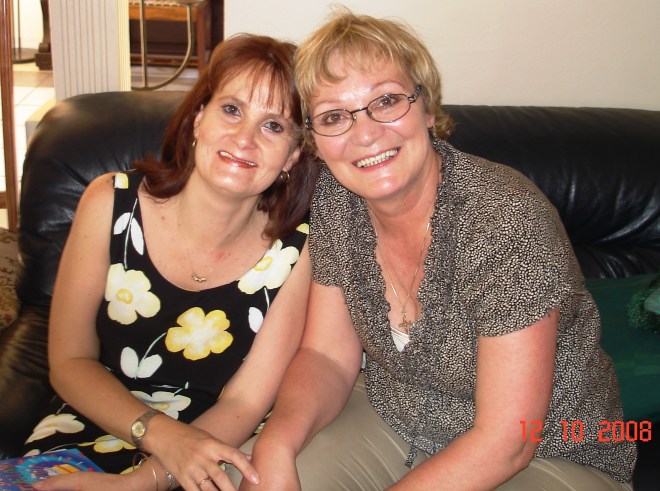
Vic and I in healthier days

The downward pain spiral has already begun.  Vic is quite swollen and had a bad day.  This afternoon late she perked up and has only had one vomiting spell tonight.

As Sr Siza was examining her this afternoon and taking her vitals I remarked on the swelling.  “It’s the organs shutting down” she whispered….

“I am scared Siza.  I administer such massive dosages of medication to Vic… What if I kill her?” I asked over a cup of tea.

“Don’t worry my love.  You won’t.  There is no upper limit to the amount of morphine that Vicky can go on… As long as we titrate the dosages she will be fine.”

So I Googled Morphine+dosage+death and one of the first articles that came up (and I could understand) is “When Morphine Fails to Kill”  By GINA KOLATA

 Proponents of assisted suicide often argue that when a doctor helps a patient who wants to die, it is no more ethically troubling than when a doctor kills a patient slowly with morphine, often without the patient’s knowledge or consent, a medical practice these proponents say is increasingly common.

So why forbid doctors to prescribe lethal pills that could allow patients to control how and when they die? There is no question that doctors use morphine this way. “It happens all the time,” said Dr. John M. Luce, a professor of medicine and anesthesiology at the University of California in San Francisco. And there is no question that most doctors think that morphine can hasten a patient’s death by depressing respiration. But Luce and others are asking whether morphine and similar drugs really speed death.

Experts in palliative care say the only available evidence indicates that morphine is not having this effect. Dr. Balfour Mount, a cancer specialist who directs the division of palliative care at McGill University in Montreal, firmly states that it is “a common misunderstanding that patients die because of high doses of morphine needed to control pain.”

 No one denies that an overdose of morphine can be lethal. It kills by stopping breathing. But, said Dr. Joanne Lynn, director of the Center to Improve Care of the Dying at George Washington University School of Medicine, something peculiar happens when doctors gradually increase a patient’s dose of morphine. The patients, she said, become more tolerant of the drug’s effect on respiration than they do of its effect on pain. The result, Dr. Lynn said, is that as patients’ pain gets worse, they require more and more morphine to control it. But even though they end up taking doses of the drug that would quickly kill a person who has not been taking morphine, the drug has little effect on these patients’ breathing.

Dr. Kathleen Foley, who is co-chief of the pain and palliative care service at Memorial SloanKettering Cancer Center in New York, said that she routinely saw patients taking breathtakingly high doses of morphine yet breathing well. “They’re taking 1,000 milligrams of morphine a day, or 2,000 milligrams a day, and walking around,” she said.

The standard daily dose used to quell the pain of cancer patients, she added, is 200 to 400 milligrams. Dr. Lynn said she sometimes gave such high doses of morphine or similar drugs that she frightened herself. She remembers one man who had a tumor on his neck as big as his head. To relieve his pain, she ended up giving him 200 milligrams of a morphinelike drug, hydromorphone, each hour, 200 times the dose that would put a person with no tolerance to the drug into a deep sleep. “Even I was scared,” Dr. Lynn said, but she found that if she lowered the dose to even 170 milligrams of the drug per hour, the man was in excruciating pain. So to protect herself in case she was ever questioned by a district attorney, she said, she videotaped the man playing with his grandson while he was on the drug.

On rare occasions, Dr. Lynn said, she became worried when she escalated a morphine dose and noticed that the patient had started to struggle to breathe. Since she did not intend to kill the patient, she said, she administered an antidote. But invariably, she said, she found that the drug was not causing the patient’s sudden respiratory problem.

One man, for example, was having trouble breathing because he had bled from a tumor in his brain, and an elderly woman had just had a stroke. “In every single case, there was another etiology,” Dr. Lynn said. “Joanne’s experience is emblematic,” said Dr. Russell K. Portenoy, the other cochief of the pain and palliative care service at Memorial SloanKettering Cancer Center.

 He said he was virtually certain that if doctors ever gave antidotes to morphine on a routine basis when dying patients started laboring to breathe, they would find that Dr. Lynn’s experience was the rule. Patients generally die from their diseases, not from morphine, Dr. Portenoy said.

The actual data on how often morphine and other opiates that are used for pain relief cause death are elusive. But Dr. Foley and others cite three studies that indirectly support the notion that if morphine causes death, it does so very infrequently. One study, by Dr. Frank K. Brescia of Calvary Hospital in the Bronx and his colleagues, examined pain, opiate use and survival among 1,103 cancer patients at that hospital, which is for the terminally ill. The patients had cancer that was “very far advanced,” said Dr. Portenoy, an author of the paper. But to his surprise, he said, the investigators found no relationship between the dose of opiates a patient received and the time it took to die. Those receiving stunningly high doses died no sooner than those taking much lower doses.

Another study, by Dr. Luce and his colleagues in San Francisco, looked at 44 patients in intensive care units at two hospitals who were so ill that their doctors and families decided to withdraw life support. Three quarters of the patients were taking narcotics, and after the decision was made to let them die, the doctors increased their narcotics dose. Those who were not receiving opiates were in comas or so severely brain damaged that they did not feel pain. The researchers asked the patients’ doctors to tell them, anonymously, why they had given narcotics to the patients and why they had increased the doses. Thirty nine (39%) percent of the doctors confided that, in addition to relieving pain, they were hoping to hasten the patients’ deaths. But that did not seem to happen.

 The patients who received narcotics survived an average of 3 1/2 hours after the decision had been made to let them die. Those who did not receive narcotics lived an average of 1 1/2 hours. Of course, Dr. Luce said, the study was not definitive because the patients who did not receive drugs may have been sicker and more likely to die very quickly. Nonetheless, he said, the investigators certainly failed to show that narcotics speeded death.

Dr. Declan Walsh, the director of the Center for Palliative Medicine at the Cleveland Clinic, said it had been 15 years since he first questioned the assumption that morphine used for pain control killed patients by depressing their respiration. He was working in England at the time, and many doctors there were afraid to prescribe morphine or similar drugs for cancer patients, Walsh said, because “they were afraid they would kill the patients.”

So Walsh looked at carbon dioxide levels in the blood of cancer patients on high doses of morphine to control their pain. If their breathing was suppressed, their carbon dioxide levels should have been high. But they were not. Nonetheless, Walsh said, the idea that morphine used for pain relief depresses respiration is widely believed by doctors and nurses because it is “drummed into them in medical school.” So, said Dr. Susan Block, a psychiatrist in the hematology and oncology division at Brigham and Women’s Hospital in Boston, it is not surprising that many doctors try to use morphine to speed dying. “There is more and more evidence most of it unpublished, but it’s coming, I’ve seen it that physicians, in addition to wanting to ease patients’ discomfort, also want to hasten death,” Dr. Block said. “Everyone is feeling guilty.”

Source: NY TIMES July 23, 1997  http://www.chninternational.com/Opiods%20for%20pain%20do%20not%20kill.htm

No more pain angel.

Friends, Lasagna and chocolate pudding…


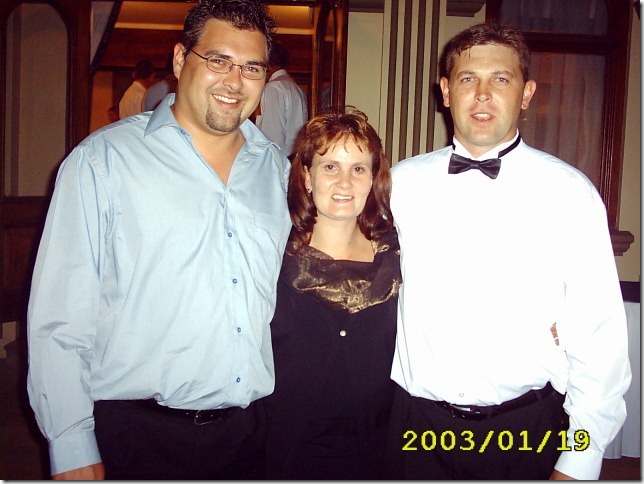
Gavin, Vic and Darren at Darren’s wedding in 2003


Today was a great day!

Yesterday Hospice increased Vic’s pain medication by 25%.  The subcutaneous driver is holding up in her arm.  She has not vomited in the past 24 hours.  Vic spent wonderful, constructive time with the boys today.

Yesterday Renée, Jared’s extra maths teacher and a friend, phoned to hear if I wanted to go for a walk.  I declined as Vic was really not well.  Then she phoned to ask if everything was okay.  I said we were having a bad day.  She had read the boys BBM status updates and asked if I wanted her to pop around and help… I declined.   She phoned again and offered to cook us dinner… I said we had already prepared a meal.  Renée said “I will bring you dinner tomorrow night”….

My BFF, Gillian, is visiting.  It is so comforting having her around.  I felt enfolded by the normal-ness of her life today …She is a warm and comforting person who knows my soul as well as I know my own soul.   In the words of the great Aristotle:  “Friendship is composed of a single soul inhibiting two bodies.”  Gill is a safe haven.  I love the no-nonsense way she speaks, her efficiency, her single-minded loyalty and ability to love.  Gillian’s greatest character trait is that she loves unconditionally and NEVER judges.

Gillian is a second mom to Vic.

Vic, Gavin and Darren standing in the house we were building at the time

When our children were growing up we were inseparable.  Gill is a delicate, tough person but cannot handle blood.  I am a tough career girl but cannot handle needles being shoved into my child’s little body.   As young mommy’s I did the blood thing and Gillian did the dentist and invasive tests thing.  She would give the kids a quarter of a Panado and a sermon about bravery and march them off to the dentist, x-rays etc….  I cleaned wounds and stuck plaster over wounds…We are the perfect team.  United against our children….

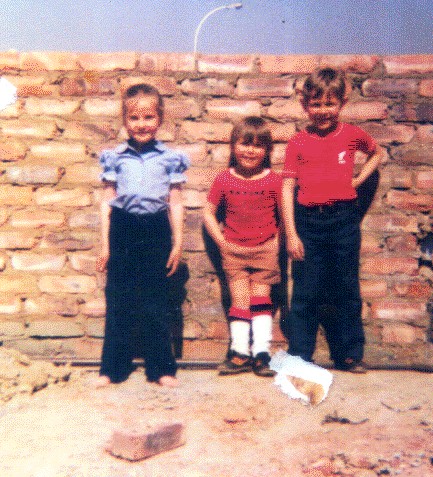
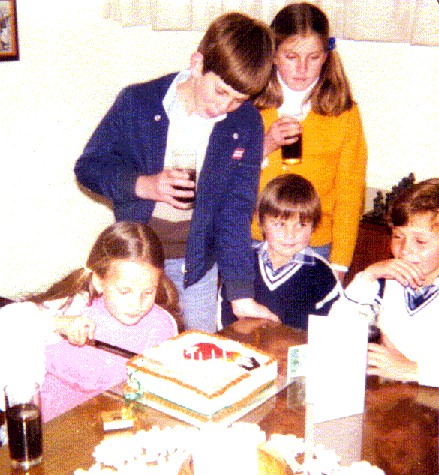
Vic’s 6th birthday party with Len and Gill’s kids…

When the boys got mumps Vic got mumps, when the boys got chicken pox Vic got chickenpox… Vic had her own bedroom in Gillian’s home.

I cried when her eldest, Darren, went to school the first time.  His little knees were so skinny and looked like matchsticks in his school pants.

Gillian used to relieve me when Vic was in hospital and Len (her husband) would take me for tea and anchovy toast.  Gillian is the first person I phone when I have a Vicky crisis.

After my divorce from Vic’s dad Len and Gill once drove to my new apartment at 2am and took turns in consoling me.  The other sat in the car with the two boys sleeping on the back seat!  In my single days I would go to Gillian for a cooked meal with vegetables…I never cooked!  The night before I remarried I spent the night with Len and Gill.  We laughed and joked and ate toast… Gillian dressed Vic and got her to church…

Gill is one of the most amazing people I know.  She is a friend in a million.

My friend is now semi-retired.  She lives in a beautiful game reserve in the most beautiful part of our country.  Her home is warm and welcoming – a safe haven to a myriad of friends and family.  Gill chats to the boys on BBM and is always 100% up to date on what is happening in their lives.  When I travel Gill will check on Vic every single day!

Yesterday the panic was sitting in my throat.  I felt as if I was choking.  Today Vic is great and Gillian is visiting.  I am calm and at peace.

Tonight Renée dropped off the greatest lasagna and a chocolate pudding.  I am in total awe of the love that we have been surrounded by and absolutely amazed at the kindness that Renée had shown…..  We live in Johannesburg – a concrete jungle!  I am so deeply touched!

So, tonight as my little girl finally settled into a deep and pain-free sleep I allowed myself the luxury of a couple of tears.  Tears of gratitude for the love we are surrounded by!  Tears of gratitude that the pain medication is working!  Tears of gratitude for a good day!

I know that the pain medication will only work for a week or two and then it will have to be increased again.  At what stage will Vic’s body not be able to handle the pain medication any longer?

But tonight I am not going to dwell on my questions.

Just tonight I will indulge in an early night.

The friend in my adversity I shall always cherish most. I can better trust those who helped to relieve the gloom of my dark hours than those who are so ready to enjoy with me the sunshine of my prosperity. – Ulysses S. Grant


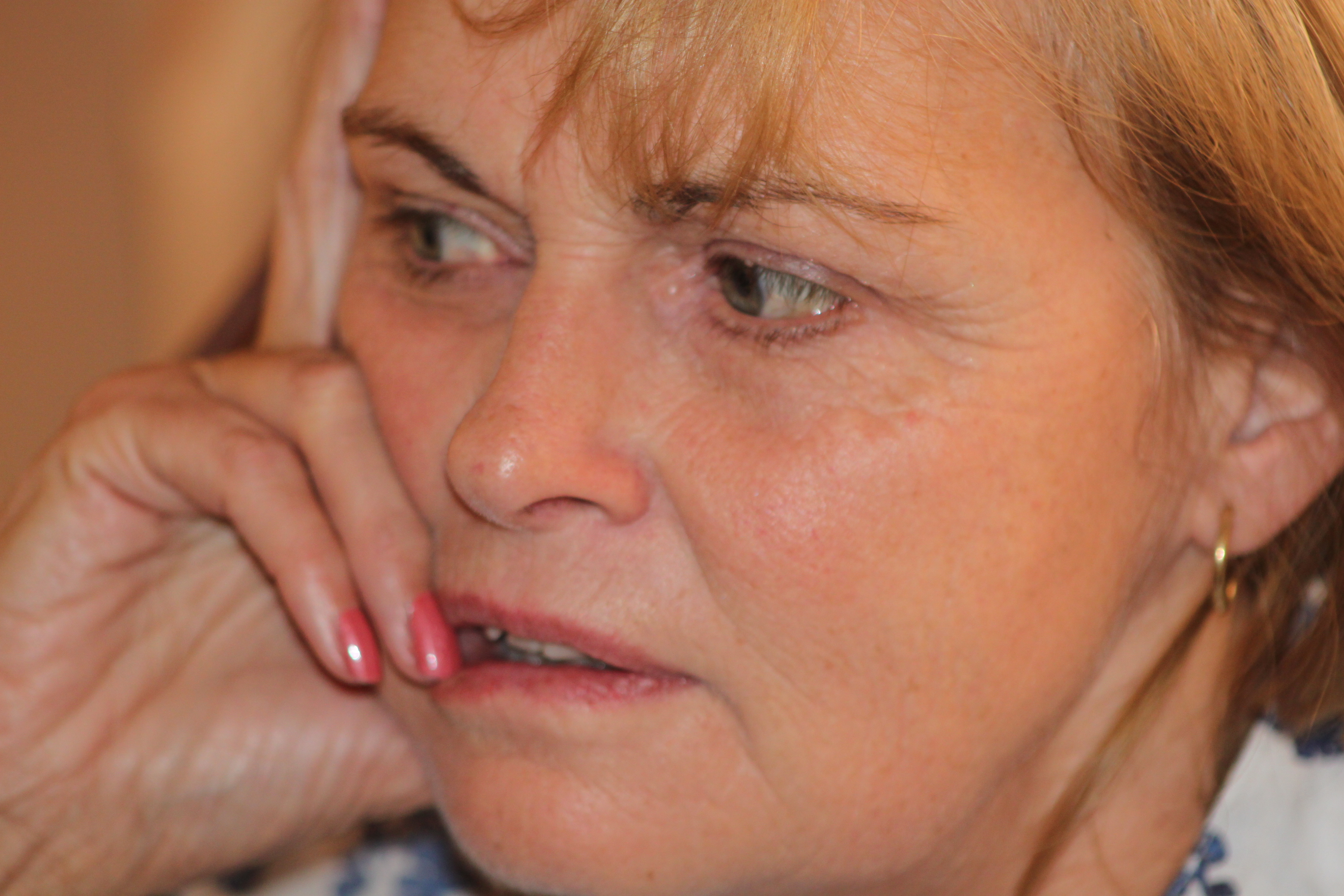
My beautiful friend in a pensive moment….


Mommy can you feel how sore it is?


Published with Vic’s permission and knowledge.

Hospice has just fitted a subcutaneous driver – again.   Vic’s pain has spiralled out of control over the past couple of days.

Vic was in absolute excruciating pain during the night.  She battled to breath.

“Help me Mommy!  I can’t stand the pain anymore…”

I lay next to her and put constant pressure on the area that hurt most.  It was just below her ribcage – liver.  “Oh Mommy, it is so sore.  Can you feel how sore it is?

As a little girl Vic used to believe that I could “feel” her pain…

“Feel how sore my toe is Mommy…”

As I lay there with my hand on her “sore” I wished with every fibre in my body that I could lay my hand on her sick body and soak up the pain and disease.  It cannot be so I look for a new spot on her bum to stick in a needle.

Vic seems calm now and the pain under control.  She is sleeping peacefully.  She has not vomited since this morning and managed to have a sandwich for lunch.

Please God let the subcutaneous driver work.  Please let the tissue hold up!   Please God!

“I shall continue the fight”


Vic when she was much healthier – 2011

Aarthi wrote Vic another beautiful poem.  Thank you Aarthi.  We needed your beautiful words to encourage and remind us today.  Vic is going through a particularly harrowing time.  She is suffering from severe nausea and the injections are no longer as efficient as before.  Poor little poppet!  She also broke another vertebra on Saturday when she put on her bra….

For the first time in Vic’s journey I am running scared of the amounts of pain medication her body needs.  This afternoon she was in excruciating pain – the pain was under the right-hand ribcage.  That is the liver.  Her eyes are slightly yellow and her skin a little sallow.

Over the weekend Vic walked into my TV lounge and I got such a fright when I saw her.  Her face was ghostly pale.  She actually looked like a geisha without the red lips and charcoal eyes.  Her eyes were dark from pain.

I had to phone Hospice this afternoon and ask them for more pain medication.  I am trying to work out what the effect of the increased medication will be to the toxicity levels in her body.  Hospice said we are at the 50/50 level.  The levels of medication can now be detrimental to her.  What do we do?

A calm courage waits in them
like a belief that breathes in her soul
those black pearls of mysterious 
power
glow like a beacon of hope
it is as if she is saying
i shall continue the fight
her will is deeper than she herself knows
that lustre speaks so much more
she is a gem as i can see
she is a warrior in her ways
that strength that originates in the depths of her
flows out and gives her eyes a brilliant grace…

https://tersiaburger.com/tag/httpsickocean-wordpress-comauthormysticparables/

http://sickocean.wordpress.com/category/poetry/

Final words….


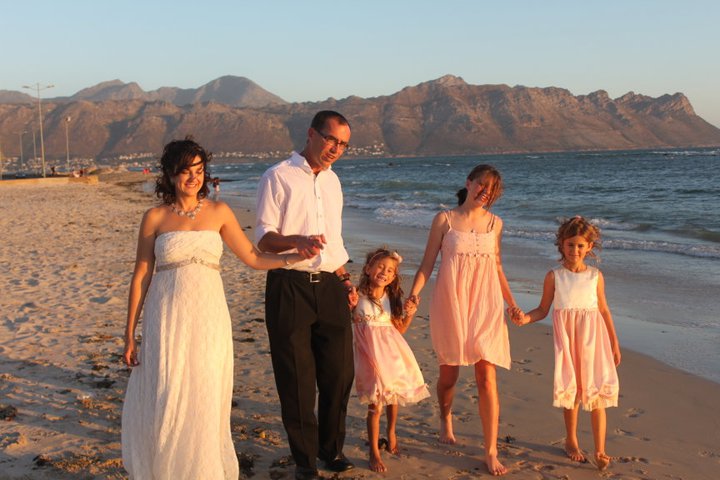
Wedding day

This weekend I again realized that there are people who are going through worse hardships than we are….

Tom, our son-in-law is a lovely, warm and hospitable man.  He has made a huge difference in our lives.  He is brutally honest as an individual.  He has embraced the family and fulfils his role within the family with enthusiasm.   Tom is bright – very bright!  As a computer nerd he lives on STRONG coffee.   He loves playing cricket with the boys.

He is Lani’s soul mate and a wonderful back-up father for the girls.

A couple of months before Tom and Lani got married Tom’s dad died from a heart attack.   A year ago Tom’s sister was travelling from Cape Town with her Mom.  Tom’s mom had been diagnosed with breast cancer and had her first chemo treatment that morning.  A tragic accident…a car landed on top of theirs and Tom’s sister was killed.  His Mom was seriously injured.  Her accident injuries healed in time.

This weekend Tom travelled to Cape Town to say goodbye to his Mom…  She is dying.   Today my dear son-in-law had to sit next to his mom’s bed and speak his final words with her.   In my heart I can see him standing in the door of her room and looking back one final time….It is extremely unlikely that he will see her again….  What thoughts went through his Mom’s mind?  What did she see?  Did she see her adult son she must be so proud of or did she see her little boy playing in the sand?

I kept thinking how unbelievable privileged we are.  We are able to be with Vic every day, every second of the day if we chose…  There is no need for cramming in “final words”.  Every day we have new words, reassuring words, words of love and support.  I cannot imagine having to get up from Vic’s bed, saying goodbye and having to walk away!

Tomorrow morning Tom will wake up; go to work…his thoughts will be filled with thoughts of his mom.  How many times an hour will his mind turn to his mom and her final journey?

My poor Tom!

Travel well dear Marna….

the weight in my bones.


Photo Credit: http://bike-pgh.org/bbpress/topic/why-isnt-there-a-bridge-pedal-pittsburgh

This beautiful poem was posted by Aarthi –  http://sickocean.wordpress.com   on 24SaturdayNov 2012.  Aarthi is an exceptional poet who often moves me to tears.  Thank you Aarthi for sharing your amazing talent with us.  I encourage everyone to visit Aarthi’s blog.  It is filled with so much raw emotion.  

The Weight In My Bones

like bridges made
of concrete ropes

ripping through my existence
keeping me earthly bound

so sturdy yet unchangeable a part
i am all heavy with matter contained

i try and bend yet
the break never happens

like a deeper strength holding me
pain prevents a shattering noise

the water in me weighs more
than what gives me a shape

this will is fragile
and a regret pulls me down

purposes unsolved
promises broken

a thousand images shattered
everything that i never said

all remains in unwalked places
the pores in my soul

each window was blocked
in persistent steps, in days and years and decades

leaving all weight like
ashes of a past trapped

so diseased i feel at times
lifeless like a fallen twig

and the feeling weighs me deep
deeper than skin and all the soft human matter

i feel it in my bones
like i am bond to a mountainous stone

so welded inside with a belief
perhaps i may never be able to sleep

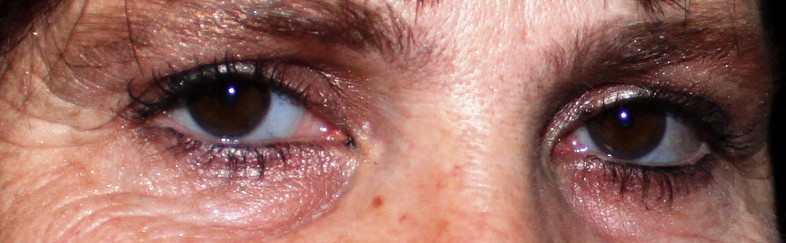
My Daughter’s Eyes


The eyes of my daughter

When i look in my daughter’s eyes
Its like looking into the skies
When i look in my daughter’s eyes
Sometimes all i see is her cries
When i look in my daughter’s eyes
You will never see any goodbyes
when i look in my daughter’s eyes
People will never be downsize
When i look in my daughter’s eyes
Maybe there will be some lies

marlena steiner                   http://www.poemhunter.com/poem/my-daughter-s-eyes/


The Liver….


 The liver works with the endocrine system to regulate nutrients in the body and remove toxins. An enlarged liver means that it is endangered due to disease or other factors, which can lead to toxic shock. The proper medical term for an enlarged liver is hepatomegaly.

A healthy liver helps fight infections and filters toxins from the blood. It also helps to digest food, store nutrients for future needs, manufactures protein, bile and blood-clotting factors and metabolizes medications. A healthy liver has the ability to grow back, or regenerate, when it is damaged. Anything that prevents the liver from performing these functions – or from growing back after injury – can severely impact health and very possibly length of life.

What Are the Symptoms of Liver Failure?

The initial symptoms of liver failure are often ones that can be due to any number or conditions. Because of this, liver failure may be initially difficult to diagnose. Early symptoms include:

  • Nausea
  • Loss of appetite
  • Fatigue
  • Diarrhea

However, as liver failure progresses, the symptoms become more serious, requiring urgent care. These symptoms include:

  • Jaundice
  • Bleeding easily
  • Swollen abdomen
  • Mental disorientation or confusion (known as hepatic encephalopathy)
  • Sleepiness
  • Coma

http://www.webmd.com/digestive-disorders/digestive-diseases-liver-failure

Causes

Fatty or enlarged livers are caused by infections, certain medications, general toxicity, hepatitis, autoimmune disorders, metabolic syndrome and genetic disorders that affect the liver. Abnormal growths, such as cysts or tumors, impact liver size. Blood-flow symptoms, such as heart failure, can cause liver enlargement. Conditions also exist that restrict blood to the liver veins, such as hepatic vein thrombosis.

An enlarged liver indicates a problem with the liver itself or your overall endocrine system. If you suspect that you have any of these symptoms, you should seek medical attention. The causes of an enlarged liver vary in their severity and complexity. Only a medical professional can make the proper diagnosis for the cause of an enlarged liver.

Read more: http://www.webdiagnosis.com/causes-of-an-enlarged-liver#ixzz2CzDrLFH2

If not addressed and stopped in the earlier stages, the damage resulting from these multiple causes leads to scarring of the liver, known as cirrhosis, where large portions of the organ begin to lose their capacity to function or regenerate.

Treatment of patients with liver failure is specific to the unique symptoms and conditions experienced by each individual. Any patient with liver damage will be asked to abstain from alcohol. For patients with cirrhosis and end-stage liver disease, medications may be required to control the amount of protein absorbed in the diet. If there has been a build-up of toxins, particularly high ammonia levels, medication will be offered which lowers these levels. Low sodium diet and water pills (diuretics) may be required to minimize water retention. In those with large amounts of ascites fluid, the excess fluid may have to be occasionally removed with a needle and syringe (paracentesis). Using local anesthetic, a needle is inserted through the abdominal wall and the fluid withdrawn. Sometimes surgery is performed to minimize portal hypertension and lower the risk of gastroesophageal bleeding.

At this point, a person may become a candidate for liver transplant of part or all of the liver. Transplant success has improved in recent years with 1-year patient survival rates of up to 87%.  Due to the severe organ shortages, patients who are listed for liver transplantation have an estimated wait time of 1 to 3 years, depending on blood type and illness severity. Many patients are never able to be considered for transplants due to severity of their disease, other medical problems, or social considerations such as ongoing alcohol use or non-compliance with treatment recommendations. Others die while waiting for a transplant as their disease continues to progress.

The impact of these various symptoms and conditions on suffering and quality of life are profound, and ESLD patients can benefit greatly from hospice and palliative care. Even, when an ESLD patient is on a transplant list, this does not automatically prevent them from being on hospice services.

According to Medicare/Hospice  guidelines, patients will be considered to be in the terminal stage of liver disease (life expectancy of six months or less) and eligible for hospice care, if they meet the following criteria (1 and 2 must be present; factors from 3 will lend supporting documentation):

1. The patient should show both a and b:
a. Prothrombin time prolonged more than 5 seconds over control, or International Normalized Ratio (INR)> 1.5
b. Serum albumin <2.5 gm/d1

2. End stage liver disease is present and the patient shows at least one of the following:
a. ascites, refractory to treatment or patient non-compliant
b. spontaneous bacterial peritonitis
c. hepatorenal syndrome (elevated creatinine and BUN with oliguria (<400ml/day) and urine sodium concentration <10 mEq/l)
d. hepatic encephalopathy, refractory to treatment, or patient non-complaint
e. recurrent variceal bleeding, despite intensive therapy

3. Documentation of the following factors will support eligibility for hospice care:
a. progressive malnutrition
b. muscle wasting with reduced strength and endurance
c. continued active alcoholism (> 80 gm ethanol/day)
d. hepatocellular carcinoma
e. HBsAg (Hepatitis B) positivity
f. hepatitis C refractory to interferon treatment

http://www.hospiceofthecomforter.org/en/post/medical-perspective/understanding-endstage-liver-disease


So I don’t forget…


PHOTO IMAGE: http://www.blogcatalog.com/blog/just-a-lonely-girl/2

Lucinda commented today “Again, I can’t add anything on to what others have said; I don’t know how you have the courage to make these posts.”

I sometimes wonder why do I blog?  My whole being screams “so I won’t forget”.  I want to remember every day, every spoken word, every unspoken word, every feverish touch.  My friends have lifetimes ahead with their children…I don’t.  They have many more Christmases and birthdays to look forward to.  The chances are that their children will bury them… As a family we live one day at a time.  We are grateful for every morning when we wake up!

We have friends who lost their 17-year-old son almost 17 years ago.  I have not seen her in a couple of years.  When I last saw her she said that it does not become easier with time.  One just learns to cope with the pain and the loss.  My friend had to walk away from her son.  He was declared brain-dead after a drunk driver drove into the car transporting him to a rugby match….

She said “I touched his big feet.  I lay my head on his chest and I could hear his heart beat …. I walked away and his body was warm…”  Steven’s heart beats on in another person’s chest.  They generously, in all their pain, donated his organs.

Joan never had the opportunity to say “goodbye forever” to Steven.  She said “Goodbye, have a good game.  Love you!”  Joan treasures the last hug, kiss, laugh… She holds onto it.

I want to hold  on to every memory I possibly can.  As hard as it is I write so I will remember everything.

A lot of what I write I don’t post.  It is too raw.


“Mommy, I have the hiccups again”


Photo courtesy of http://www.mindentimes.ca/2012/07/11/non-profit-facility-provides-vacations-for-dialysis-patients


Dr Sue has been.  The lung infection has cleared and Vic’s saturation is back up to 98%!  What a little trooper she is!

She is however in Stage 4 renal and liver failure.

Chronic Kidney Disease is diagnosed by the eGFR and other factors, and is divided into five stages:

Stage of Chronic Kidney Disease eGFR ml/min/1.73 m
Stage 1: the eGFR shows normal kidney function but you are already known to have some kidney damage or disease. For example, you may have some protein or blood in your urine, an abnormality of your kidney, kidney inflammation, etc. 90 or more
Stage 2: mildly reduced kidney function AND you are already known to have some kidney damage or disease. People with an eGFR of 60-89 without any known kidney damage or disease are not considered to have chronic kidney disease (CKD). 60 to 89
Stage 3: moderately reduced kidney function. (With or without a known kidney disease. For example, an elderly person with ageing kidneys may have reduced kidney function without a specific known kidney disease.) 45 to 59 (3A)
30 to 44 (3B)
Stage 4: severely reduced kidney function. (With or without known kidney disease.) 15 to 29
Stage 5: very severely reduced kidney function. This is sometimes called end-stage kidney failure or established renal failure. Less than 15

Only last week Vic complained to one of her siblings that she is battling with hiccups.  We laughed about it and reminded her of the old wives tale that if you steal you will get hiccups… We wanted to know what she had stolen… If any person in the world told me then that hiccups is a symptom of kidney failure I would of thought they were taking the Micky out of me!

Renal Failure Symptoms                                                                   http://www.mayoclinic.com/health/kidney-failure/DS00682/DSECTION=symptoms

Signs and symptoms of kidney failure develop slowly over time if kidney damage progresses slowly. Signs and symptoms of kidney failure may include:

Signs and symptoms of kidney failure are often nonspecific, meaning they can also be caused by other illnesses. In addition, because your kidneys are highly adaptable and able to compensate for lost function, signs and symptoms of kidney failure may not appear until irreversible damage has occurred.

 Chronic kidney failure can affect almost every part of your body. Potential complications may include:

 Treating the cause of kidney failure

Depending on the underlying cause, some types of chronic kidney failure can be treated. Often, though, chronic kidney failure has no cure. Treatment consists of measures to help control signs and symptoms of chronic kidney failure, reduce complications, and slow the progress of the disease. If your kidneys become severely damaged, you may need treatments for end-stage kidney disease.

Your doctor will work to slow or control the disease or condition that’s causing your kidney failure. Treatment options vary, depending on the cause. But kidney damage can continue to worsen even when an underlying condition, such as high blood pressure, has been controlled.

Treating complications of kidney failure Kidney failure complications can be controlled to make you more comfortable. Treatments may include:

CONCLUSION:  Vic’s kidney failure is irreversible.  There are no drugs to reverse the process.  The question can only be whether Vic will go onto dialysis….  The decision will be her’s to make.


.